
Dental Implants vs. Bridges vs. Dentures: 2026 Cost & Comparison Guide

Losing a tooth affects more than just appearance. Missing teeth can change the way you chew, speak, and maintain oral health.
Many people searching for tooth replacement options ask the same question:
Should I choose dental implants, bridges, or dentures?
Each treatment works differently and has its own advantages and limitations. The right option depends on several factors, including:
- number of missing teeth
- jawbone health
- budget considerations
- long-term oral health goals
This guide explains the key differences among dental bridge vs implants vs dentures so you can determine which option is best for your situation.
Why Replacing Missing Teeth Is Important
When a tooth is lost, the surrounding structures in the mouth begin to change over time.
Some common problems caused by missing teeth include:
- difficulty chewing certain foods
- shifting of nearby teeth
- bite alignment problems
- jawbone shrinkage
- speech changes
Replacing missing teeth early helps maintain oral health and prevents long-term complications.
Modern dentistry offers several reliable tooth replacement options, including dental implants, dental bridges, and removable dentures. Each treatment addresses missing teeth differently.
What Are Dental Implants?
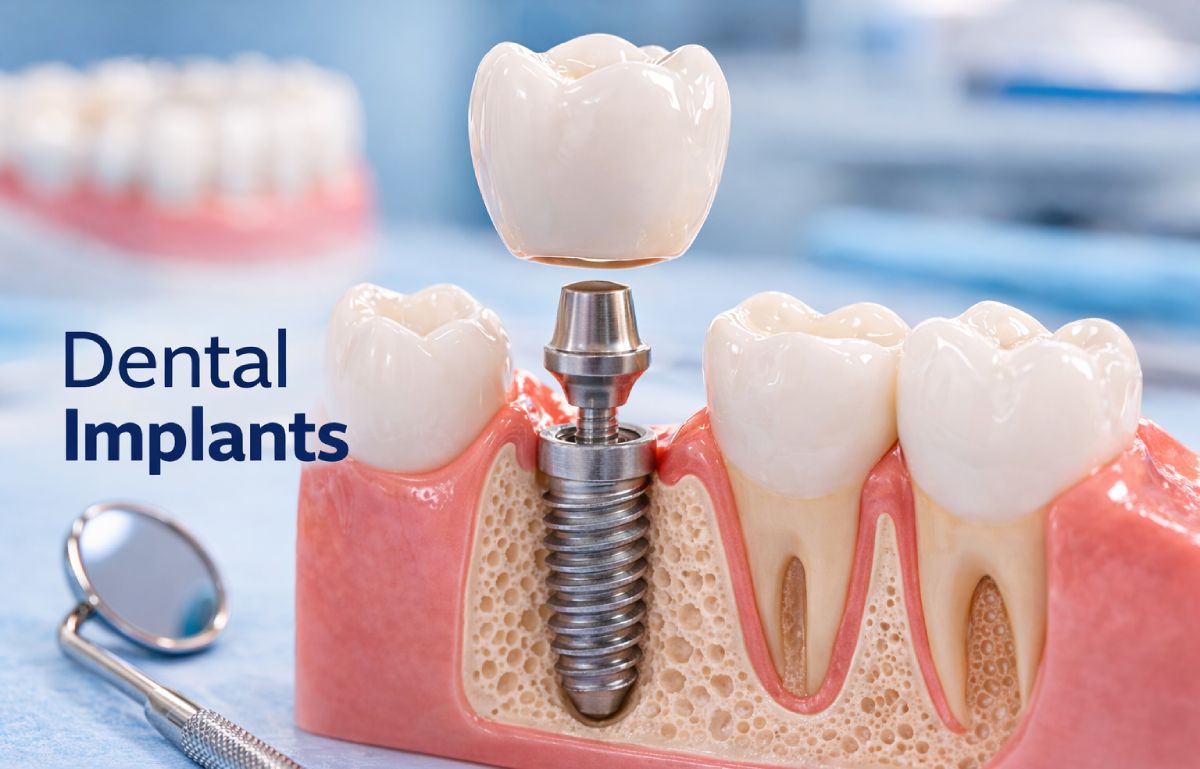
Dental implants are artificial tooth roots placed into the jawbone to support replacement teeth. The implant is typically made of titanium and serves as a stable foundation for a dental crown, bridge, or full-arch restoration.
A typical dental implant system includes three main components:
- implant fixture (placed in the jawbone)
- abutment connector
- dental crown
Once the implant integrates with the jawbone through a process called osseointegration, it becomes a stable support for the replacement tooth.
Dental implants are often recommended for patients seeking a long-term, natural-looking solution for missing teeth.
Benefits of Dental Implants
Dental implants offer several advantages over other tooth-replacement options.
Key benefits include:
- strong and stable tooth replacement
- natural appearance and function
- preservation of jawbone structure
- no damage to neighboring teeth
- long-term durability
Because implants integrate with the bone, they behave similarly to natural teeth during chewing and speaking.
What Are Dental Bridges?
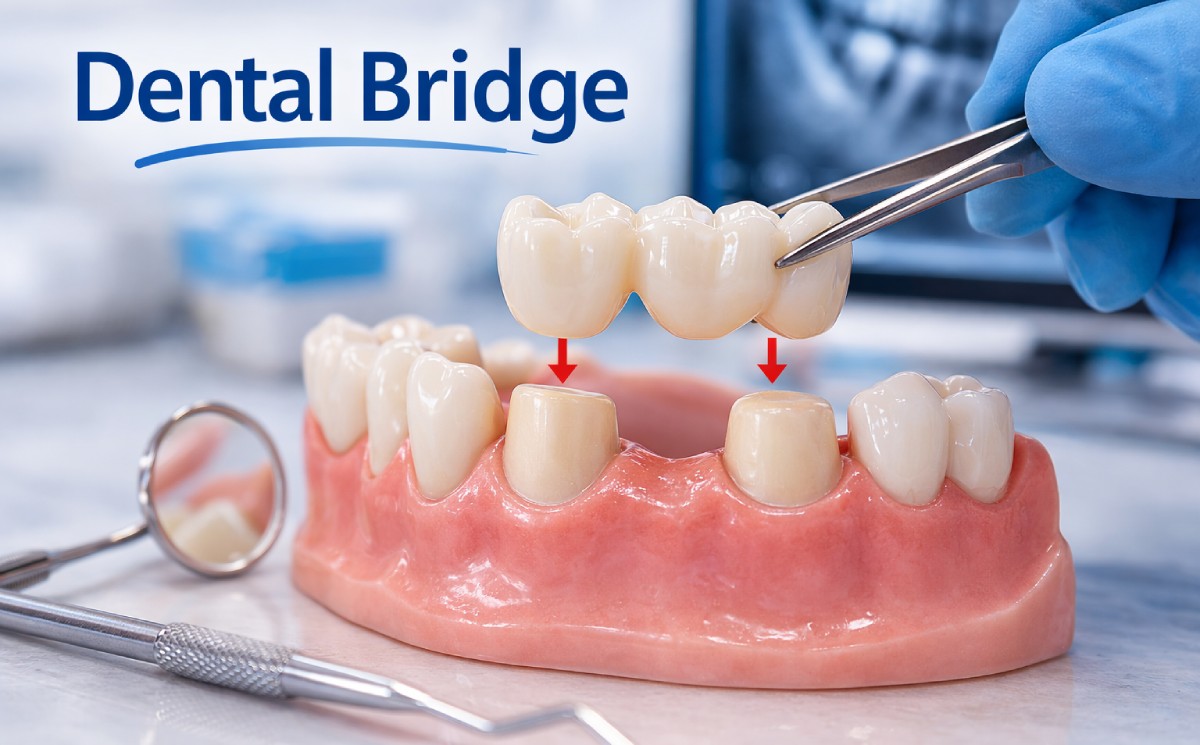
Dental bridges are fixed dental restorations used to replace one or more missing teeth. A bridge works by attaching an artificial tooth to the natural teeth on either side of the gap.
These supporting teeth are called abutment teeth. To place a bridge, the dentist typically prepares the adjacent teeth by shaping them to support crowns. The artificial tooth in the middle fills the space left by the missing tooth.
Dental bridges are commonly used when:
- One or two teeth are missing
- Neighboring teeth are strong enough to support a bridge
- Implants are not recommended due to bone limitations
Benefits of Dental Bridges
Dental bridges have been used for many years and remain a reliable treatment option in certain cases.
Some benefits include:
- shorter treatment time compared with implants
- fixed restoration that does not need to be removed
- An effective solution for replacing a few missing teeth
- improved chewing ability and appearance
However, dental bridges rely on surrounding teeth for support, which can affect those teeth over time.
What Are Dentures?
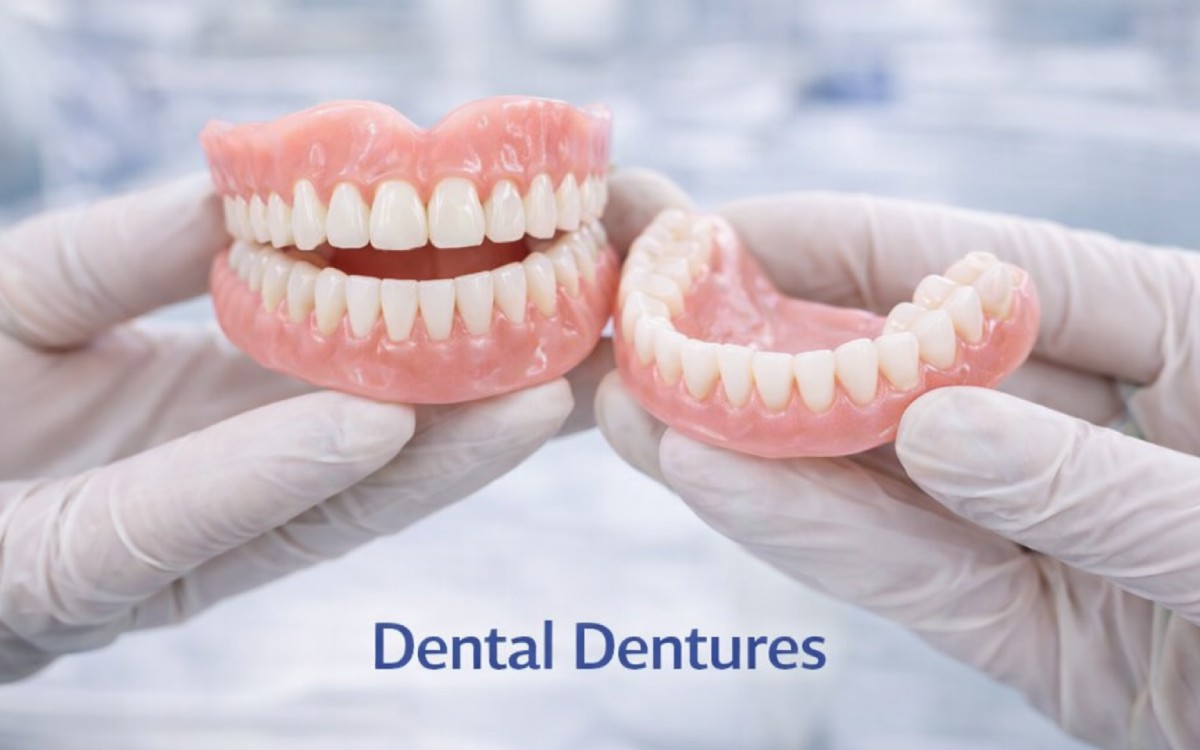
Dentures are removable appliances designed to replace missing teeth and surrounding gum tissue. They are typically used when multiple teeth or all teeth are missing.
Dentures are made from acrylic, resin, or metal frameworks and can be customized to fit the patient’s mouth.
There are two main types of dentures:
Partial Dentures
Partial dentures replace several missing teeth while the remaining natural teeth stay in place. They are usually supported by metal clasps that attach to neighboring teeth.
Full Dentures
Full dentures replace an entire arch of teeth in the upper or lower jaw. They rest on the gums and rely on suction or adhesive to remain stable.
Benefits of Dentures
Dentures offer a non-surgical solution for replacing missing teeth.
Some advantages include:
- lower initial treatment cost
- Replacement of multiple teeth at once
- non-invasive treatment option
- improved appearance and facial support
However, dentures may require periodic adjustments as the jawbone changes over time.
Dental Implants vs Bridge vs Dentures: Key Differences
Understanding the differences among implants, dentures, and bridges helps patients make informed treatment decisions.
Here are some important factors to consider.
Tooth Support
- Dental implants are anchored directly into the jawbone, providing strong and stable support.
- Dental bridges rely on neighboring teeth for support.
- Dentures rest on the gums and may move slightly during chewing.
Impact on Surrounding Teeth
- Dental implants do not affect adjacent teeth.
- Bridges require the preparation of neighboring teeth.
- Dentures may place pressure on surrounding gum tissue.
Stability
- Implants provide the most stable solution.
- Bridges are fixed but rely on other teeth.
- Dentures are removable and may require adhesives for stability.
Bone Health
- Dental implants stimulate the jawbone and help prevent bone loss.
- Bridges and dentures do not provide this benefit.
Maintaining jawbone health is a key reason many patients consider implants for long-term tooth replacement.
Tooth Replacement Options: Which Treatment Is Right for You?
Choosing between dental implants, a bridge, or dentures depends on several factors.
Your dentist will evaluate:
- number of missing teeth
- bone density and jaw health
- condition of neighboring teeth
- overall oral hygiene
- personal preferences and budget
In many cases, dental implants are considered the most advanced solution because they restore both the root and the visible part of the tooth.
However, bridges and dentures can still be appropriate options depending on the individual case.
A consultation with a dental professional helps determine the most suitable treatment plan.
Cost Comparison: Dental Implants vs Bridges vs Dentures
Cost is often one of the first factors patients consider when choosing between bridge vs implants vs dentures
However, it is important to recognize that the initial cost of treatment is only one factor in the decision. Long-term durability, maintenance, and replacement needs also affect overall value.
Dental Implant Cost
Dental implant costs typically have a higher initial cost than other tooth-replacement options.
This is because implant treatment involves:
- surgical placement of a titanium implant
- healing and bone integration
- placement of a custom crown or restoration
- advanced diagnostic imaging and planning
Although implants require a larger upfront investment, they often last longer and require fewer replacements over time.
Dental Bridge Cost
Dental bridges usually cost less than implants initially.
The treatment involves preparing the adjacent teeth and placing crowns that support the artificial tooth.
Bridge costs typically depend on:
- number of teeth being replaced
- materials used for crowns
- laboratory fabrication
While bridges can be effective for replacing one or two missing teeth, they may need to be replaced after several years.
Denture Cost
Dentures generally have the lowest upfront cost among tooth replacement options.
Because dentures are removable appliances, the treatment does not require surgery.
Costs vary depending on:
- type of denture (partial or full)
- materials used
- customization and fit
However, dentures often require adjustments, relining, or replacement over time due to changes in jawbone structure.
Durability Comparison
Another important consideration when choosing between implants vs dentures vs bridges is durability. Each treatment option has a different expected lifespan depending on oral hygiene and maintenance.
Dental Implant Durability
Dental implants are designed to be long-term tooth replacement solutions. With proper care, implants can last many years and often decades.
Because implants integrate with the jawbone, they provide strong support similar to natural tooth roots.
Dental Bridge Durability
Dental bridges typically last 10 to 15 years with proper care. The longevity of a bridge depends on the health of the supporting teeth and regular dental maintenance. If the supporting teeth develop decay or gum disease, the bridge may require replacement.
Denture Durability
Dentures typically require replacement or adjustment every few years. Changes in jawbone shape can affect how dentures fit, potentially causing them to loosen over time. Regular dental visits help ensure dentures remain comfortable and functional.
Which Option Lasts Longer?
When comparing dental implants, bridges, and dentures, implants generally offer the longest lifespan.
This is mainly because dental implants replace both the tooth root and the visible tooth structure.
Bridges and dentures only replace the visible part of the tooth and rely on surrounding teeth or gum tissue for support.
Here is a simplified comparison:
| Tooth Replacement Option | Average Longevity |
| Dental Implants | 20+ years with proper care |
| Dental Bridges | 10–15 years |
| Dentures | 5–10 years |
While implants often last longer, the best option depends on the patient’s oral health and treatment goals.
Maintenance Differences
Proper care is essential for the success of any tooth replacement treatment.
Caring for Dental Implants
Dental implants should be cared for in the same way as natural teeth.
Patients should:
- Brush twice daily
- floss regularly
- attend routine dental check-ups
- Maintain good gum health
With consistent oral hygiene, implants can remain stable and functional for many years.
Caring for Dental Bridges
Dental bridges require careful cleaning around the supporting teeth. Special flossing tools or interdental brushes are often recommended to clean underneath the bridge. Maintaining healthy supporting teeth is important for the longevity of the bridge.
Caring for Dentures
Dentures require daily removal and cleaning.
Patients should:
- Clean dentures with a denture brush
- Soak them overnight
- Maintain gum hygiene
- Attend regular dental visits for adjustments
Proper maintenance helps ensure dentures remain comfortable and functional.
Dental Implants vs Bridges vs Dentures: Which Is Best?
There is no single treatment that is best for everyone.
The right option depends on several factors, including:
- number of missing teeth
- jawbone health
- surrounding tooth condition
- budget considerations
- long-term treatment goals
Dental implants are often recommended for patients seeking a long-term and stable tooth replacement option. However, bridges and dentures remain effective treatments in many cases.
A comprehensive dental evaluation helps determine the most suitable solution for each individual.
When Dentists Recommend Dental Implants
Dentists often recommend implants when:
- A single tooth is missing
- Multiple teeth are missing in different areas
- Patients want a fixed, long-term solution
- Jawbone density is sufficient for implant placement
Implants can also support advanced treatments, such as implant-supported bridges or full-arch restorations. If you are considering implants, you can learn more about the procedure on our Dental Implants in Dubai service page.
Frequently Asked Questions
Are dental implants better than bridges?
Dental implants often provide greater stability and longevity because they replace both the tooth root and crown. However, bridges may be suitable when implants are not recommended.
Are dentures a good option for replacing missing teeth?
Dentures can be an effective option for patients missing multiple teeth or a full arch. They provide a non-surgical solution for restoring appearance and chewing function.
Which tooth replacement option is right for me?
The best way to determine the right treatment is through a dental consultation. Your dentist will evaluate your oral health, jawbone condition, and treatment goals.
Do dental implants last longer than dentures?
Yes. Dental implants generally last longer because they integrate with the jawbone, while dentures may require replacement or adjustment over time.
Can dental implants replace multiple teeth?
Yes. Dental implants can support crowns, bridges, or full arch restorations to replace multiple missing teeth.
Final Thoughts
Choosing between dental implants, bridges, and dentures involves balancing function, durability, cost, and long-term oral health.
Dental implants offer a stable and long-lasting solution for many patients, while bridges and dentures remain valuable alternatives depending on the clinical situation.
Understanding the differences among these tooth-replacement options helps patients make informed decisions about their dental care.
Book a Consultation at Bay Avenue Dental Centre
If you are considering dental implants or exploring other tooth replacement options, a professional consultation can help determine the best solution for your needs.
At Bay Avenue Dental Centre in Business Bay, our dental specialists evaluate your oral health and create a personalized treatment plan designed to restore both function and appearance.
Contact our team today to schedule your consultation and learn more about the most suitable tooth replacement options for your smile.