
Gum Disease Treatment in Dubai: Causes, Symptoms, Stages, and Care
Introduction: Why Gum Health Should Never Be Ignored
Gum health is one of the most overlooked aspects of oral care, yet it plays a fundamental role in maintaining strong teeth, stable bite function, and long-term oral health. Many patients focus only on visible problems such as cavities or tooth pain, while early signs of gum disease often go unnoticed because they are painless in the beginning.
Gum disease, also known as periodontal disease, is a progressive infection that affects the gums and the supporting structures of the teeth, including bone. If not treated at the right time, it can lead to gum recession, tooth mobility, and even permanent tooth loss.
In a fast-paced city like Dubai, lifestyle factors such as stress, smoking, irregular dental visits, and diet habits contribute significantly to the increasing prevalence of gum disease. Many patients only seek treatment when symptoms become severe, which makes treatment more complex.
“Gum disease treatment focuses on removing bacteria from below the gum line to stop infection and protect supporting bone.”
The good news is that with early diagnosis and the right gum disease treatment in Dubai, this condition can be effectively controlled, and in early stages, completely reversed.
What Is Gum Disease?
Gum disease is a bacterial infection that affects the tissues surrounding and supporting your teeth. It starts when plaque, a sticky film of bacteria, accumulates along the gum line and is not removed properly through brushing and flossing.
Over time, this plaque hardens into tartar, which cannot be removed at home and requires professional cleaning. The bacteria within plaque and tartar release toxins that irritate the gums, leading to inflammation and infection.
As the disease progresses, it can spread deeper below the gum line, affecting the bone that supports the teeth. This is what makes gum disease particularly serious compared to other dental conditions.
Why Early Treatment Matters
One of the most important aspects of gum disease is that it develops gradually. In the early stage (gingivitis), the damage is limited to the gums and can be reversed completely with proper care.
However, once it progresses to periodontitis, the damage extends to deeper structures and becomes more difficult to treat.
Ignoring early signs can lead to:
- Irreversible bone loss around teeth
- formation of deep periodontal pockets
- gum recession and root exposure
- eventual tooth loss
Early treatment not only prevents complications but also reduces the need for advanced procedures such as surgery or implants.
Common Signs of Gum Disease
Gum disease often develops without significant pain, which is why many patients overlook the early warning signs. Being aware of these symptoms can help you seek timely treatment and prevent progression.
Bleeding Gums
Bleeding while brushing or flossing is often the first sign of gum disease. Many people ignore this symptom, assuming it is normal, but healthy gums should not bleed easily.
This bleeding occurs due to inflammation caused by bacterial infection and should be evaluated by a dentist.
Swollen, Red, or Tender Gums
Healthy gums are firm and pink. When gums become red, swollen, or sensitive, it indicates inflammation and infection.
This condition, if left untreated, can worsen and spread to deeper tissues.
Persistent Bad Breath
Chronic bad breath (halitosis) is commonly caused by bacteria trapped under the gum line. Unlike temporary bad breath, this condition does not improve with brushing alone.
Gum Recession
As gum disease progresses, the gums begin to pull away from the teeth. This exposes the roots and makes teeth appear longer.
Gum recession can also lead to increased sensitivity and aesthetic concerns.
Loose Teeth or Bite Changes
In advanced stages, gum disease affects the supporting bone, causing teeth to become loose or shift position.
Patients may notice changes in their bite or difficulty chewing. These symptoms should never be ignored, as early treatment can prevent long-term damage.
Stages of Gum Disease
Understanding the stages of gum disease helps patients recognize the severity of their condition and the importance of early treatment.
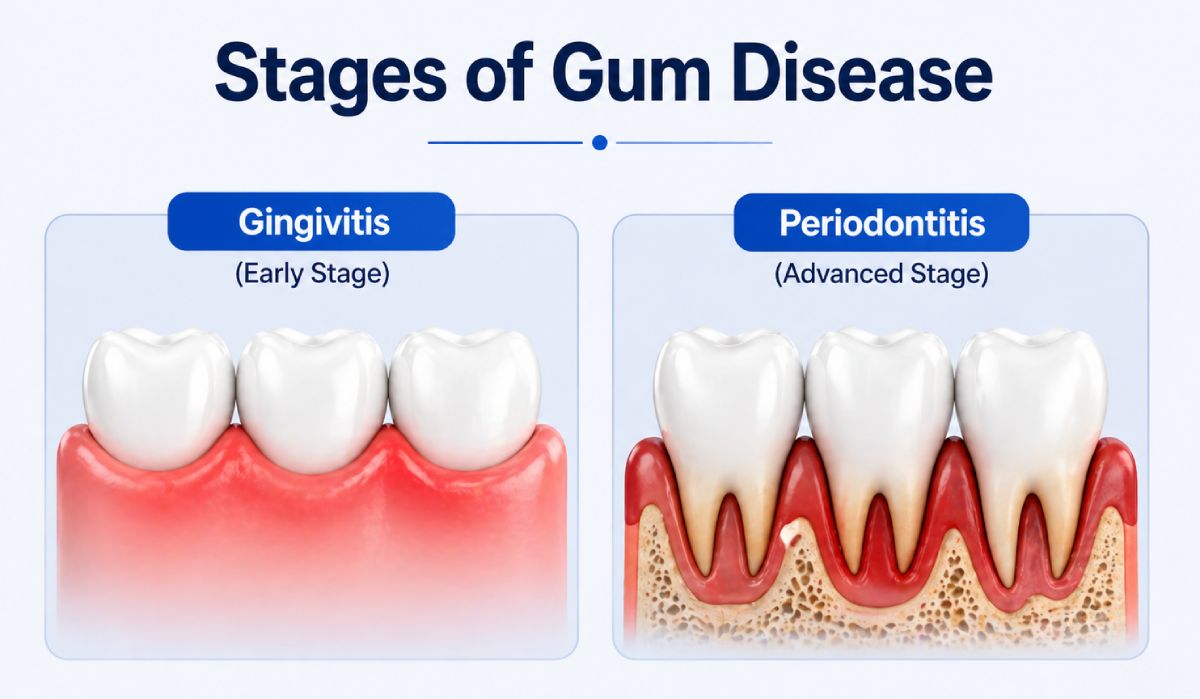
Gingivitis (Early Stage)
Gingivitis is the initial stage of gum disease and is caused by plaque buildup at the gum line. At this stage, there is no damage to the bone or supporting structures.
Symptoms include:
- Bleeding during brushing
- mild swelling and redness
- occasional bad breath
The key advantage of treating gingivitis is that it is completely reversible with professional cleaning and improved oral hygiene.
Periodontitis (Advanced Stage)
When gingivitis is not treated, it progresses to periodontitis. At this stage, bacteria spread below the gum line and begin to damage the supporting bone.
The body’s immune response to infection also contributes to tissue destruction.
Symptoms include:
- deep pockets between gums and teeth
- gum recession
- bone loss
- loose or shifting teeth
Periodontics treatment Dubai becomes more complex and may involve deep cleaning, surgical procedures, and long-term maintenance.
The transition from gingivitis to periodontitis can be gradual but has serious consequences if ignored.
What Causes Gum Disease
Gum disease is primarily caused by bacterial buildup, but several contributing factors can increase the risk and severity of the condition.
Plaque and Tartar Accumulation
The most common cause is poor oral hygiene, leading to plaque buildup. When plaque is not removed, it hardens into tartar, which provides a surface for bacteria to thrive.
Smoking and Tobacco Use
Smoking is one of the most significant risk factors for gum disease. It weakens the immune system, reduces blood flow to the gums, and slows healing.
Medical Conditions (Diabetes)
Conditions like diabetes affect the body’s ability to fight infection, making patients more prone to gum disease and slower recovery.
Hormonal Changes
Hormonal fluctuations during pregnancy, puberty, or menopause can make gums more sensitive and prone to inflammation.
Poor Nutrition and Stress
A weak immune system due to poor diet or high stress levels can reduce the body’s ability to fight bacterial infections.
Identifying and managing these causes is essential for effective treatment and prevention.
Gum Disease Treatment in Dubai: What Are the Options?
Treatment depends on the severity of the condition and the extent of damage.
Professional Dental Cleaning
For early-stage gum disease, a professional cleaning removes plaque and tartar from above and slightly below the gum line. This helps reduce inflammation and allows the gums to heal naturally.
Scaling and Root Planing (Deep Cleaning)
This is a non-surgical procedure used for moderate gum disease. It involves:
- removing plaque and tartar from deep pockets
- smoothing root surfaces to prevent bacterial buildup
This procedure helps the gums reattach to the teeth.
Laser Gum Therapy
Laser treatment is a modern technique that removes infected tissue with high precision while preserving healthy tissue.
It offers:
- minimal discomfort
- faster healing
- reduced bleeding
Surgical Treatment
In advanced cases, surgical procedures such as flap surgery or bone grafting may be required to restore lost tissue and bone support.
Choosing the right periodontics treatment Dubai depends on accurate diagnosis and specialist evaluation.
When You Need a Gum Specialist in Dubai
While general dentists can effectively manage early-stage gum disease such as gingivitis, more advanced conditions require the expertise of a periodontal disease specialist. Gum disease that progresses beyond surface-level inflammation begins to affect deeper structures such as connective tissue and bone, which need specialized diagnosis and treatment.
Many patients delay seeing a specialist because symptoms are not always painful in the beginning. However, by the time visible changes occur, the disease may already be in an advanced stage. Early referral to a gum specialist in Dubai can prevent further complications and improve long-term outcomes.
You Should See a Specialist If:
- gum pockets are deeper than normal (typically more than 4mm)
- Bone loss is visible in dental X-rays or CBCT scans
- teeth feel loose or begin to shift position
- Infection persists or returns after basic treatment
- Gums are receding significantly, exposing tooth roots
A periodontist has advanced training in managing both soft tissue (gums) and hard tissue (bone), allowing them to treat complex cases more effectively than general treatments alone.
Early intervention by a periodontal disease specialist can help preserve your natural teeth and prevent the need for extensive surgical procedures later.
What a Gum Specialist (Periodontist) Does
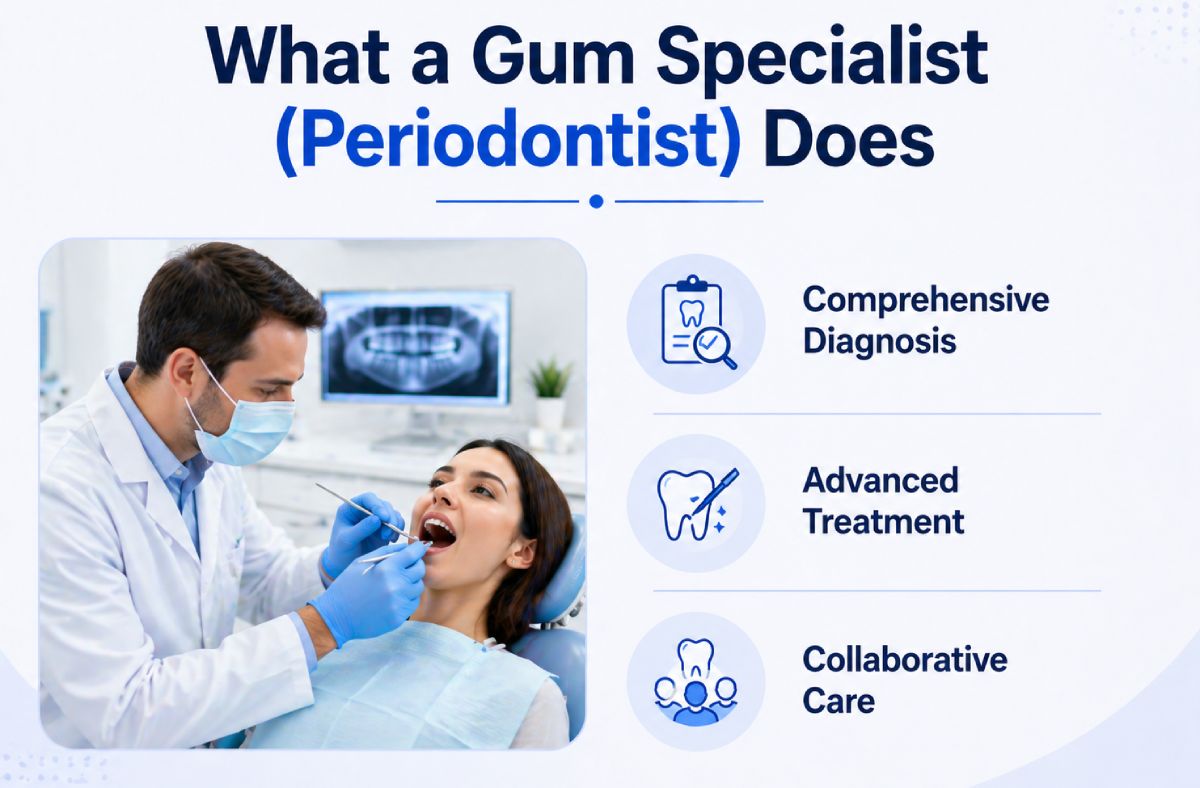
A periodontal disease gum specialist, a periodontist trained specifically in diagnosing and treating diseases of the gums and supporting bone structures. Their role goes beyond basic cleaning; they focus on managing infection, restoring tissue health, and preventing long-term damage.
Comprehensive Diagnosis
The first step in periodontal care is an in-depth evaluation. A periodontist uses advanced diagnostic tools to understand the severity and extent of gum disease.
This includes:
- periodontal probing to measure gum pocket depth
- CBCT scans to assess bone levels and structural damage
- digital imaging to detect hidden infection areas
These tools allow precise diagnosis, which is essential for creating an effective and targeted treatment plan.
Advanced Treatment
Based on the diagnosis, the specialist recommends appropriate treatment options tailored to the patient’s condition.
Treatment may include:
- scaling and root planing (deep cleaning) to remove bacteria
- Laser therapy to target infected tissue with minimal invasion
- surgical procedures such as flap surgery or bone grafting
- dental implant placement in areas with missing teeth
Each procedure is designed not only to eliminate infection but also to restore the health and stability of the supporting structures.
Collaborative Care
In complex cases, periodontal treatment is often part of a broader dental plan. Periodontists work closely with:
- prosthodontists (for crowns, bridges, implants)
- orthodontists (for alignment correction)
This collaborative approach ensures that both function and aesthetics are restored effectively. Their expertise plays a crucial role in preserving natural teeth and supporting long-term oral health.
Gum Treatment in Dubai: Step-by-Step Care Process
Understanding the complete treatment journey helps patients feel more confident and reduces anxiety. Gum disease treatment is not a one-time procedure; it is a structured process designed to eliminate infection and maintain long-term stability.
Step 1: Detailed Examination
The process begins with a comprehensive evaluation of gum health. The dentist measures pocket depth, checks for bleeding and inflammation, and uses digital imaging to assess bone levels.
This step helps determine the severity of gum disease and identify areas that require immediate attention.
Step 2: Initial Treatment (Professional Cleaning / Deep Cleaning)
Depending on the stage of the disease, the first line of treatment involves removing plaque and tartar buildup.
- Professional cleaning is used for early-stage cases
- Scaling and root planing are used for deeper infections
This step is crucial for reducing bacterial load and allowing the gums to begin healing.
Step 3: Advanced Procedures (If Required)
If the infection has progressed, additional treatments may be necessary.
These may include:
- Laser therapy for targeted infection removal
- surgical procedures to access deeper pockets
- regenerative treatments to restore lost bone
These advanced procedures help stabilize the condition and prevent further damage.
Step 4: Maintenance Phase
After treatment, regular follow-up visits are essential to monitor progress and prevent recurrence.
This includes:
- periodic cleanings
- gum health monitoring
- reinforcement of oral hygiene practices
A well-structured treatment plan combined with ongoing care ensures long-term success and stability.
Recovery After Gum Treatment
Recovery after gum treatment varies depending on the type of procedure performed and the severity of the condition. While most treatments are well-tolerated, proper post-treatment care plays a critical role in healing.
In the initial days after treatment, patients may experience:
- mild discomfort or soreness in the gums
- temporary sensitivity to hot or cold foods
- slight bleeding or swelling
These symptoms are normal and usually subside within a few days.
Healing Timeline
- minor treatments: 2–5 days recovery
- deep cleaning: 1–2 weeks improvement
- surgical procedures: several weeks for full healing
During the healing phase, the gums gradually reattach to the teeth, and inflammation reduces significantly.
Post-Treatment Care Guidelines
Patients are advised to:
- Maintain gentle but thorough oral hygiene
- Avoid smoking, as it delays healing
- follow dietary instructions (soft foods if needed)
- Take prescribed medications as directed
- Attend follow-up visits for monitoring
Following proper aftercare instructions ensures faster healing and reduces the risk of complications or recurrence.
Preventing Gum Disease After Treatment
Preventing gum disease after treatment is essential to maintain the results and avoid recurrence. Even after successful treatment, gum disease can return if proper care is not maintained.
Daily Oral Hygiene Routine
Consistent oral hygiene is the foundation of prevention. Patients should:
- Brush twice daily using proper technique
- Floss regularly to remove plaque between teeth
- Use antibacterial mouthwash to reduce bacteria
Proper technique is just as important as frequency, as ineffective brushing can leave plaque behind.
Regular Dental Visits
Routine dental checkups play a crucial role in maintaining gum health. Professional cleanings remove tartar that cannot be removed at home.
Regular visits also help:
- detect early signs of recurrence
- Monitor gum pocket depth
- maintain overall oral health
Lifestyle and Health Management
Certain lifestyle habits and health conditions significantly impact gum health.
Patients are advised to:
- quit smoking or tobacco use
- Maintain a balanced diet rich in vitamins
- manage systemic conditions such as diabetes
- reduce stress levels
Long-term success depends on a combination of professional care and daily habits.
Final Thoughts: Early Action Saves Your Smile
Gum disease is a serious but manageable condition. The key to successful treatment lies in early detection, proper diagnosis, and consistent care.
With advanced gum disease treatment in Dubai, patients have access to modern techniques that can effectively control infection, restore gum health, and prevent tooth loss.
Taking timely action not only protects your smile but also improves your overall quality of life.