
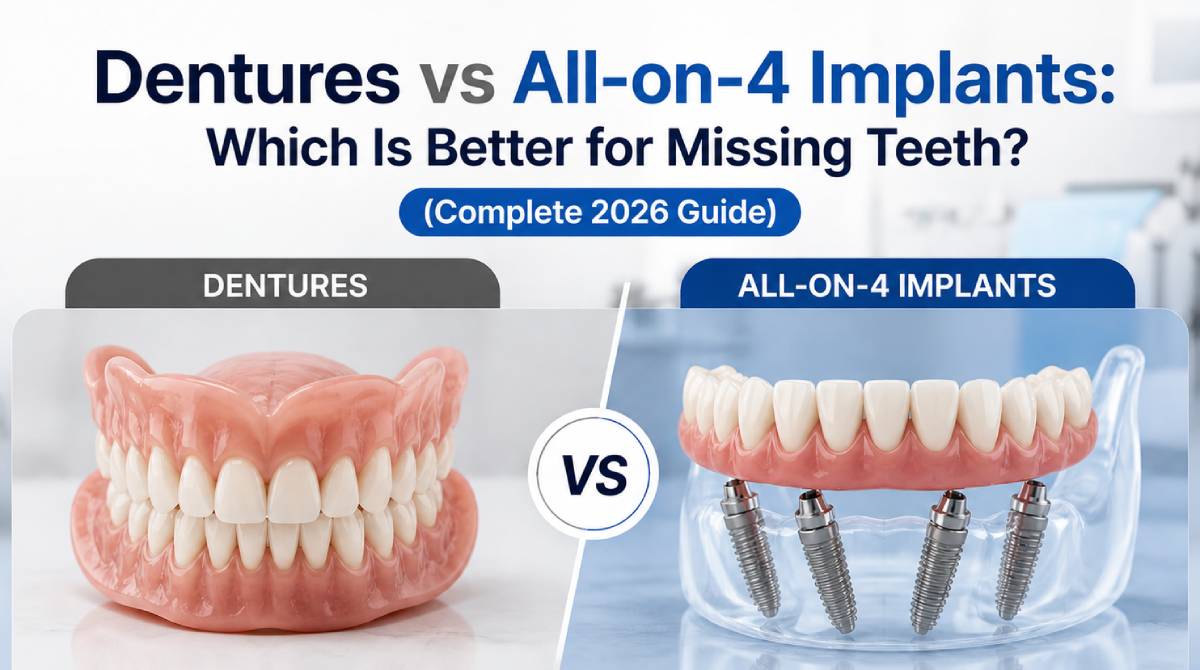
Dentures vs All-on-4 Implants: Which Is Better for Missing Teeth? (Complete 2026 Guide)
Introduction: Choosing the Right Solution for Missing Teeth
Losing multiple teeth can affect every part of your daily life. It changes how you eat, how you speak, and how confident you feel when you smile.
Many patients searching for the best solution for missing teeth often come across two main options:
- Dentures (traditional solution)
- All-on-4 dental implants (modern solution)
At first glance, dentures may seem simple and affordable. But when you look deeper, modern treatments like All-on-4 dental implants in Dubai offer a completely different level of comfort, stability, and long-term results.
The challenge is this:
👉 Which option is actually better for you?
This guide will help you understand:
- dentures vs dental implants
- all-on-4 vs dentures comparison
- cost, comfort, and long-term value
- Which option suits your needs
Understanding Dentures vs All-on-4 Implants helps patients identify the best solution for missing teeth based on comfort, durability, and long-term clinical outcomes.
What Are Dentures? (Traditional Tooth Replacement Explained)
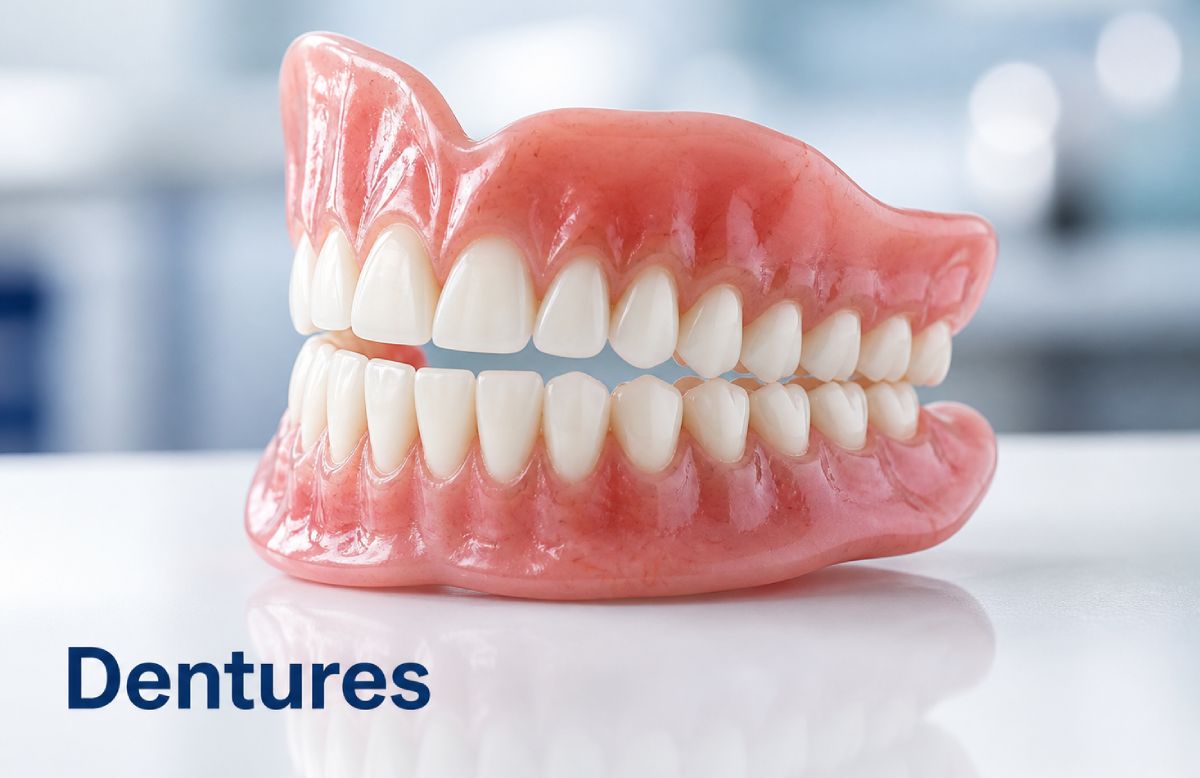
Dentures are removable dental appliances designed to replace missing teeth and restore basic oral function. They are custom-made to fit over your gums and are shaped to look like natural teeth and surrounding tissues.
Dentures have been used for decades and remain a common solution, especially for patients who want a non-surgical and lower-cost option. While they can improve appearance and help with basic chewing, they function very differently from natural teeth.
Unlike natural teeth, dentures do not have roots. They simply rest on the surface of the gums, which affects stability, comfort, and long-term oral health.
When evaluating dentures vs dental implants, patients often consider stability, while all on 4 vs dentures comparisons highlight long-term structural and functional benefits.
Types of Dentures
Different types of dentures are used depending on how many teeth are missing and the condition of your gums and remaining teeth.
1. Full Dentures
Full dentures are used when all teeth are missing in either the upper or lower jaw.
They are designed to:
- sit directly on the gums
- restore a complete smile
- improve basic chewing ability
Upper dentures usually stay in place using suction from the palate, while lower dentures rely more on muscle control and may feel less stable. In Dentures vs All-on-4 Implants discussions, patients explore permanent teeth replacement options that offer improved retention, comfort, and long-term oral health stability.
2. Partial Dentures
Partial dentures are used when some natural teeth are still present.
They are supported by:
- remaining natural teeth
- metal or flexible clasps
- a base that fits around existing teeth
They help fill gaps and prevent other teeth from shifting, but they still remain removable. Patients exploring all on 4 dental implants in Dubai often compare all on 4 vs dentures to understand differences in comfort, stability, and long-term performance.
3. Immediate Dentures
Immediate dentures are placed right after tooth extraction.
This means:
- You do not stay without teeth
- Healing happens while wearing dentures
- Adjustments are required as gums shrink
Over time, these dentures often need to be relined or replaced due to changes in the shape of the gums. When comparing all on 4 dental implants in Dubai with Dentures vs All-on-4 Implants, patients evaluate healing time, stability, and long-term functional outcomes.
How Dentures Work
Dentures stay in place using a combination of natural support and external help.
They rely on:
- suction created between the denture and gums
- the shape of the jaw and oral tissues
- adhesive creams for added stability (in some cases)
Because dentures are not anchored into the bone, their stability depends on how well they fit the gums. Over time, as the jawbone changes, the fit can become loose. This is why many patients experience movement or discomfort after a few years.
The key limitation is that dentures do not replace tooth roots, which affects both function and long-term oral health.
Limitations of Dentures (Important to Know)
While dentures can restore your smile, they come with several limitations that patients often experience over time.
1. Lack of Stability
Because dentures are not fixed:
- They may slip while eating
- They can move while speaking
- confidence may be affected
This can make social situations uncomfortable for some patients.
2. Reduced Chewing Efficiency
Dentures do not provide the same bite strength as natural teeth.
This can lead to:
- difficulty eating hard foods
- limited diet options
- reduced chewing comfort
Over time, this can affect nutrition and overall health.
3. Discomfort and Irritation
Since dentures sit on soft tissue:
- pressure points can develop
- Gums may become sore
- Irritation may occur with prolonged use
Some patients need repeated adjustments to improve comfort.
4. Bone Loss in the Jaw
This is one of the most important long-term concerns.
Because dentures do not stimulate the jawbone:
- bone begins to shrink over time
- facial structure changes
- dentures become loose
This leads to a cycle where dentures need to be adjusted or replaced.
5. Need for Replacement
Dentures are not permanent.
Over time:
- they wear out
- lose their fit
- require relining or replacement
These ongoing issues are why many patients eventually look for a more permanent solution like implants.
What Are All-on-4 Dental Implants? (Modern Permanent Solution)
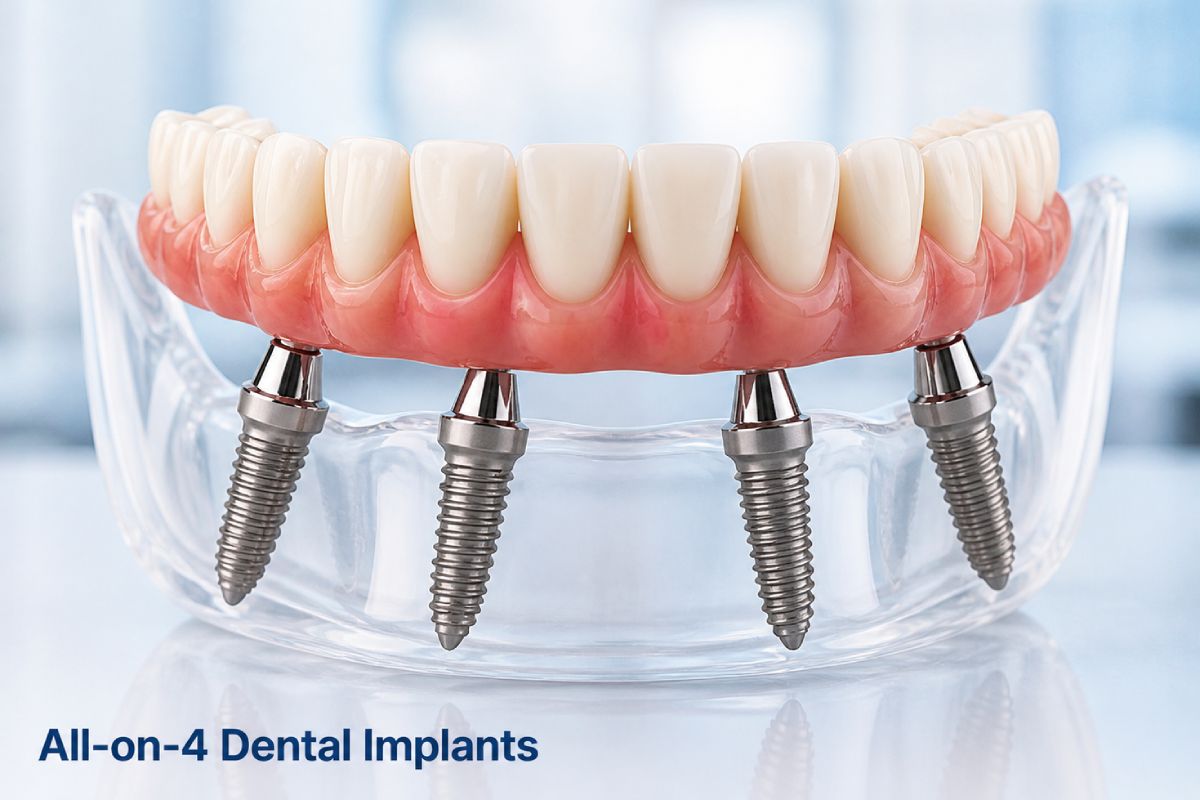
All-on-4 dental implants are an advanced treatment designed to replace a full set of missing teeth using only four implants. Instead of placing one implant for each tooth, this technique uses a small number of implants to support a full arch of fixed teeth.
These implants are made of titanium and are placed directly into the jawbone, where they function like natural tooth roots. Once healed, they provide a strong and stable foundation for permanent teeth.
How All-on-4 Works
The success of All-on-4 comes from strategic implant placement.
The system uses:
- 2 implants placed vertically in the front of the jaw
- 2 implants placed at an angle in the back
This angled placement allows better use of available bone, even in patients with some bone loss.
Why This Technique Is Effective
This approach provides several advantages:
- better distribution of chewing forces
- increased stability of the prosthetic teeth
- Reduced need for bone grafting
- faster treatment compared to traditional implants
Because fewer implants are used, the procedure is often less invasive while still providing strong support.
Key Benefits of All-on-4
All-on-4 implants are designed to solve the major limitations of dentures.
1. Fixed (Non-Removable) Teeth
The teeth are permanently attached to the implants.
This means:
- No removal required
- No slipping or movement
- Greater confidence
2. Strong and Stable Bite
Because implants are anchored in bone:
- Chewing strength is significantly improved
- Patients can eat a wider range of foods
- The bite function is closer to natural teeth
3. Natural Appearance
The prosthetic teeth are custom-designed to match:
- facial structure
- tooth shape and color
- smile aesthetics
This creates a natural and balanced appearance.
4. Prevention of Bone Loss
Unlike dentures, implants stimulate the jawbone.
This helps:
- maintain bone density
- prevent jaw shrinkage
- preserve facial structure
5. Long-Term Durability
With proper care:
- Implants can last for decades
- Prosthetic teeth are strong and durable
- Fewer replacements are needed
Same-Day Teeth Advantage
One of the biggest benefits of All-on-4 is that many patients receive temporary teeth on the same day as surgery.
This means:
- No period without teeth
- immediate improvement in appearance
- faster return to normal life
After healing, the final permanent teeth are placed for long-term use. This makes All-on-4 one of the most advanced and reliable permanent teeth replacement options, offering both functional and aesthetic benefits.
Dentures vs All-on-4 Implants: Full Comparison
Choosing between dentures and All-on-4 implants is not just about replacing teeth; it directly affects your comfort, lifestyle, and long-term oral health. While both options serve the same purpose, they function very differently in the mouth. Understanding these differences helps you make a confident and informed decision.
Now let’s compare both options in detail.
1. Stability and Function
Dentures
Dentures are not fixed in place and rest directly on the gums. Because they are supported by soft tissue rather than bone, they can shift during daily activities. This often leads to slipping while eating or movement when speaking, especially with lower dentures.
Patients may experience reduced chewing strength, which makes it difficult to eat hard or fibrous foods. As a result, many people avoid foods like nuts, apples, or meat, which can impact nutrition over time.
Dentures provide basic function but lack the stability needed for confident eating and speaking.
All-on-4 Implants
All-on-4 implants are securely anchored into the jawbone, making them completely stable. This fixed support allows patients to chew with much greater strength and efficiency, similar to natural teeth.
Because there is no movement, patients can eat a wide variety of foods without worry. Speech also improves since the teeth remain firmly in place at all times. Implants provide near-natural function and significantly improve daily comfort and confidence.
2. Comfort and Daily Experience
Dentures
Dentures can feel bulky and unnatural, especially during the initial adjustment period. Since they sit on the gums, they may create pressure points that lead to soreness or irritation.
Many patients rely on adhesives to keep dentures in place, which can be inconvenient. Over time, as the jawbone changes, dentures may become less comfortable and require adjustments. Daily comfort with dentures can vary and often requires ongoing adaptation.
All-on-4 Implants
All-on-4 implants are fixed in place, so they do not move or rub against the gums. This eliminates many of the common discomfort issues associated with dentures.
Patients typically report that implants feel very similar to natural teeth once healing is complete. There is no need for adhesives, and the overall experience is more stable and comfortable. Implants offer a more natural and consistent daily experience.
3. Bone Health and Facial Structure
Dentures
Dentures do not replace the roots of teeth, which means the jawbone does not receive stimulation. Over time, this lack of stimulation causes the bone to shrink, a process known as bone resorption.
As the bone shrinks, the face may begin to look sunken or aged. This also affects how dentures fit, often making them loose and less effective. Bone loss is one of the most significant long-term disadvantages of dentures.
All-on-4 Implants
All-on-4 implants function like natural tooth roots and stimulate the jawbone during chewing. This helps maintain bone density and prevents the shrinking that occurs with tooth loss.
By preserving the bone, implants also help maintain facial structure and appearance. This contributes to a more youthful look and better long-term oral stability. Implants protect both oral health and facial aesthetics over time.
4. Maintenance and Daily Care
Dentures
Dentures require a dedicated daily cleaning routine outside the mouth. Patients need to remove them at night, clean them thoroughly, and store them in a solution.
Adhesives may also be needed to keep them stable during the day. This routine can feel time-consuming and inconvenient for some patients. Dentures require more effort and consistent care to maintain hygiene and function.
All-on-4 Implants
All-on-4 implants are maintained just like natural teeth. Patients can brush, floss, and follow a regular oral hygiene routine without removing anything.
Regular dental checkups are still important to monitor health, but overall maintenance is simple and familiar. This makes implants easier to manage in daily life. Implants offer a more convenient and straightforward maintenance routine.
5. Longevity and Durability
Dentures
Dentures are not designed to last forever. Over time, changes in the jawbone can affect their fit, requiring relining or replacement.
Most dentures last between 5 and 8 years, depending on use and care. Frequent adjustments may be needed to maintain comfort and function. Dentures are a short- to medium-term solution that requires ongoing maintenance.
All-on-4 Implants
All-on-4 implants are designed for long-term durability. The implants themselves can last for decades when properly cared for.
The prosthetic teeth are also strong and resistant to wear. With regular maintenance, patients can enjoy stable and reliable results for many years. Implants provide a long-term solution with greater durability and fewer replacements.
All-on-4 vs Dentures: Cost Comparison
Cost is often one of the most important factors when choosing a treatment, but it is important to consider both short-term and long-term value.
Dentures Cost (Short-Term View)
Dentures are generally more affordable at the beginning, making them an attractive option for patients on a budget. However, they often require ongoing expenses over time.
These include:
- replacements every few years
- relining and adjustments
- cleaning and maintenance products
While the initial cost is lower, the long-term expenses can add up significantly.
All-on-4 Cost (Long-Term View)
All-on-4 implants require a higher initial investment due to the surgical procedure and advanced technology involved. However, they are designed to last much longer and require fewer replacements.
Patients benefit from:
- long-term durability
- reduced maintenance costs
- improved quality of life
Over time, implants are often more cost-effective due to their longevity and stability.
Which Option Is Better for You?
Choosing between dentures and All-on-4 implants depends on your personal needs, lifestyle, and long-term goals.
Choose Dentures If:
- You prefer a lower upfront cost
- You want to avoid surgery
- You need a temporary tooth replacement
- You have medical conditions that limit implant treatment
Dentures can be a practical short-term solution, especially for patients looking for a simple and non-invasive option.
Choose All-on-4 Implants If:
- You want a permanent and stable solution
- You want to eat comfortably without restrictions
- You prefer teeth that feel natural
- You are looking for long-term results
All-on-4 implants are ideal for patients who want both functional and aesthetic improvements. For most patients, implants offer a better long-term solution in terms of comfort, stability, and overall quality of life.
Procedure Comparison (What to Expect)
Understanding the treatment process is important before choosing between dentures and All-on-4 implants. While both options aim to restore missing teeth, the procedures involved are very different in terms of complexity, time, and long-term outcomes.
Dentures Process
The denture process is relatively simple and non-surgical, making it suitable for patients who want to avoid surgical procedures.
The typical steps include:
- impressions of your gums are taken to create a custom fit
- dentures are fabricated in a dental lab based on these impressions
- fittings are done to adjust comfort and alignment
In some cases, multiple visits are required to achieve the correct fit. After placement, further adjustments may be needed as the gums heal and change shape over time.
While the process is quicker, it does not address underlying bone health or provide long-term stability. Dentures offer a faster and simpler solution, but with functional limitations.
All-on-4 Implant Process
The All-on-4 process is more advanced and involves careful planning and precision.
The treatment typically includes:
- detailed consultation and 3D CBCT scan for accurate diagnosis
- digital treatment planning to determine implant placement
- surgical placement of four implants into the jawbone
- placement of temporary teeth (often on the same day)
- healing phase (3–6 months) for bone integration
- Final placement of permanent prosthetic teeth
This process ensures that the implants are positioned for maximum strength and long-term success. Although it requires more time and expertise, the outcome is significantly more stable and functional. A more advanced process leads to more predictable and long-lasting results.
Recovery and Adjustment
Recovery experience plays a major role in patient satisfaction. Both treatments have different healing and adjustment timelines.
Dentures
With dentures, there is no surgical recovery, but patients go through an adjustment period.
Common experiences include:
- initial discomfort or soreness in the gums
- difficulty speaking or eating in the beginning
- need to practice chewing and speaking
- Ongoing adjustments as the gums change
Over time, as the jawbone shrinks, dentures may become loose, requiring relining or replacement. Denture recovery is easier initially, but long-term adaptation can be challenging.
All-on-4 Implants
All-on-4 involves a surgical procedure, so some recovery is expected.
Patients may experience:
- mild swelling or discomfort for a few days
- temporary dietary restrictions during healing
- gradual improvement as implants integrate with bone
The healing phase allows the implants to fuse with the jawbone, creating a strong and stable foundation. Once healing is complete, patients typically enjoy long-term comfort with minimal issues. Implant recovery takes time initially but provides lasting comfort and stability.
Aesthetic Results
Both dentures and implants aim to restore your smile, but the quality and consistency of results can differ significantly.
Dentures
Modern dentures are designed to look natural and improve facial appearance.
However:
- They may shift slightly while speaking or smiling
- Gum-based support can affect the natural look over time
- Bone loss can change facial structure
As a result, dentures may sometimes appear less natural, especially after prolonged use. Dentures improve appearance but may not maintain long-term aesthetics.
All-on-4 Implants
All-on-4 implants provide highly natural and stable results.
They offer:
- fixed teeth that stay in place
- improved smile symmetry
- better facial support due to preserved bone
- consistent appearance over time
Because they are anchored in the jaw, they do not shift or move, allowing for a more confident and natural smile. Implants deliver superior aesthetic results and long-term facial harmony.
Common Mistakes Patients Make
Many patients make decisions based only on short-term factors, especially cost, without considering long-term impact. A common mistake is choosing dentures because they seem more affordable initially. However, over time, patients often face issues such as discomfort, poor fit, and repeated replacements.
Other common mistakes include:
- delaying treatment after tooth loss
- not considering long-term bone health
- choosing temporary solutions for permanent problems
These decisions can lead to higher costs and more complex treatments later. Choosing a long-term solution early can save time, money, and discomfort.
Frequently Asked Questions
Are dentures better than implants?
Dentures are more affordable initially and do not require surgery, which makes them suitable for some patients. However, implants provide better stability, comfort, and long-term results. Most patients who switch to implants report a significant improvement in quality of life.
How long do All-on-4 implants last?
With proper care, All-on-4 implants can last for decades. The implants themselves are highly durable, while the prosthetic teeth may need occasional maintenance. Regular dental visits and good oral hygiene play a key role in longevity.
Is All-on-4 treatment painful?
The procedure is performed under anesthesia, so patients do not feel pain during surgery. After the procedure, mild discomfort or swelling may occur, but it is usually manageable with medication. Most patients return to normal activities within a few days.
Can I switch from dentures to implants?
Yes, many patients transition from dentures to implants for better comfort and stability. In some cases, additional procedures such as bone grafting may be required. A consultation helps determine the best approach for your condition.
Which option looks more natural?
Both dentures and implants can look natural, but implants provide more consistent and stable results. Because they are fixed and preserve bone structure, implants tend to maintain a more natural appearance over time.
Final Conclusion
When comparing dentures and All-on-4 implants, the difference lies in long-term performance and quality of life.
- Dentures are a removable, short-term solution that may require ongoing adjustments.
- All-on-4 implants are a fixed, long-term solution designed for stability, comfort, and durability.
If your goal is to restore not just your smile but also your confidence and function, implants offer a more advanced and reliable option.
- For patients seeking comfort, stability, and long-term results, All-on-4 dental implants in Dubai are the better choice.
Book Your Consultation Today
Looking for the best solution for missing teeth?
At Bay Avenue Dental Centre, we provide advanced implant solutions tailored to your needs.
- expert implant specialists
- advanced digital planning technology
- personalized treatment approach
- long-term smile restoration solutions
Book your consultation today and take the first step toward a confident, fully restored smile.