
Are Dental Veneers Worth It? Cost, Procedure, Advantages & Long-Term Results Explained
Introduction: Are Veneers Really Worth It?
If you are unhappy with your smile, chances are you have already come across dental veneers as a possible solution. They are widely promoted as a fast and effective way to achieve a perfect smile, especially in cosmetic dentistry clinics across Dubai.
However, the real question patients struggle with is not what veneers are, but whether they are truly worth the investment.
Are veneers worth it in the long term?
This question goes far beyond cost. It involves understanding durability, maintenance, long-term impact on your natural teeth, and whether veneers actually solve your underlying dental concerns. Many patients choose veneers based on appearance alone. But without proper knowledge, they may overlook important aspects such as enamel removal, longevity, and possible side effects.
In this guide, we will break down everything in detail, so you can decide with clarity, not assumptions.
What Are Dental Veneers?
Dental veneers are thin, custom-designed shells that are bonded to the front surface of your teeth to improve their appearance. They are primarily used for cosmetic enhancement rather than structural repair. These veneers are carefully crafted to match your natural teeth in color, shape, and size. Once placed, they create a uniform and aesthetically pleasing smile.
Veneers are commonly used to correct multiple issues at once. Instead of treating each problem separately, they provide a comprehensive cosmetic solution.
They are especially effective for:
- stained or discolored teeth that don’t respond to whitening
- chipped or worn teeth
- uneven or irregular tooth shapes
- gaps between teeth
- minor alignment issues
This makes veneers one of the most versatile cosmetic dental treatments available today.
Types of Veneers
Choosing the right type of veneer is critical because it directly affects how long they last, how natural they look, and how much you invest.
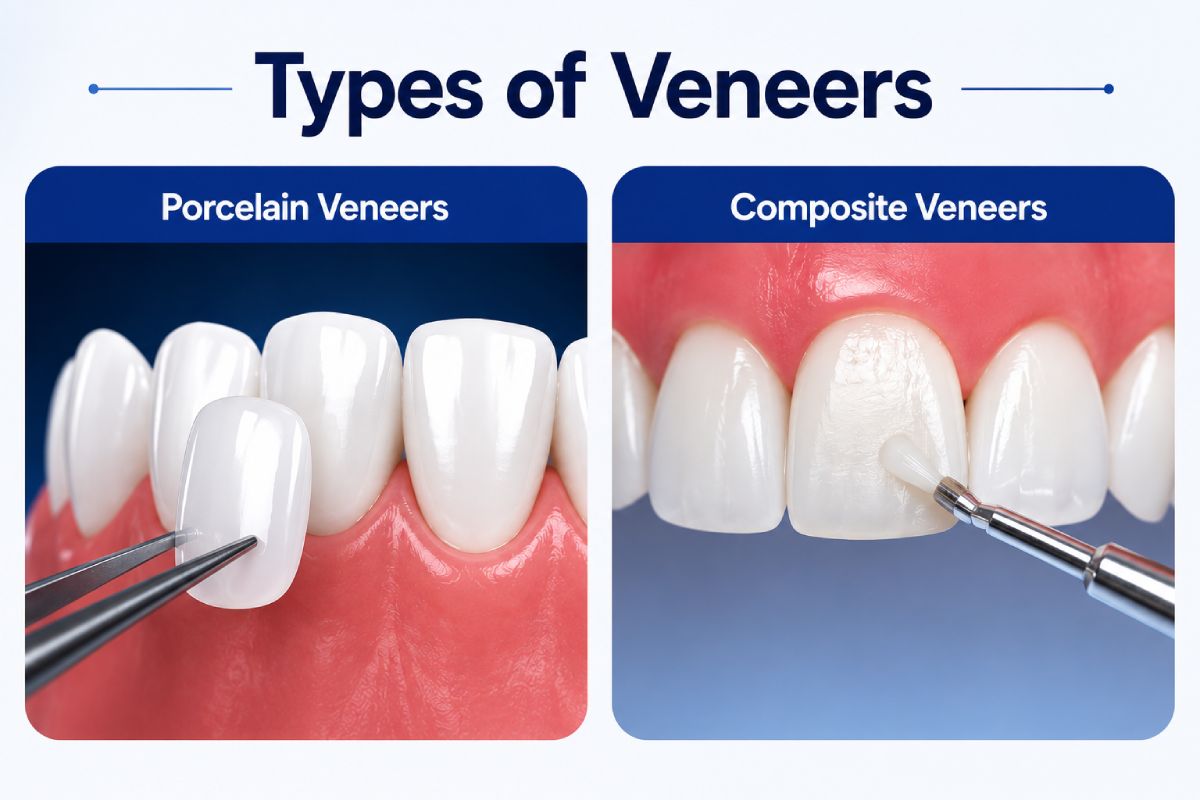
1. Porcelain Veneers
Porcelain veneers are considered the gold standard in cosmetic dentistry. They are fabricated in a dental lab using high-quality ceramic materials designed to mimic natural enamel. One of their biggest advantages is their ability to reflect light in a way similar to natural teeth. This creates a very realistic and natural-looking result.
They are also highly resistant to stains, which means your smile stays bright for many years without discoloration. Although they require multiple visits and involve a slightly more detailed process, they offer superior durability and aesthetics.
Porcelain veneers are ideal for patients looking for long-term, premium results.
2. Composite Veneers
Composite veneers are made using a tooth-colored resin material that is applied directly to the teeth and shaped by the dentist. Unlike porcelain veneers, they can often be completed in a single visit, making them a faster option for smile enhancement.
They are more affordable and easier to repair if damaged. However, they do not offer the same level of durability or stain resistance as porcelain. Over time, composite veneers may discolor or wear down, requiring maintenance or replacement.
Composite veneers are suitable for patients looking for a quick and budget-friendly cosmetic improvement.
Are Veneers Worth It?
The answer depends on your expectations, dental condition, and long-term goals. Veneers are not a one-size-fits-all solution, and their value varies from patient to patient.
To determine whether veneers are worth it, you need to evaluate:
- What problem are you trying to solve
- How long do you want the results to last
- Whether you are comfortable with a permanent procedure
- How much maintenance are you willing to commit to
Veneers can deliver dramatic results, but they also come with commitments that should not be ignored.
When Veneers Are Worth It
Veneers are worth it when your primary goal is to improve the appearance of your smile quickly and effectively.
They are especially beneficial for patients who:
- have healthy teeth but cosmetic imperfections
- want immediate visible results
- are not interested in long orthodontic treatments
- are looking for a complete smile transformation
They can significantly improve confidence and facial aesthetics in a short period. For the right candidate, veneers provide a high-impact, long-lasting cosmetic solution.
When Veneers May Not Be Ideal
Veneers are not suitable for every situation, especially when underlying dental issues are present.
They may not be ideal if:
• Your teeth are severely misaligned
• You have untreated gum disease
• Your enamel is too weak
• You grind your teeth frequently
In such cases, veneers may fail prematurely or not deliver the expected results. A proper dental evaluation is essential before deciding on veneers.
Dental Veneers Dubai Procedure (Step-by-Step Explained)
Understanding the procedure helps eliminate fear and ensures realistic expectations. While veneers are considered a cosmetic treatment, the process involves precision and careful planning.
1. Consultation and Smile Assessment
The first step is a comprehensive consultation where your dentist evaluates your oral health and aesthetic goals.
This includes assessing:
- tooth shape and size
- color and shade matching
- bite alignment
- gum health
Advanced clinics may use digital smile design to show a preview of your expected results. This helps you visualize your future smile before starting treatment.
2. Tooth Preparation
A thin layer of enamel is removed from the front surface of the teeth. This step is necessary to create space for the veneer and ensure a natural appearance. Although minimal, this process is permanent. Once enamel is removed, it does not grow back.
This step also helps prevent veneers from looking bulky or unnatural. Proper preparation is key to achieving a seamless and natural result.
3. Impressions and Lab Work
For porcelain veneers, impressions of your teeth are taken and sent to a dental lab where the veneers are custom-made.
During this time:
- Temporary veneers may be placed
- shape and fit are refined
- Color matching is finalized
This stage ensures that the final veneers match your smile perfectly.
4. Veneer Placement
Once the veneers are ready, they are carefully bonded to your teeth using a strong dental adhesive.
The dentist ensures:
- proper alignment
- correct bite
- aesthetic balance
After bonding, the veneers are polished to achieve a natural finish.
5. Final Adjustments
Minor adjustments are made to ensure comfort and functionality.
This includes:
- bite correction
- smoothing edges
- ensuring a natural feel
The entire process typically takes 1–2 weeks but delivers long-lasting results.
Veneers Pros and Cons (Detailed Breakdown)
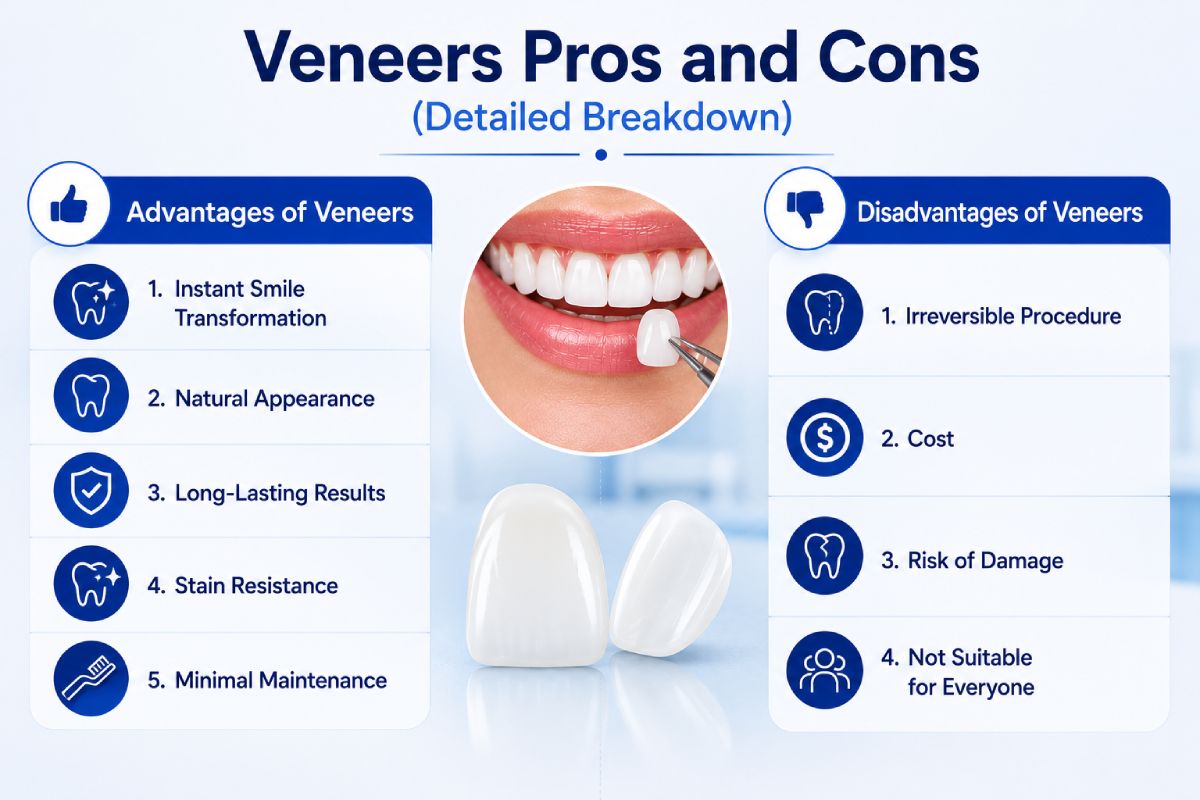
Advantages of Veneers
1. Instant Smile Transformation
Veneers provide one of the fastest ways to improve your smile. Unlike orthodontic treatments that take months, veneers can deliver visible results in just a few visits. They are ideal for patients who want quick aesthetic improvement for personal or professional reasons.
2. Natural Appearance
Modern veneers are designed to mimic natural teeth closely. They replicate the translucency and texture of enamel, making them virtually indistinguishable from real teeth. This level of customization ensures that your smile looks natural rather than artificial.
3. Long-Lasting Results
Porcelain veneers can last over a decade with proper care. They are strong, durable, and resistant to everyday wear. This makes them a long-term solution compared to many other cosmetic treatments.
4. Stain Resistance
Porcelain veneers are highly resistant to staining from coffee, tea, and other common substances. This helps maintain a bright and consistent smile over time without frequent whitening treatments.
5. Minimal Maintenance
Maintaining veneers is simple and similar to natural teeth care.
You only need:
- regular brushing
- flossing
- routine dental checkups
No special maintenance is required beyond good oral hygiene.
Disadvantages of Veneers
1. Irreversible Procedure
Because enamel is removed, veneers are permanent. You cannot return to your natural teeth once the procedure is done.
This makes it a lifelong commitment.
2. Cost
Veneers can be expensive, especially high-quality porcelain ones. Veneers cost in Dubai depends on expertise, materials, and customization.
3. Risk of Damage
Although strong, veneers can chip or crack under excessive pressure. Habits like teeth grinding or biting hard objects increase this risk.
4. Not Suitable for Everyone
Veneers are not ideal for patients with structural dental problems. Proper case selection is critical to ensure long-term success. Understanding the pros and cons helps patients choose the right dental veneers Dubai treatment confidently.
Veneers Side Effects (What You Should Know Before Treatment)
Dental veneers are considered safe and effective, but like any dental procedure, they come with potential side effects and risks. Understanding these in advance helps you make a more informed decision and avoid unrealistic expectations.
Most side effects are mild and temporary, but some long-term considerations are important.
Short-Term Veneers Side Effects
After veneer placement, patients may experience temporary sensitivity and mild discomfort. This happens because a thin layer of enamel is removed during preparation, exposing the underlying dentin slightly.
Common short-term effects include:
- sensitivity to hot and cold foods
- Mild gum irritation around treated teeth
- slight discomfort when biting initially
These symptoms usually settle within a few days as your mouth adjusts. Proper post-treatment care and following your dentist’s instructions can minimize these effects.
Long-Term Veneers Side Effects and Risks
Long-term issues are rare but can occur if veneers are not properly planned or maintained.
Possible concerns include:
- veneers loosening or detaching over time
- bite imbalance if the alignment is not accurate
- gum recession exposing veneer margins
- increased wear if teeth grinding is present
These issues are often linked to poor technique or a lack of proper maintenance. Choosing an experienced cosmetic dentist significantly reduces these risks.
Tooth Sensitivity After Veneers
Some patients experience ongoing sensitivity, especially if enamel removal is slightly deeper than required. This sensitivity is usually manageable and decreases over time.
In most cases:
- Sensitivity is mild and temporary
- Protective dental veneers bonding reduces exposure
- Desensitizing toothpaste may help
Sensitivity is a manageable side effect and not a common long-term concern.
How Long Do Veneers Last?
Longevity is one of the biggest factors when deciding whether veneers are worth it. While veneers are durable, their lifespan depends on several important factors.
Porcelain Veneers Lifespan
Porcelain veneers are known for their durability and strength.
On average:
- They last 10–15 years
- Many cases last even longer with proper care
- They maintain their appearance over time
Their resistance to staining and wear makes them a long-term cosmetic solution.
Composite Veneers Lifespan
Composite veneers have a shorter lifespan than porcelain veneers.
Typically:
- They last 5–7 years
- They may require polishing or repairs
- They are more prone to staining
They are suitable for temporary or budget-conscious treatments.
Factors That Affect Veneers’ Longevity
The lifespan of veneers is not fixed. It depends on how well they are maintained.
Key factors include:
- oral hygiene habits
- diet (hard or staining foods)
- teeth grinding or clenching
- regular dental checkups
- quality of placement
Proper care can significantly extend the life of your veneers. Knowing how long veneers last helps patients choose durable dental veneers Dubai treatments confidently.
Dental Veneers Cost in Dubai
Cost is one of the most searched topics when patients consider veneers. However, understanding cost requires looking beyond just numbers.
What Influences Veneers Cost in Dubai
The cost of veneers varies based on multiple factors, including clinical and aesthetic considerations.
Important factors include:
- type of material (porcelain vs composite)
- number of teeth being treated
- dentist’s expertise and specialization
- clinic technology and equipment
- level of customization and smile design
Each of these factors contributes to the final treatment cost.
Why Veneers Can Be Expensive
Veneers involve precision, customization, and high-quality materials.
The cost reflects:
- detailed smile design planning
- lab fabrication for porcelain veneers
- advanced bonding techniques
- long-term durability
You are not just paying for the veneer; you are investing in the expertise and outcome.
Cost vs Value Perspective
While veneers may seem expensive upfront, they offer long-term benefits.
Compared to repeated cosmetic treatments:
- Veneers require fewer replacements
- results last longer
- Confidence improvement is immediate
Veneers are often considered a long-term investment rather than a short-term expense.
Veneers vs Other Treatments
Many patients considering cosmetic dentistry are confused about the different treatment options. While veneers are highly popular, they are not always the only or best solution depending on your dental condition.
Understanding how veneers compare to other treatments helps you make a more informed decision. Each treatment has a different purpose; some focus on function, while others focus on aesthetics. The key is choosing the right treatment based on your goals, not just trends.
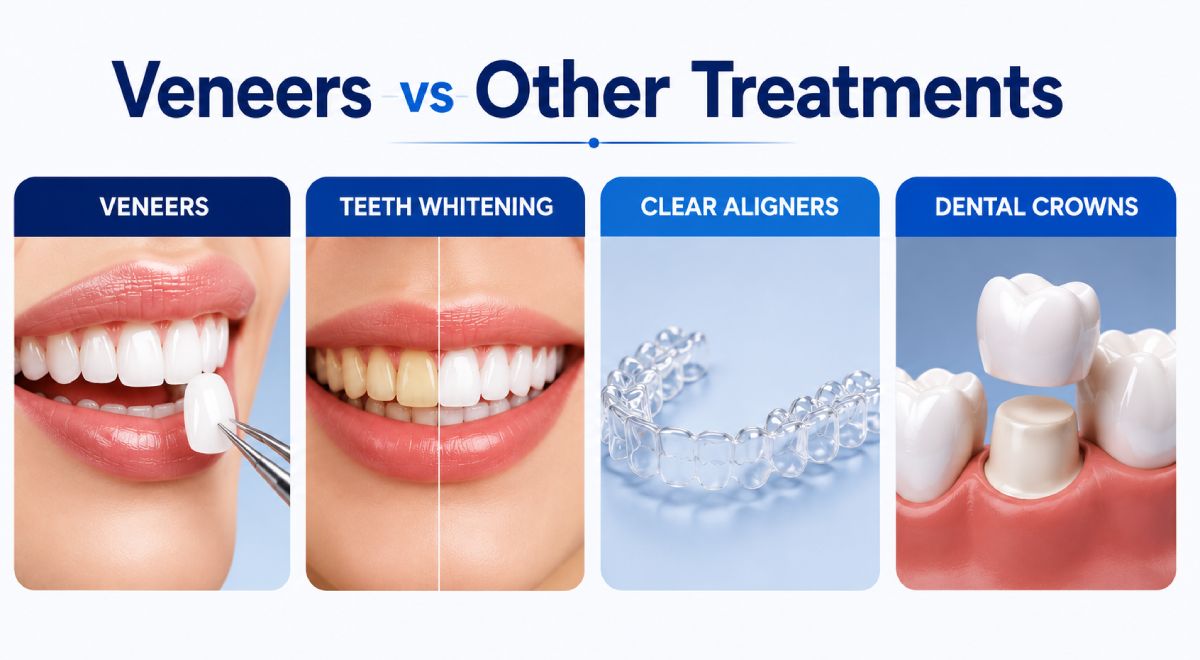
Veneers vs Teeth Whitening
Teeth whitening is one of the simplest and most common cosmetic treatments. It works by removing stains from the surface of the teeth and slightly lightening their color.
However, whitening has limitations. It only improves color and does not change the shape, size, or alignment of your teeth. It is also not effective for deep stains or discoloration caused by internal tooth damage.
Veneers Offer More Comprehensive Results
Veneers go beyond whitening by addressing multiple aesthetic concerns at once.
They can:
- permanently change tooth color
- reshape uneven teeth
- close small gaps
- improve symmetry
Unlike whitening, veneers provide long-term results and are not affected by deep staining. Whitening is a surface-level improvement, while veneers provide a complete smile transformation.
Veneers vs Clear Aligners
Clear aligners are designed to straighten teeth gradually by applying controlled pressure over time. They are ideal for correcting alignment issues such as crowding, spacing, and bite problems.
However, aligners do not improve tooth color, shape, or surface imperfections. Even after alignment, additional cosmetic treatment may be needed to enhance the overall appearance. Veneers Focus on Immediate Aesthetic Enhancement. Veneers provide instant visual improvement without the need for long treatment timelines.
They can:
- mask minor alignment issues visually
- improve tooth shape and proportions
- enhance color and brightness
While aligners focus on correcting function, veneers focus on improving appearance. Aligners are best for structural correction, while veneers are ideal for cosmetic transformation.
Veneers vs Dental Crowns
Dental crowns are restorative treatments that cover the entire tooth. They are typically used when a tooth is damaged, weakened, or has undergone root canal treatment. Crowns provide strength and protection, making them essential for restoring function rather than just appearance.
Veneers Are More Conservative
Veneers cover only the front surface of the tooth, preserving more of the natural tooth structure.
They are used when:
- Teeth are healthy but cosmetically imperfect
- Minimal tooth reduction is preferred
- Aesthetic improvement is the primary goal
Crowns require more tooth preparation and are generally recommended when structural support is needed. Veneers are a conservative cosmetic option, while crowns are a functional restorative solution.
Who Is the Right Candidate for Veneers?
Not every patient is suitable for veneers, and choosing the right candidate is critical for long-term success. Veneers are primarily a cosmetic treatment, so the underlying dental health must be stable.
A proper consultation helps determine whether veneers will deliver the desired results or if alternative treatments are more appropriate.
Ideal Candidates for Veneers
You are a good candidate for veneers if your teeth are structurally sound but have aesthetic concerns. Veneers work best when the goal is to improve appearance rather than repair damage.
Ideal candidates typically:
- have healthy enamel and strong teeth
- have discoloration that does not respond to whitening
- have minor gaps or uneven spacing
- want a symmetrical and balanced smile
- maintain good oral hygiene
These patients usually achieve the most predictable and long-lasting results. Veneers are ideal for patients seeking cosmetic enhancement without major structural correction.
Non-Ideal Candidates for Veneers
Veneers may not be suitable for patients with underlying dental problems that need to be addressed first. Applying veneers without treating these issues can lead to failure or complications.
You may not be a suitable candidate if:
- You have active gum disease or infection
- Your teeth are severely misaligned
- Enamel is too thin to support veneers
- You grind or clench your teeth frequently
- You have untreated cavities
In such cases, treatments like orthodontics, gum therapy, or restorative procedures may be required before veneers. Proper diagnosis is essential to ensure veneers are the right long-term solution.
Maintenance After Veneers (Long-Term Care Guide)
Veneers are low-maintenance, but proper care is essential to ensure they last as long as possible. Many patients assume veneers do not require attention, but long-term success depends on daily habits and professional care.
Daily Care Routine
Maintaining veneers is similar to maintaining natural teeth, but consistency is important.
Recommended daily habits include:
- brushing twice daily using a soft-bristle toothbrush
- flossing regularly to prevent gum issues
- using non-abrasive toothpaste to protect the veneer surface
Good oral hygiene prevents plaque buildup and helps maintain both the veneers and the surrounding gums.
Lifestyle Considerations
Certain habits can reduce the lifespan of veneers if not controlled.
Patients should avoid:
- biting hard objects like ice or pens
- using teeth as tools (opening packages)
- excessive consumption of staining substances
- smoking, which affects overall oral health
These habits can lead to chipping, staining, or damage over time. Small lifestyle changes can significantly improve veneer longevity.
Professional Care and Checkups
Regular dental visits are essential to monitor the condition of your veneers and overall oral health.
During checkups, dentists:
- Check for early signs of wear or damage
- clean areas that are difficult to reach
- Ensure gums remain healthy
- make minor adjustments if needed
Routine visits help prevent small issues from becoming major problems. Professional care plays a key role in maintaining long-term results.
Common Myths About Veneers
Misconceptions about veneers often prevent patients from making informed decisions. Clearing these myths helps build trust and confidence.
Myth 1: Veneers Look Fake
This belief comes from older or poorly done cases where veneers appeared overly white or bulky.
Modern veneers are:
- customized to match natural teeth
- designed with proper translucency
- shaped according to facial features
When done correctly, veneers blend seamlessly with your smile. High-quality veneers look natural and enhance your appearance without looking artificial.
Myth 2: Veneers Damage Teeth
While a small amount of enamel is removed, this is a controlled and minimal process. It is done to ensure proper bonding and a natural appearance.
When performed by an experienced dentist:
- Tooth structure is preserved
- bonding is secure
- long-term health is maintained
Veneers do not damage teeth when properly planned and executed.
Myth 3: Veneers Are Only for Celebrities
Veneers are often associated with celebrity smiles, but they are widely accessible today.
They are:
- customizable based on budget and needs
- available in different materials
- suitable for everyday patients
Many people choose veneers to improve confidence in both personal and professional life. Veneers are no longer exclusive; they are a practical solution for many patients.
Frequently Asked Questions
Are veneers worth it in Dubai?
Yes, veneers are worth it for patients looking for long-term aesthetic improvement. With advanced clinics and experienced dentists, results can be highly natural and durable.
How much do veneers cost in Dubai?
The cost varies depending on the material, the number of teeth, and the clinic’s expertise. Porcelain veneers are more expensive but offer longer-lasting results.
Do veneers require special care?
No special care is required beyond regular oral hygiene. However, avoiding damaging habits helps extend their lifespan.
Can veneers be removed later?
Veneers are not reversible because enamel is removed. Replacement is possible, but removal without replacement is not recommended.
Do veneers feel like natural teeth?
Yes, after a short adjustment period, veneers feel very similar to natural teeth in daily use.
Final Conclusion: Are Veneers Worth It?
The answer depends on your expectations and goals.
Veneers are worth it if you want:
- immediate smile transformation
- long-lasting aesthetic results
- improved confidence
However, they require commitment, proper care, and expert placement. When done correctly, veneers are one of the most effective cosmetic dental solutions available today.
Book Your Veneers Consultation in Dubai
Thinking about improving your smile with veneers?
At Bay Avenue Dental Centre, we offer:
- personalized smile design
- advanced digital planning
- expert cosmetic dentists
- natural-looking results
Book your consultation today and discover if veneers are right for you.