
Best Orthodontist in Dubai: Treatments, Timelines, Process & What to Expect (2026 Complete Guide)
Introduction
A healthy smile is about much more than having straight teeth. Proper tooth alignment affects the way you chew, speak, clean your teeth, and even how your jaw functions every day. While many people associate orthodontic treatment with cosmetic improvements, the primary goal of orthodontics is to create a healthy bite that supports long-term oral health.
Today, more children, teenagers, and adults are choosing orthodontic treatment than ever before. Advances in technology have made treatment more comfortable, more discreet, and more predictable. Modern orthodontic options such as clear aligners, ceramic braces, and advanced metal braces allow patients to improve their smiles without significantly affecting their daily lives.
If you have been searching for the best orthodontist in Dubai, you have probably come across many clinics offering similar treatments. Some focus on braces, while others promote clear aligners or invisible orthodontic solutions. With so many options available, it can be difficult to understand what an orthodontist actually does, when you should see one, and how to choose the right specialist.
Many patients also wonder whether orthodontic treatment is only for teenagers. The answer is no. Adults of all ages can benefit from orthodontic care, provided their teeth and gums are healthy enough to support treatment. In fact, adult orthodontics has become one of the fastest-growing areas in modern dentistry, especially among professionals seeking discreet treatment options.
Choosing a specialist orthodontist in Dubai is an important decision because orthodontic treatment typically lasts several months or even years. The expertise of your orthodontist directly influences treatment planning, comfort, efficiency, and the long-term stability of your results.
In this comprehensive guide, you’ll learn:
- what an orthodontist does
- who should visit an orthodontist
- common orthodontic problems
- what happens during your first consultation
- diagnostic technology used by modern orthodontists
- how treatment planning works
- what to expect throughout your orthodontic journey
By understanding the complete process, you’ll be better prepared to make informed decisions about your oral health and choose the right orthodontic specialist for your needs. An orthodontist focuses on correcting tooth and jaw alignment to improve function, comfort, and long-term oral health.
What Does an Orthodontist Actually Do?
Many people believe an orthodontist simply “puts braces on teeth.” While braces and aligners are certainly important tools, orthodontics is much more complex than straightening crooked teeth. Orthodontists specialize in diagnosing, preventing, and correcting problems involving the alignment of teeth, jaws, and facial structures. Their work combines science, biomechanics, facial aesthetics, and long-term treatment planning to create smiles that not only look attractive but also function efficiently.
An orthodontist specialist studies how teeth move, how jaws develop, and how different bite relationships influence oral health throughout life. Unlike cosmetic dentistry, which primarily focuses on appearance, orthodontics aims to improve both function and aesthetics simultaneously.Orthodontic treatment is about creating harmony between your teeth, jaws, muscles, and facial structure.
Orthodontist vs General Dentist
Many patients are unsure whether they should visit a general dentist or an orthodontist. For patients with complex bite or alignment concerns, consulting an orthodontist specialist ensures treatment is based on advanced diagnosis and long-term planning.
A general dentist provides comprehensive dental care, including:
- routine checkups
- fillings
- teeth cleaning
- crowns
- root canal treatment
- preventive care
An orthodontist first completes dental school and then undergoes several additional years of specialized training focused entirely on tooth movement, jaw development, and bite correction. This advanced education allows orthodontists to manage complex orthodontic problems that require detailed planning and long-term monitoring.
For example, while a general dentist may identify crowding or bite issues during a routine examination, an orthodontist develops the detailed treatment plan required to correct those problems safely and effectively. Every orthodontist is a dentist, but not every dentist is an orthodontist.
Orthodontics Is About More Than Straight Teeth
Patients often seek orthodontic treatment because they dislike the appearance of crooked teeth. However, orthodontists also evaluate how those teeth function together.
Poor alignment can contribute to:
- uneven tooth wear
- difficulty chewing
- speech problems
- jaw discomfort
- gum recession
- plaque accumulation
- increased cavity risk
Correcting alignment improves much more than appearance.
For example, crowded teeth create areas that are difficult to clean. Even patients with excellent brushing habits may struggle to remove plaque from overlapping teeth, increasing the likelihood of tooth decay and gum disease.
Similarly, bite problems may cause excessive pressure on certain teeth, leading to premature enamel wear or fractures.
Orthodontic treatment supports healthier teeth for decades not just a straighter smile.
Orthodontists Also Treat Jaw Alignment
One of the least understood aspects of orthodontics is jaw alignment. Patients searching for orthodontist jaw alignment often believe jaw problems always require surgery. In reality, many jaw alignment issues can be improved using orthodontic treatment alone, particularly in growing children and selected adult cases.
Orthodontists evaluate:
- upper jaw position
- lower jaw position
- bite relationship
- facial symmetry
- growth patterns
Jaw alignment influences:
- chewing efficiency
- speech
- facial appearance
- smile balance
- long-term oral function
Some patients with significant jaw discrepancies may require combined orthodontic and surgical treatment, while others achieve excellent results using braces or aligners alone. Proper jaw alignment is essential for comfortable function and long-term bite stability.
Who Should See an Orthodontist?
One of the biggest myths about orthodontics is that it is only for teenagers. In reality, orthodontic treatment benefits patients of all ages. Children may require early intervention to guide jaw development, teenagers often begin comprehensive orthodontic treatment after permanent teeth erupt, and adults increasingly choose orthodontics to improve both aesthetics and oral health. The treatment approach varies depending on age, growth, and the complexity of the orthodontic problem.
Children: Why Early Orthodontic Assessment Matters
Parents searching for a pediatric orthodontist near me should schedule an early evaluation to identify developing bite or jaw concerns before they become more complex. Parents often ask: “When should my child first visit an orthodontist?”
Most orthodontic organizations recommend an initial orthodontic evaluation around the age of 7 years. This does not necessarily mean treatment will begin immediately. Instead, the orthodontist evaluates how the child’s teeth and jaws are developing and identifies problems that may benefit from early intervention.
Examples include:
- crossbites
- severe crowding
- jaw growth discrepancies
- prolonged thumb sucking
- abnormal tooth eruption
- missing or extra teeth
Early evaluation allows orthodontists to monitor development and intervene only when necessary. Early assessment often reduces the severity of future orthodontic problems.
Growth Can Be Used to the Child’s Advantage
Families looking for a pediatric orthodontist near me should consider early assessments to support healthy jaw and tooth development. One unique advantage of treating children is that their jaws are still developing. Orthodontists can sometimes guide jaw growth using specialized appliances, reducing the need for more complex treatment later.
Early treatment may help:
- create space for erupting teeth
- improve jaw relationships
- reduce traumatic bite problems
- simplify future orthodontics
Not every child requires early treatment, but identifying problems during growth provides valuable opportunities.
Teenagers: The Most Common Age for Orthodontic Treatment
Adolescence remains the most common time for comprehensive orthodontic treatment because most permanent teeth have erupted while jaw growth is still continuing. This combination allows orthodontists to achieve highly predictable results.
Teenagers commonly seek treatment for:
- crowded teeth
- spacing
- overbite
- underbite
- crossbite
- protruding teeth
In addition to oral health benefits, orthodontic treatment often improves confidence during an important stage of social development.
Today’s teenagers also have more treatment choices than previous generations, including:
- metal braces
- ceramic braces
- clear aligners
The most appropriate option depends on clinical requirements rather than age alone. The teenage years often provide an ideal opportunity for comprehensive orthodontic correction.
Adults: Orthodontic Treatment Is Never Too Late
One of the fastest-growing areas of orthodontics is adult treatment. Many adults assume they missed their opportunity because they never wore braces during childhood. Fortunately, healthy teeth can often be moved successfully throughout adulthood.
Adults commonly seek orthodontic treatment because of:
- gradual crowding
- relapse after previous braces
- spacing
- smile improvement
- preparation for veneers
- bite problems
- difficulty cleaning crowded teeth
Modern orthodontic solutions such as clear aligners have made treatment far more appealing for adults who prefer discreet options. Adults seeking personalized orthodontic care often choose an experienced Indian orthodontist in Dubai for comprehensive treatment planning and ongoing support throughout their smile transformation.
Adults often appreciate not only the cosmetic improvements but also the long-term oral health benefits of improved alignment. Age is rarely the limiting factor healthy teeth and gums are far more important than the date on your birth certificate.
Common Problems Treated by an Orthodontist
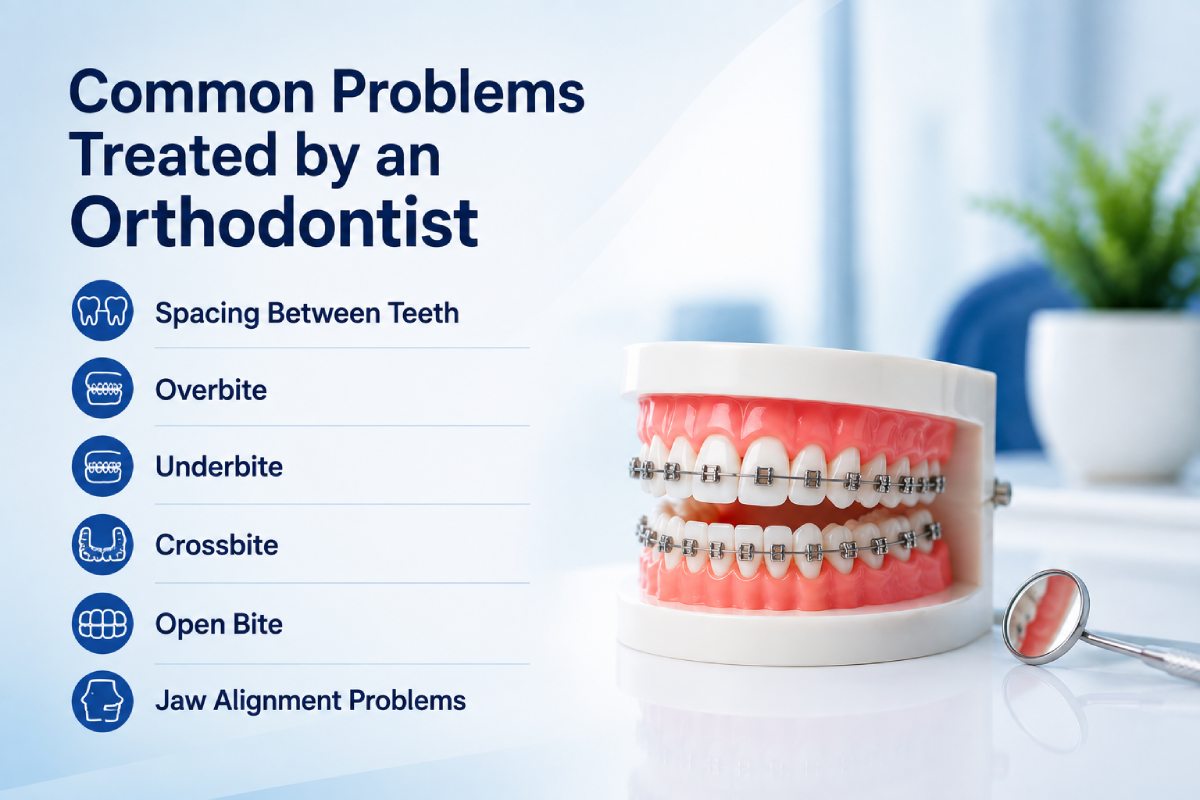
Orthodontists treat a wide range of alignment and bite problems. While every patient is unique, several conditions are seen regularly in clinical practice. Understanding these problems helps patients recognize when professional evaluation may be beneficial.
Crowded Teeth
Crowding occurs when there is insufficient space in the jaw for all teeth to align properly. Instead of erupting into ideal positions, teeth overlap, rotate, or become displaced.
Crowding may result from:
- inherited jaw size
- large teeth
- premature tooth loss
- delayed eruption
- developmental factors
Beyond affecting appearance, crowding makes brushing and flossing more difficult.
Plaque accumulates in areas that are difficult to reach, increasing the risk of:
- tooth decay
- gum disease
- bad breath
- uneven wear
Orthodontic treatment creates better alignment, improving both aesthetics and oral hygiene. Crowded teeth are not just a cosmetic issue they can significantly affect long-term dental health.
Spacing Between Teeth
Spacing occurs when excessive gaps exist between teeth.
Some patients inherit naturally spaced teeth, while others develop spacing because of:
- missing teeth
- abnormal jaw size
- gum disease
- small teeth
- tongue habits
Although spacing may seem like a purely cosmetic concern, large gaps can influence bite function and trap food during eating. Closing these spaces often improves both smile appearance and chewing efficiency.
Overbite
An overbite occurs when the upper front teeth excessively overlap the lower front teeth. While a slight overbite is considered normal, a deep overbite can lead to several functional and aesthetic problems if left untreated. Patients with a significant overbite often experience excessive pressure on the front teeth every time they bite or chew. Over many years, this repeated force can cause enamel wear, tooth fractures, gum recession, and discomfort in the jaw joints.
Common signs of a problematic overbite include:
- excessive overlap of front teeth
- lower teeth barely visible when biting
- worn front teeth
- difficulty biting into certain foods
- jaw fatigue after eating
Treatment depends on the patient’s age, severity of the overbite, and whether jaw growth is still occurring. A specialist orthodontist may recommend:
- metal braces
- clear aligners
- bite-correcting appliances
- elastics
- growth modification (for children)
Correcting an overbite improves chewing efficiency, protects the teeth from unnecessary wear, and creates a more balanced smile. A properly corrected overbite improves both function and long-term oral health, not just appearance.
Underbite
An underbite occurs when the lower jaw or lower teeth extend forward beyond the upper teeth. This changes the normal relationship between the jaws and often affects both facial appearance and bite function. Unlike simple crowding, an underbite usually involves skeletal jaw positioning in addition to tooth alignment. This makes proper diagnosis particularly important.
Patients with an underbite may experience:
- difficulty chewing
- speech challenges
- uneven tooth wear
- jaw discomfort
- facial imbalance
Children often benefit from early orthodontic evaluation because jaw growth can sometimes be guided before skeletal development is complete. Adults with severe underbites may require a combination of orthodontic treatment and corrective jaw surgery, while mild cases can often be managed with braces or clear aligners. Early diagnosis gives orthodontists more opportunities to manage jaw growth and simplify treatment.
Crossbite
A crossbite occurs when one or more upper teeth bite inside the lower teeth instead of outside them.
This may affect:
- a single tooth
- several teeth
- the entire dental arch
Many patients are unaware they have a crossbite because it may not cause immediate pain.
However, untreated crossbites can contribute to:
- uneven enamel wear
- gum recession
- jaw asymmetry
- shifting of the lower jaw during chewing
- long-term bite instability
For growing children, correcting crossbites early is particularly important because the jaws are still developing.
Treatment options may include:
- braces
- palatal expansion
- clear aligners
- removable appliances
The specific treatment depends on whether the problem involves teeth alone or the underlying jaw structure. Correcting a crossbite early often prevents more complex orthodontic treatment later.
Open Bite
An open bite occurs when the upper and lower front teeth do not touch even when the back teeth are together. Patients with an open bite often find it difficult to bite into foods such as sandwiches, apples, or pizza because the front teeth cannot perform their normal function.
Common causes include:
- prolonged thumb sucking
- tongue thrusting
- prolonged pacifier use
- abnormal jaw growth
- skeletal development patterns
In addition to affecting eating, open bites may contribute to:
- speech difficulties
- increased tooth wear
- chewing inefficiency
- facial imbalance
Treatment varies according to the underlying cause. Children may benefit from habit correction and growth guidance, while adults often require braces, clear aligners, or combined orthodontic treatment. Treating the underlying cause is just as important as closing the gap between the teeth.
Jaw Alignment Problems
Many patients searching online for an orthodontist jaw alignment specialist assume jaw problems only involve surgery.
In reality, orthodontists regularly diagnose and manage jaw alignment conditions using a variety of treatment approaches.
Jaw alignment affects:
- chewing
- speech
- facial symmetry
- smile balance
- long-term bite stability
An orthodontist evaluates:
- upper jaw position
- lower jaw position
- facial profile
- bite relationship
- growth pattern
- muscle function
Some patients benefit from orthodontic appliances that guide jaw growth during childhood. An orthodontist jaw alignment assessment helps identify whether bite concerns can be managed with orthodontic treatment or require a multidisciplinary approach.
Others may require braces or aligners to improve bite relationships. Only the most severe skeletal discrepancies typically require surgical correction. Every jaw alignment problem is different, which is why a detailed orthodontic assessment is essential before treatment begins.
What Happens During Your First Orthodontic Consultation?
Many patients delay visiting an orthodontist because they are unsure what to expect during the first appointment.
In reality, the initial consultation is designed to gather information, evaluate your oral health, and create a personalized treatment plan not to begin treatment immediately.
An experienced specialist orthodontist in Dubai spends considerable time understanding both the clinical condition of your teeth and your personal treatment goals. Rather than recommending braces or aligners immediately, the consultation focuses on diagnosis, education, and planning. Patients searching for an orthodontist close to me should choose a clinic that combines specialist expertise with advanced diagnostic technology. The first consultation lays the foundation for successful orthodontic treatment.
Medical and Dental History Review
Every orthodontic consultation begins with a detailed discussion about your health and dental history. This helps identify factors that may influence treatment planning.
Your orthodontist may ask about:
- previous orthodontic treatment
- dental injuries
- jaw pain
- teeth grinding
- medical conditions
- medications
- allergies
- family history of orthodontic problems
Understanding your medical history helps ensure treatment is both safe and appropriate. For children, the orthodontist may also discuss growth, oral habits, and dental development. A detailed history allows the orthodontist to create a treatment plan tailored specifically to your needs.
Clinical Examination
After reviewing your history, the orthodontist performs a comprehensive examination of your teeth, gums, bite, and facial structure. A thorough evaluation by an orthodontist specialist helps identify bite issues that may not be noticeable during a routine dental examination.
This assessment evaluates:
- tooth alignment
- crowding
- spacing
- bite relationship
- jaw movement
- gum health
- oral hygiene
- tooth wear
Unlike routine dental checkups, orthodontic examinations focus heavily on how the teeth and jaws function together. The orthodontist also observes facial symmetry, smile width, and lip support because these influence treatment planning. Orthodontic diagnosis considers the entire facial structurnot just individual teeth.
Digital Scans and X-Rays
Modern orthodontic clinics increasingly use digital technology instead of traditional impression materials. Digital scans create accurate three-dimensional models of your teeth without uncomfortable impression trays.
Depending on your condition, additional imaging may include:
- panoramic X-rays
- cephalometric X-rays
- CBCT scans
- digital photographs
These records allow the orthodontist to evaluate:
- tooth roots
- jawbone
- impacted teeth
- bite relationships
- skeletal development
High-quality imaging improves diagnosis and allows treatment to be planned with greater precision. Accurate diagnosis begins with accurate records.
Bite Analysis
Bite analysis is one of the most important parts of orthodontic assessment. Rather than simply looking at straightness, the orthodontist studies how your upper and lower teeth fit together.
This includes evaluating:
- overbite
- overjet
- crossbite
- open bite
- midline alignment
- chewing function
Even minor bite discrepancies can influence treatment planning. A smile that appears straight may still require orthodontic correction if the bite is unstable. Healthy bites are just as important as straight teeth.
Discussion of Treatment Options
After completing the examination and reviewing diagnostic records, the orthodontist explains the available treatment options. Many patients prefer consulting an Indian orthodontist in Dubai for personalized communication and a treatment plan tailored to their individual needs.
Rather than recommending the same treatment for every patient, they consider:
- age
- treatment goals
- lifestyle
- complexity
- oral health
- expected compliance
Possible options may include:
- metal braces
- ceramic braces
- clear aligners
- removable appliances
- growth modification appliances
The orthodontist explains the advantages, limitations, expected timelines, and maintenance requirements of each option.
Patients are encouraged to ask questions so they fully understand the recommended treatment plan before making any decisions. Consulting the best orthodontist in Dubai helps ensure your treatment recommendations are based on a detailed diagnosis, your oral health needs, and long-term treatment goals. Orthodontic treatment should always be a shared decision between the patient and the specialist.
Modern Diagnostic Technology Used by Orthodontists
Technology has transformed orthodontics over the past decade. Advanced diagnostic tools allow orthodontists to plan treatment with far greater precision than was possible using traditional methods. While technology cannot replace clinical expertise, it significantly improves diagnosis, communication, and treatment predictability.
Intraoral Digital Scanners
Digital scanners capture thousands of images each second to create a precise three-dimensional model of your teeth.
Compared with traditional impressions, digital scanning offers:
- greater comfort
- higher accuracy
- faster treatment planning
- improved communication with laboratories
These scans are particularly valuable for:
- clear aligners
- retainers
- braces planning
- treatment monitoring
Patients also appreciate being able to see their teeth digitally during consultations.
CBCT Imaging
Cone Beam Computed Tomography (CBCT) provides detailed three-dimensional views of the teeth, jawbone, and surrounding structures.
CBCT may be recommended for patients with:
- impacted teeth
- jaw abnormalities
- missing teeth
- complex orthodontic cases
- surgical planning
The additional information helps orthodontists plan treatment more safely and accurately.
Digital Treatment Simulations
Many modern orthodontic systems allow patients to visualize expected tooth movement before treatment begins.
Using specialized software, orthodontists can demonstrate:
- projected tooth movement
- estimated treatment stages
- anticipated final smile
- bite improvements
These simulations improve patient understanding and make treatment planning more interactive. Technology helps patients better understand their treatment journey while supporting more predictable clinical outcomes.
Looking Ahead
Orthodontic treatment does not begin with braces or aligners it begins with careful diagnosis, personalized planning, and a clear understanding of each patient’s unique needs. A thorough consultation allows your orthodontist to identify the underlying causes of alignment problems and recommend the most appropriate treatment approach.
Orthodontic Treatment Options Explained
One of the first questions patients ask after an orthodontic consultation is: “Which treatment is best for me?” The answer depends on much more than appearance or cost.
An experienced specialist orthodontist in Dubai selects treatment based on your:
- bite relationship
- tooth alignment
- jaw position
- oral health
- age
- lifestyle
- treatment goals
- expected level of cooperation
Modern orthodontics offers several effective treatment options, each designed for different clinical situations. Understanding how these treatments work helps patients make informed decisions rather than choosing based only on advertising or social media trends. The best orthodontic treatment is not necessarily the newest or most expensive it is the one that provides the healthiest, safest, and most predictable outcome for your specific case.
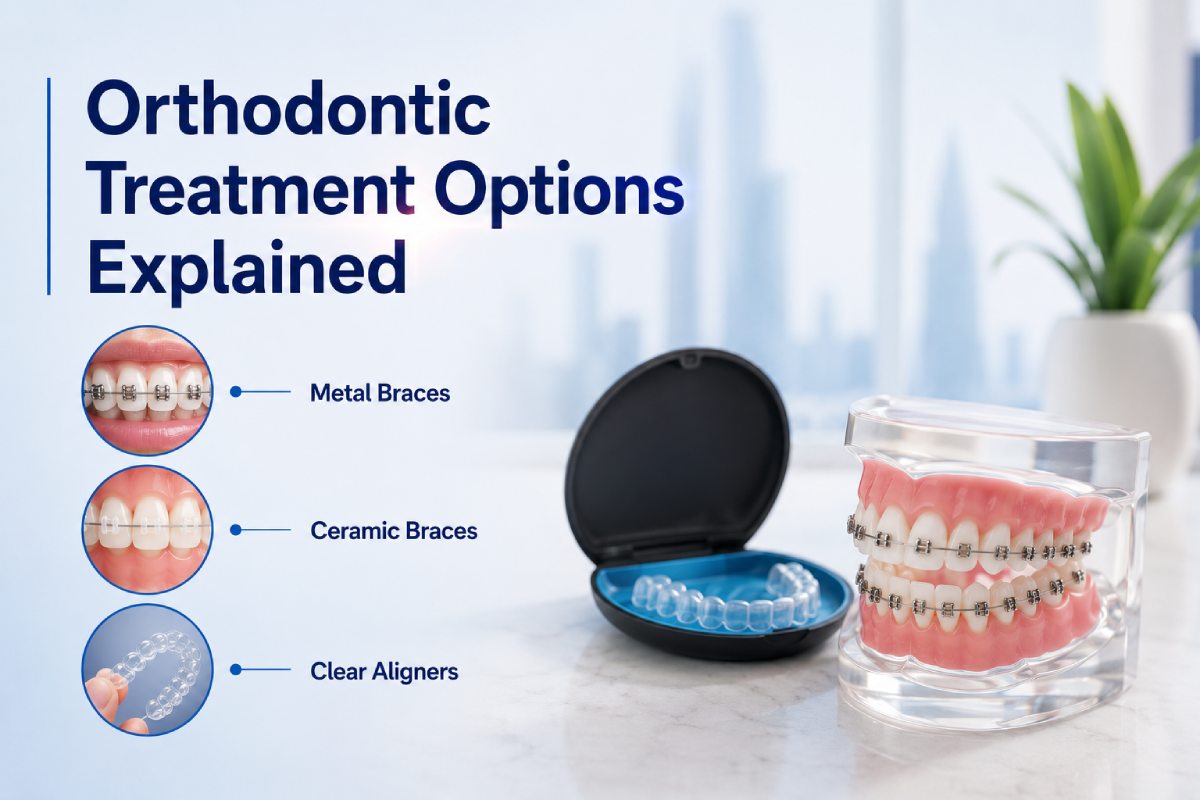
Metal Braces
Metal braces remain one of the most reliable and effective orthodontic treatments available. Although many patients assume they have become outdated because of clear aligners, they continue to be the preferred option for many moderate and complex orthodontic cases.
Today’s metal braces are significantly smaller, lighter, and more comfortable than the bulky braces used decades ago. Advances in orthodontic materials have reduced friction between brackets and wires, allowing teeth to move more efficiently while improving patient comfort.
Unlike removable appliances, metal braces remain fixed to the teeth throughout treatment. This means they work continuously without relying on patient discipline. Metal braces remain the gold standard for treating complex orthodontic problems.
How Metal Braces Work
Metal braces consist of brackets bonded to each tooth and connected by a specialized orthodontic wire.
During regular appointments, the orthodontist adjusts or replaces the wire to apply carefully controlled forces that gradually move the teeth into healthier positions.
Each adjustment is based on the planned sequence of tooth movement developed during treatment planning.
These gradual movements stimulate natural bone remodeling around the roots of the teeth, allowing them to shift safely over time. The process may appear simple from the outside, but every adjustment is carefully calculated to achieve precise results while protecting surrounding tissues.
Advantages of Metal Braces
Metal braces continue to be recommended because they provide exceptional control over tooth movement.
Benefits include:
- highly effective for simple and complex cases
- excellent control of bite correction
- suitable for severe crowding
- effective for rotated teeth
- continuous tooth movement
- no need to remember wearing appliances
- long history of predictable success
Because braces remain attached throughout treatment, they eliminate concerns about patients forgetting to wear removable appliances. This consistency often makes treatment more predictable, particularly for teenagers. For complicated orthodontic cases, metal braces frequently provide the highest level of precision.
Limitations of Metal Braces
Although metal braces offer outstanding clinical performance, they also present certain challenges. Patients should understand that braces require adjustments to daily habits.
Common considerations include:
- visible appearance
- temporary soreness after adjustments
- more careful oral hygiene
- dietary restrictions
- additional cleaning around brackets
Sticky foods, hard candies, chewing ice, and similar foods should generally be avoided because they may damage brackets or wires. Fortunately, these challenges become much easier to manage after the first few weeks of treatment.
Ceramic Braces
Ceramic braces function similarly to metal braces but use tooth-coloured or clear brackets instead of stainless steel.
This makes them considerably less noticeable while maintaining many of the advantages of traditional braces.
Many adult patients appreciate ceramic braces because they provide fixed orthodontic treatment without the highly visible appearance of metal brackets.
For patients who want effective treatment while maintaining a more natural appearance, ceramic braces often provide an excellent compromise.
Benefits of Ceramic Braces
Ceramic braces offer several aesthetic advantages.
These include:
- less noticeable appearance
- effective for moderate to complex cases
- fixed treatment
- similar mechanics to metal braces
- suitable for adults seeking discreet treatment
Because the brackets blend more naturally with tooth colour, many patients feel more comfortable smiling throughout treatment.
Considerations Before Choosing Ceramic Braces
Although ceramic braces are attractive, they are not always the ideal choice.
Patients should know that ceramic brackets may:
- cost more than metal braces
- require careful cleaning
- be slightly more fragile
- stain if elastic modules are not changed regularly
An experienced orthodontist will discuss whether ceramic braces are appropriate based on your individual treatment needs.
Clear Aligners
Clear aligners have transformed orthodontics over the past decade. Instead of using brackets and wires, treatment involves a series of transparent trays that gradually move the teeth according to a digitally planned sequence. Their nearly invisible appearance has made them one of the most popular orthodontic treatments among adults.
Patients searching for the best orthodontist near me frequently ask whether aligners can replace braces completely.
The answer depends on the complexity of the case. Clear aligners provide outstanding results for many patients, but careful case selection remains essential.
How Clear Aligners Work
Treatment begins with digital scanning and computerized treatment planning. The orthodontist designs the complete sequence of tooth movement before the first aligner is even manufactured. Each aligner is worn for approximately one to two weeks before progressing to the next stage.
Patients should generally wear aligners:
20–22 hours each day to achieve predictable results. The gentle pressure generated by each aligner gradually shifts teeth into their planned positions. Because every aligner is custom manufactured, treatment is highly individualized.
Advantages of Clear Aligners
Many adults choose clear aligners because they integrate easily into modern lifestyles.
Benefits include:
- nearly invisible appearance
- removable during meals
- easier brushing and flossing
- greater comfort
- fewer emergency appointments
- no wires or brackets
- digital treatment planning
Professionals who attend meetings, presentations, or public events often appreciate being able to straighten their teeth without drawing attention to treatment.
Limitations of Clear Aligners
Aligners require patient cooperation. Unlike braces, they only work when worn consistently.
Patients who frequently remove them may experience:
- slower tooth movement
- longer treatment
- compromised results
- additional aligners
Very complex orthodontic movements may also be better managed using fixed appliances. Patient commitment is one of the biggest factors influencing aligner success.
Removable Orthodontic Appliances
Not every orthodontic patient requires braces or aligners immediately. Children, in particular, sometimes benefit from removable appliances designed to guide jaw growth or correct developing bite problems.
These appliances may be recommended for:
- expanding narrow dental arches
- correcting crossbites
- guiding jaw development
- maintaining space
- eliminating harmful oral habits
Because children’s jaws are still developing, early intervention may reduce the need for more extensive treatment later.
Orthodontists carefully monitor growth before deciding whether removable appliances are appropriate.
Retainers: Protecting Your New Smile
Many patients believe orthodontic treatment ends when braces are removed or the final aligner is completed. In reality, retention is one of the most important phases of treatment. Without retainers, teeth naturally tend to drift toward their previous positions. This occurs because surrounding bone and soft tissues require time to stabilize around the newly aligned teeth. Retainers help preserve treatment results while the supporting structures adapt. Straightening teeth is only half the journey maintaining them is equally important.
Types of Retainers
Orthodontists typically recommend one of two retention methods.
Removable Retainers
These clear appliances are worn according to the orthodontist’s instructions. Initially, they are often worn most of the day before gradually transitioning to nighttime use.
Advantages include:
- easy cleaning
- comfortable
- removable
- nearly invisible
However, they can be misplaced if patients are not careful.
Fixed Retainers
A fixed retainer consists of a thin wire bonded behind the front teeth. Because it remains in place continuously, it helps maintain alignment without requiring daily patient compliance. Fixed retainers are particularly useful for teeth that have a higher tendency to relapse. The orthodontist will determine whether removable retainers, fixed retainers, or a combination of both is most appropriate.
How Long Does Orthodontic Treatment Take?
One of the most common questions patients ask is: “How long will I need braces or aligners?” The answer depends on several clinical factors.
Rather than promising a fixed timeline, orthodontists estimate treatment based on:
- complexity of alignment
- bite correction
- patient age
- appliance type
- oral health
- treatment compliance
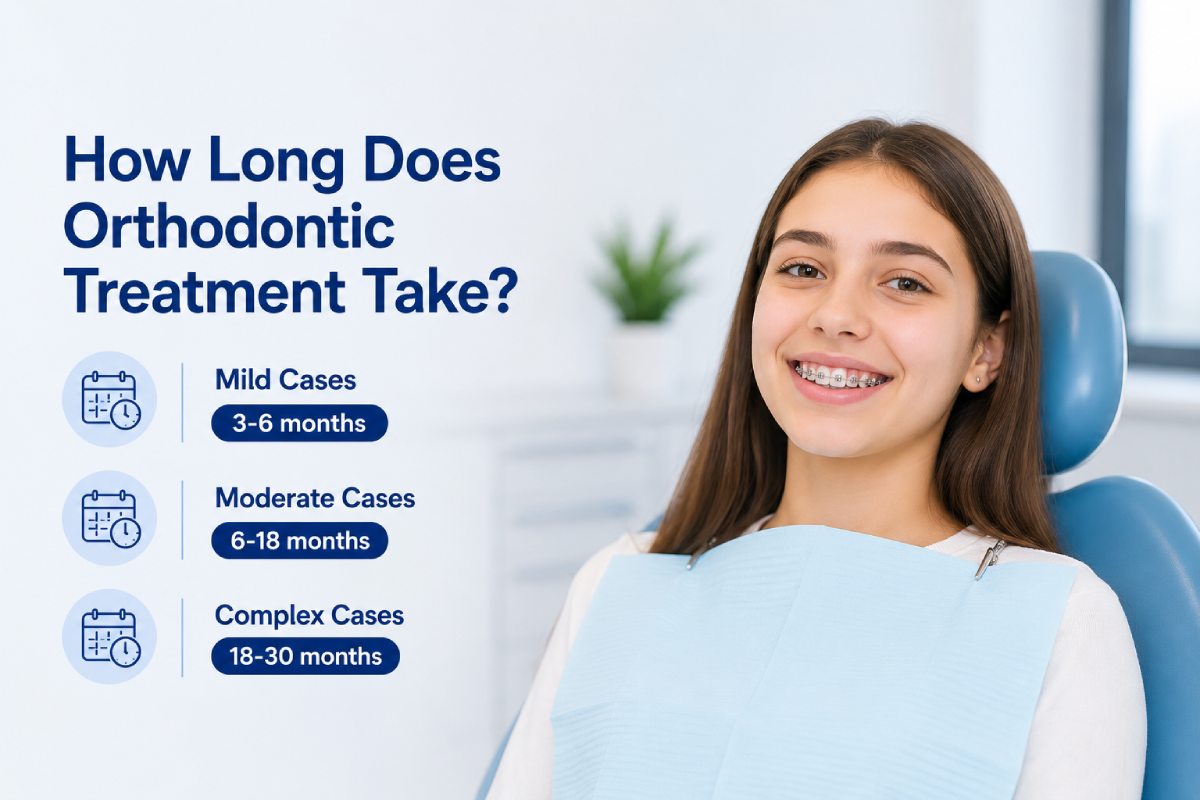
General treatment timelines include:
Mild Cases
Examples:
- small gaps
- minor crowding
Typical duration: 3-6 months
Moderate Cases
Examples:
- moderate crowding
- spacing
- mild bite correction
Typical duration: 6-18 months
Complex Cases
Examples:
- severe crowding
- significant bite problems
- jaw discrepancies
- impacted teeth
Typical duration: 18-30 months
Some highly complex cases may require additional time depending on individual circumstances. Successful orthodontic treatment prioritizes healthy tooth movement rather than rushing the process.
Cost Factors in Orthodontic Treatment
Patients often ask why orthodontic treatment prices vary between clinics. The answer lies in the complexity of treatment rather than simply the appliance used. Several factors influence overall treatment costs.
Type of Appliance
Different appliances require different materials and treatment planning.
General ranges include:
- Metal braces: AED 4,500–12,000
- Ceramic braces: AED 6,500–15,000
- Clear aligners: AED 8,000–20,000+
These ranges vary depending on individual treatment requirements.
Treatment Complexity
Patients with:
- impacted teeth
- severe crowding
- jaw discrepancies
- bite correction
generally require longer and more detailed treatment. This increases both treatment time and overall cost.
Technology Used
Clinics investing in advanced technology often provide:
- digital scanning
- CBCT imaging
- computerized treatment planning
- digital simulations
These technologies improve diagnosis and treatment precision while contributing to treatment costs.
How to Choose the Best Orthodontist in Dubai
Choosing an orthodontist is about much more than finding the lowest price or the closest clinic. Since orthodontic treatment typically lasts many months, selecting the right specialist has a major impact on your experience and long-term results.
When comparing orthodontists, consider:
- specialist qualifications
- years of orthodontic experience
- before-and-after cases
- digital technology
- communication style
- personalized treatment planning
- patient reviews
- long-term follow-up care
A good orthodontist should explain all suitable treatment options, discuss their advantages and limitations, and answer your questions without pressure. Patients searching for the best orthodontist near me should compare specialist qualifications, clinical experience, and personalized treatment planning rather than choosing a clinic based on convenience alone. The best orthodontist is one who combines clinical expertise, modern technology, clear communication, and a patient-centered approach.
Finding an Orthodontist Near You
Many patients search online for:
- best orthodontist near me
- orthodontist close to me
- Indian orthodontist in Dubai
- pediatric orthodontist near me
While convenience is important, it should not be the only deciding factor. While searching for an orthodontist close to me, consider the specialist’s qualifications, treatment approach, and long-term patient care in addition to clinic location. Since orthodontic treatment involves multiple review appointments, choosing a clinic that is both accessible and experienced can make the treatment journey much easier.
Consider:
- proximity to home or work
- parking availability
- public transport access
- appointment flexibility
- emergency support
- reputation
- specialist experience
Patients specifically looking for an Indian orthodontist in Dubai often value communication in familiar languages and cultural comfort, but the most important considerations remain professional qualifications, clinical expertise, and the quality of care provided.
Final Thoughts
Orthodontic treatment is a long-term investment in both your smile and your oral health. If you are looking for an orthodontist close to me, prioritize experience, personalized treatment planning, and ongoing follow-up care for the best long-term results.
Whether you require braces, clear aligners, jaw alignment correction, or early orthodontic care for your child, the first step is a thorough consultation with an experienced orthodontist.
The right treatment plan should be personalized to your needs, supported by an accurate diagnosis, and focused on achieving healthy, stable, and natural-looking results.
A well-planned orthodontic journey not only creates straighter teeth but also improves bite function, oral hygiene, facial balance, and long-term dental health. Choosing the right orthodontist is one of the most important decisions you can make for your smile, as expert diagnosis and personalized treatment planning form the foundation of successful, long-lasting orthodontic results.
Frequently Asked Questions
How do I know if I need an orthodontist or a general dentist?
A general dentist provides routine dental care such as checkups, fillings, and preventive treatments. If you have concerns about crooked teeth, bite problems, jaw alignment, spacing, or crowding, an orthodontist has specialized training to diagnose and treat these issues with braces, aligners, and other orthodontic appliances.
What is the best age to visit an orthodontist?
Children should ideally have their first orthodontic evaluation around the age of seven to monitor jaw and tooth development. However, orthodontic treatment can be successful at almost any age, and many adults choose braces or clear aligners to improve their smile and oral health.
How long does orthodontic treatment usually take?
Treatment duration depends on the complexity of your case. Mild alignment issues may take 3–6 months, moderate cases 6–18 months, and complex orthodontic problems 18-30 months or longer. Your orthodontist will provide a personalized timeline after a full evaluation.
Are clear aligners as effective as braces?
Clear aligners are highly effective for many mild to moderate orthodontic cases when worn consistently. However, patients with severe crowding, complex bite problems, or impacted teeth may achieve better results with fixed braces.
Is orthodontic treatment painful?
Patients may experience mild soreness or pressure for a few days after braces are adjusted or when changing to a new aligner. This discomfort is temporary and generally manageable with soft foods and over-the-counter pain relief if needed.
Book Your Orthodontic Consultation
If you’re looking for the best orthodontist in Dubai to improve your smile, bite, or jaw alignment, our experienced orthodontic team at Bay Avenue Dental Centre offers personalized treatment plans using advanced diagnostic technology and modern orthodontic solutions.
Why Choose Bay Avenue Dental Centre?
If you are looking for the best orthodontist in Dubai, choosing a clinic that combines specialist expertise, advanced technology, and personalized treatment planning can help you achieve healthy, long-lasting results.
- Specialist orthodontic care for children, teens, and adults
- Advanced digital scans and treatment planning
- Metal braces, ceramic braces, and clear aligners
- Personalized treatment plans tailored to your needs
- Convenient Business Bay location with flexible appointments
- Ongoing support from consultation through retention
Schedule your orthodontic consultation today and take the first step toward a healthier, straighter smile with expert care designed around your long-term oral health goals.