
What Makes a Pediatric Dentist the Right Choice for Anxious Children?
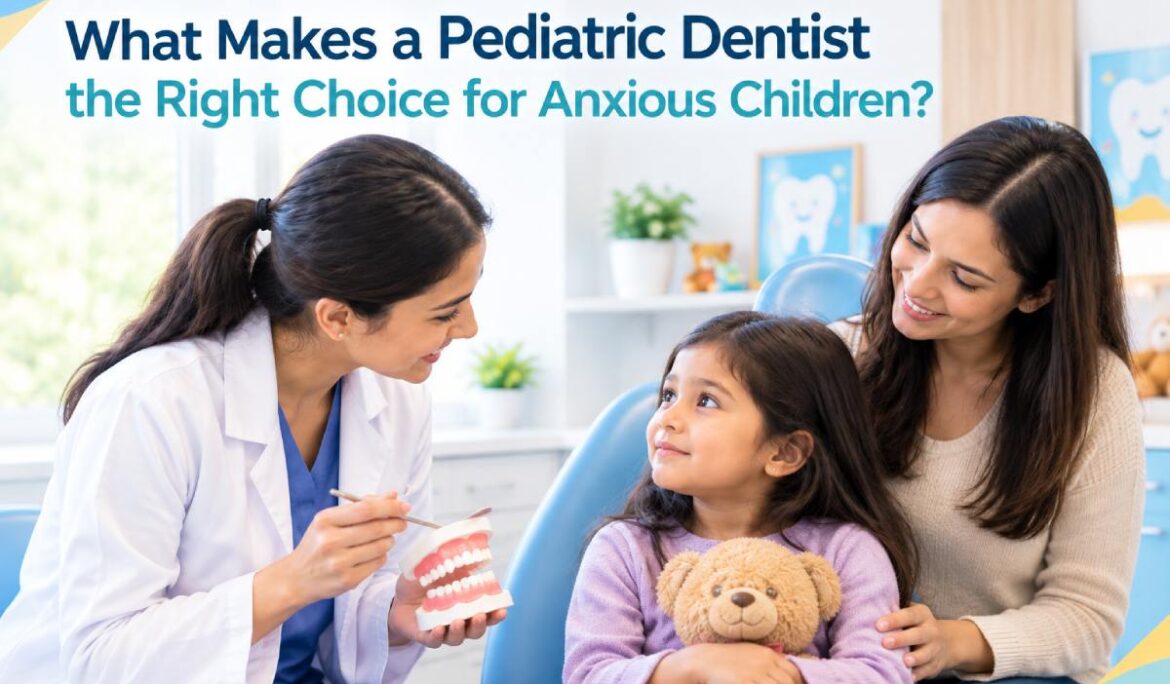
Introduction: Choosing a Pediatric Dentist for an Anxious Child Is About More Than Finding a Convenient Clinic
Finding a pediatric dentist in Dubai is relatively easy. Finding the right dentist for a child who becomes frightened, refuses to sit in the dental chair, cries during examinations, or has difficulty coping with unfamiliar sounds and sensations requires a different level of consideration.
For an anxious child, the quality of the treatment is only one part of the experience. The dentist’s communication style, understanding of child development, behavior-management approach, appointment structure, clinical environment, and ability to adapt treatment can all influence how a child responds to dental care.
Parents searching for the best pediatric dentist in Dubai should therefore look beyond online ratings or proximity alone. A good pediatric dental team should be able to determine why a child is anxious, introduce treatment at an appropriate pace, and choose the least restrictive approach that allows necessary dental care to be provided safely.
This becomes particularly important when a child needs fillings, treatment for dental infection, a tooth extraction, emergency care, orthodontic assessment, or more complex treatment. For families searching for a pediatric dentist close to me, a good pediatric dentist near me, or a pediatric dentist in Business Bay, the right question is not simply “Who is closest?” but: “Which pediatric dental team has the expertise and approach to make my child feel safe while providing the treatment they actually need?”
Why Some Children Become Anxious About the Dentist
Dental anxiety in children can develop for several reasons, and it should not automatically be interpreted as misbehavior. A child may be frightened because they do not understand what will happen, have previously experienced discomfort, dislike unfamiliar environments, or are sensitive to sounds, smells, bright lights or physical sensations.
Younger children may also struggle to communicate exactly what is worrying them. Previous medical or dental experiences can influence behavior as well. A child who remembers a difficult injection, painful toothache, or uncomfortable procedure may anticipate the same experience during the next visit.
Some children may also have developmental or sensory differences that make a conventional dental appointment particularly challenging. Bay Avenue’s pediatric-dentist profile specifically describes individualized care for children with autism spectrum disorder, ADHD, developmental delays, sensory sensitivities, and medical complexities. That is why the best pediatric dentist in Dubai for an anxious child should begin by understanding the child rather than immediately attempting to complete treatment.
What Is Different About a Pediatric Dentist?
A pediatric dentist is trained to manage the dental needs of children while considering their physical, emotional, and developmental stages. Children are not simply smaller adults. Their primary teeth, permanent teeth, jaws, behavior, communication abilities, and treatment requirements change as they grow.
A pediatric dental appointment may therefore involve more than examining teeth. The dentist may need to assess the child’s cooperation, communication, developmental stage, oral habits, eruption of permanent teeth, and ability to tolerate different aspects of treatment.
This is particularly relevant when a child is anxious. A pediatric dentist can adapt how information is presented, how the appointment progresses, and how much treatment is attempted at one time. When parents search for a good pediatric dentist near me or an affordable pediatric dentist, specialist pediatric training should be one of the first things they verify.
The First Skill to Look For: Behavior Guidance
For anxious children, behavior guidance is one of the most important areas to evaluate. Behavior guidance does not simply mean telling a child to sit still. It involves using communication and structured techniques to help the child understand the situation and participate in dental care.
Depending on the child’s age and behavior, the dentist may use:
- age-appropriate explanations
- gradual introduction to instruments
- demonstration before treatment
- positive reinforcement
- distraction
- controlled pacing
- parental involvement where appropriate
- short familiarization visits
- breaks when necessary
The objective is to create cooperation without unnecessarily increasing fear. The Dubai Health Authority’s pediatric dentistry guidance recognizes behavior guidance as an important part of pediatric care and notes that many children can receive dental treatment using non-pharmacological behavior-management approaches.
This is an important distinction when comparing clinics. A top pediatric dentist near me should not be judged only by how quickly treatment can be completed. The way the child is guided through treatment matters too.
What Should Happen During the First Visit of an Anxious Child?
The first appointment should ideally give the dentist an opportunity to understand both the child’s oral health and their behavior. Depending on the child’s age and cooperation, the dentist may begin with a conversation with the parent and child before attempting a detailed examination.
The dentist may want to understand:
- previous dental experiences
- current dental symptoms
- what makes the child nervous
- previous reactions to medical procedures
- sensory sensitivities
- relevant medical history
- medications or allergies
- oral hygiene and dietary habits
- the parent’s concerns about treatment
The clinical examination can then be adapted to the child’s tolerance. For a very anxious child, the first appointment may sometimes be more about establishing trust than completing every possible procedure immediately. That can be frustrating for parents who want treatment completed quickly, but building cooperation may make subsequent treatment significantly easier.
Why “Tell-Show-Do” Can Help Younger Children
One of the practical approaches used in pediatric dentistry is to introduce children to treatment gradually. Rather than immediately placing unfamiliar instruments into a child’s mouth, the dentist can explain what will happen in language the child understands and, where appropriate, demonstrate the procedure before carrying it out.
For example, a dentist might explain:
- Tell: “This is the small mirror we use to look at your teeth.”
- Show: The child is allowed to see or experience the instrument in an age-appropriate manner.
- Do: The dentist then uses it during the examination.
The same principle can be applied to other parts of the appointment. This gradual exposure can reduce uncertainty because the child knows what to expect.
For parents searching for an affordable pediatric dentist near me or an affordable pediatric dentist, it is worth asking whether the clinic takes time for this type of behavior guidance rather than assuming that lower cost automatically represents better value.
How the Dental Environment Can Affect an Anxious Child
The physical environment does not replace clinical expertise, but it can influence how a child experiences the appointment. An anxious child may respond differently to a clinic that feels calm and welcoming compared with one that feels unfamiliar or intimidating.
Useful features may include:
- child-friendly communication
- welcoming staff
- age-appropriate surroundings
- distractions during waiting
- an organized appointment process
- sufficient time for anxious patients
- a dentist who communicates directly with the child
Bay Avenue’s existing pediatric service page describes a child-focused environment, including playful surroundings and distractions intended to make dental visits more comfortable.
However, Parents searching for the best pediatric dentist near me should remember that a colorful clinic is not the same thing as pediatric expertise. The environment is one part of the equation. The dentist’s qualifications, behavior-management experience, and clinical decision-making remain more important.
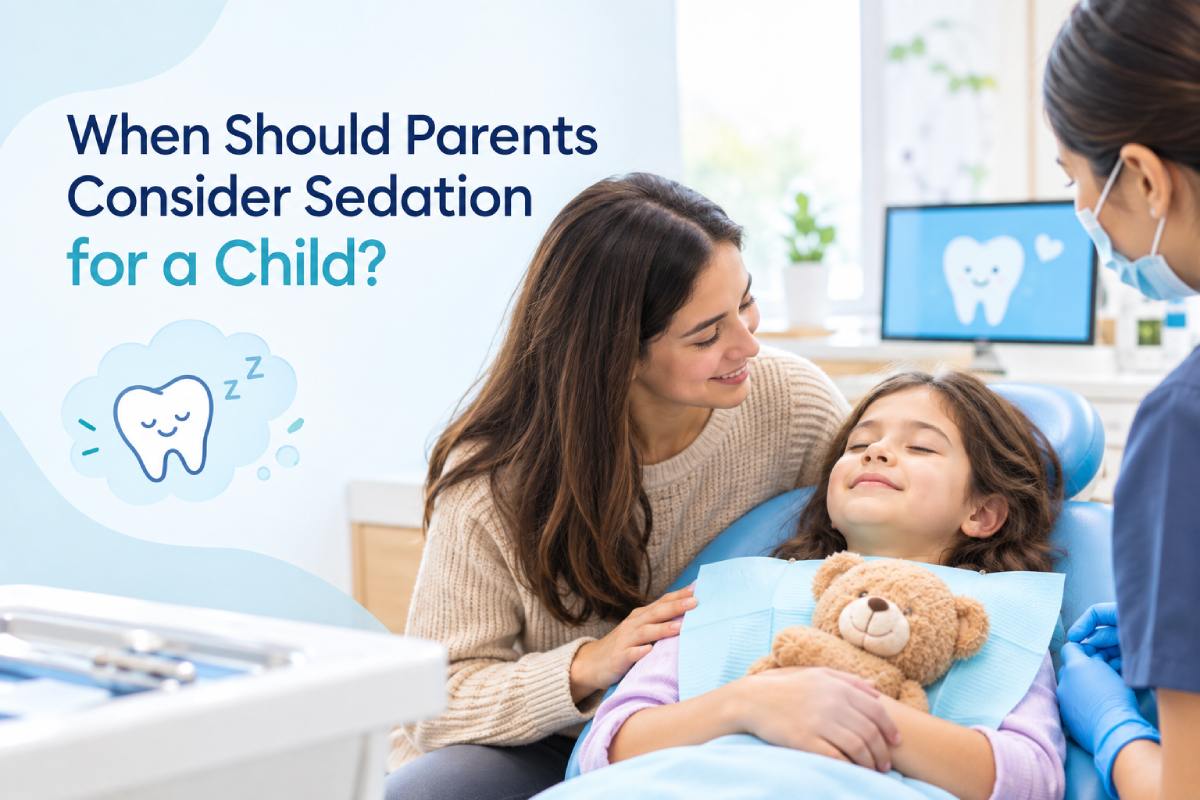
When Should Parents Consider Sedation for a Child?
Sedation is one of the areas parents should discuss carefully rather than treating it as the default solution for dental anxiety. Some children can receive dental treatment using communication, behavior guidance, and other non-pharmacological techniques. Other children may require additional support because of severe anxiety, extensive treatment needs, developmental conditions, inability to cooperate, or other clinical considerations.
The Dubai Health Authority’s pediatric dentistry guideline describes sedation and general anesthesia as options that may be required for selected children when conventional behavior guidance is insufficient or when treatment cannot otherwise be provided safely and humanely.
The important point is: Sedation should be based on the child’s clinical needs and treatment circumstances, not simply because the child is nervous.
Parents searching for an affordable pediatric dentist near me should ask the dental team why sedation is being considered, what alternative approaches have been assessed, what type of sedation is proposed, and what monitoring and safety arrangements are required.
Nitrous Oxide and General Anesthesia Are Not the Same
Parents sometimes use the word “sedation” to describe several different approaches. They should ask the dentist to explain exactly what is being recommended.
Nitrous oxide conscious sedation, commonly known as laughing gas, can help some appropriately selected children relax while remaining conscious and able to communicate. General anesthesia, by contrast, is a much deeper level of anesthesia and involves different clinical requirements. The Dubai Health Authority specifically distinguishes levels of sedation and general anesthesia in its pediatric dentistry guidance.
Bay Avenue’s pediatric dentist profile states that care for certain children with special healthcare needs can, when required, be provided under nitrous oxide sedation or general anesthesia, with treatment planned in consultation with parents.
This is precisely why parents should not choose a clinic simply because it advertises “sleep dentistry for kids.”
Families looking for a top pediatric dentist near me should also ask whether the approach is appropriate for the individual child and delivered under appropriate clinical protocols.
When Might a Child Need More Than Behavior Management?
There are situations where completing treatment through conventional cooperation may not be realistic.
For example, a child might have:
- extensive dental decay
- multiple teeth requiring treatment
- acute dental pain
- severe situational anxiety
- significant developmental limitations
- sensory challenges
- difficulty remaining still
- special healthcare needs
- a treatment plan that cannot reasonably be divided into many short visits
In these circumstances, the dental team may discuss different treatment pathways with the parents. The decision should consider the benefit of completing necessary dental treatment, the child’s ability to cooperate, the complexity of treatment, and the safety of the proposed approach.
This is where an experienced pediatric dentist can make an important difference: the objective is not simply to make a difficult appointment easier, but to determine the safest and most appropriate way to deliver necessary care.
How to Tell Whether a Pediatric Dentist Understands Anxious Children
Parents can learn a great deal by observing how the dentist communicates before treatment begins.
A dentist experienced with anxious children will generally be willing to explain:
Why the child is anxious
Rather than immediately labeling the child as “uncooperative.”
What can be done without sedation
This helps parents understand whether behavior-guidance approaches are appropriate.
Whether treatment can be divided into visits
Some children cope better when treatment is introduced progressively.
What happens if the child becomes distressed
Parents should understand the clinic’s approach to pauses, breaks and reassessment.
When sedation is considered
The dentist should explain the clinical reason rather than simply presenting sedation as a convenience.
These questions can be more revealing than asking: “Are you the best pediatric dentist?”
What Qualifications Should Parents Check?
When searching for the best pediatric dentist in Dubai, parents should verify the dentist’s professional training rather than relying exclusively on marketing language.
Relevant factors include:
- pediatric dentistry qualification
- clinical experience with children
- experience managing anxious patients
- experience with children requiring additional support
- appropriate sedation training where sedation is offered
- emergency and life-support training relevant to pediatric care
- continuing professional development
Bay Avenue’s current pediatric-dentist profile identifies Dr. Kashmira Pawar as an MDS – Pediatric & Preventive Dentistry with more than 10 years of experience. The profile also states that she is certified in Nitrous Oxide Conscious Sedation, Pediatric Advanced Life Support (PALS), and Basic Life Support (BLS).
These are the types of credentials parents should look for when evaluating a pediatric dentist in Business Bay or elsewhere in Dubai.
Why Experience With Special Healthcare Needs Matters
A child with sensory sensitivities, developmental differences, or medical complexity may require a different appointment strategy from a typically developing child.
The dentist may need to consider communication preferences, sensory triggers, treatment tolerance, and relevant medical information before planning care. That does not mean every child with additional needs requires sedation. Instead, the treatment plan should be adapted to the child’s individual circumstances.
Parents searching for a pediatric dentist and orthodontist near me should also consider whether the clinic can coordinate different stages of a child’s dental development, particularly when early orthodontic concerns exist alongside preventive or restorative needs. A multidisciplinary environment can be useful when a child’s needs extend beyond a single dental problem.
Pediatric Dentist vs General Dentist for an Anxious Child
A general dentist may provide excellent care for many children. However, an anxious child may benefit from a clinician whose training and practice are specifically focused on pediatric patients. The difference is not simply the treatment being performed.
It can involve:
| Consideration | General Dental Care | Pediatric-Focused Care |
| Child development | May vary by clinician | Central to pediatric training |
| Behavior guidance | Depends on experience | Core part of pediatric care |
| Primary teeth | Treated | Specifically managed throughout development |
| Child anxiety | Depends on clinic approach | Greater emphasis on child-centered management |
| Special healthcare needs | Depends on experience | Can be a dedicated area of pediatric care |
| Growth and eruption | Considered | Integral to pediatric assessment |
| Parent education | Usually provided | Often integrated into pediatric care |
This does not mean a pediatric dentist is automatically the right choice for every child. But for a child with significant dental anxiety, pediatric specialization is an important factor to consider.
What About Children Who Also Need Orthodontic Care?
Parents sometimes search for a pediatric dentist and orthodontist near me because their child’s teeth appear crowded, crooked or delayed in eruption.
Pediatric dentistry and orthodontics overlap, but they are not the same specialty. A pediatric dentist focuses on the oral health and development of infants, children, and adolescents, while an orthodontist focuses primarily on tooth and jaw alignment.
Early assessment can identify issues that may require monitoring or orthodontic intervention. Bay Avenue’s pediatric dentistry information states that the clinic offers early orthodontic evaluations and assesses children’s tooth and jaw development, while its wider team includes a specialist orthodontist.
For parents, having access to both areas of expertise can simplify care when preventive dentistry and developing alignment problems need to be considered together.
Should You Choose the Closest Pediatric Dentist?
Searching for a pediatric dentist close to me or the best pediatric dentist near me is a sensible starting point, particularly when a child needs multiple visits.
Convenience matters because pediatric dental care can involve:
- routine check-ups
- preventive appointments
- restorative treatment
- orthodontic monitoring
- follow-up visits
- emergency appointments
A nearby clinic can make maintaining these appointments easier. However, proximity should be considered after clinical suitability, not instead of it.
For families living or working in Business Bay, a pediatric dentist in Business Bay may offer practical advantages in terms of travel, appointment scheduling, and follow-up. Bay Avenue Dental Centre is located at The Regal Tower in Business Bay and currently provides pediatric dentistry alongside orthodontics, implants, cosmetic dentistry and general dental services.
How Much Should Parents Focus on Price?
Searching for an affordable pediatric dentist is understandable, particularly when a child requires repeated treatment. However, parents should compare the complete treatment plan, not simply the consultation or procedure price.
A lower initial price may not tell you:
- whether the dentist is a pediatric specialist
- how the clinic manages anxious children
- whether diagnostic procedures are included
- whether follow-up visits are included
- whether sedation, when clinically indicated, is priced separately
- whether additional treatment may be required
Likewise, a higher price does not automatically mean better care. The more useful question is: What clinical expertise, treatment, safety arrangements, and follow-up are included in the proposed plan?
That is a better way to evaluate an affordable pediatric dentist near me than comparing one advertised procedure price against another.
Questions to Ask Before Choosing the Best Pediatric Dentist in Dubai
Before booking treatment for an anxious child, parents can ask the clinic:
1. Is the dentist specifically trained in pediatric dentistry?
Ask about the dentist’s pediatric qualifications and experience.
2. How do you manage children who are afraid of dental treatment?
Look for a clear explanation of behavior guidance rather than a generic “we are child-friendly” answer.
3. Can the first appointment be used for familiarization?
This may be useful for highly anxious children who are not ready for immediate treatment.
4. What happens if my child refuses treatment?
The dentist should explain how treatment will be reassessed rather than simply forcing the appointment forward.
5. When would sedation be considered?
Ask what alternatives would be considered first and why sedation may be clinically appropriate.
6. What type of sedation is available?
Ask specifically whether the clinic offers nitrous oxide or another approach and who is responsible for administering and monitoring it.
7. Does the dentist treat children with sensory or developmental needs?
This is particularly important when the child has additional support requirements.
8. Can the clinic manage dental emergencies?
Ask how urgent pain, trauma, or infection is handled.
9. Is orthodontic assessment available if required?
This can be useful as the child’s permanent teeth begin developing.
10. Can parents discuss the complete treatment plan before starting?
A good consultation should give parents enough information to understand the proposed treatment and alternatives.
Red Flags When Choosing a Pediatric Dentist
Parents should be cautious when a clinic:
- guarantees that every anxious child can be treated without difficulty
- presents sedation as the solution for every nervous child
- cannot explain the dentist’s pediatric qualifications
- avoids explaining treatment alternatives
- focuses heavily on price but provides little clinical information
- pressures parents to begin extensive treatment immediately
- cannot clearly explain what happens if the child becomes distressed
- makes unrealistic promises about completing complex treatment in one visit
A confident pediatric dental practice should be able to explain what it knows, what it recommends, and where individual assessment is required.
Why the Right Pediatric Dentist Can Change a Child’s Future Dental Experience
The long-term objective of pediatric dentistry is not simply to fix today’s cavity. A child’s early experiences can influence how they approach dental care later in life. A child who learns that the dentist listens to them, explains procedures clearly, and responds when they are uncomfortable may gradually become more confident about future visits. This is particularly important for anxious children.
The right pediatric dental experience can therefore involve two outcomes:
- Immediate outcome: Treat the child’s current dental problem.
- Long-term outcome: Help the child develop a healthier relationship with dental care.
That is one reason choosing a good pediatric dentist near me should be based on more than convenience.
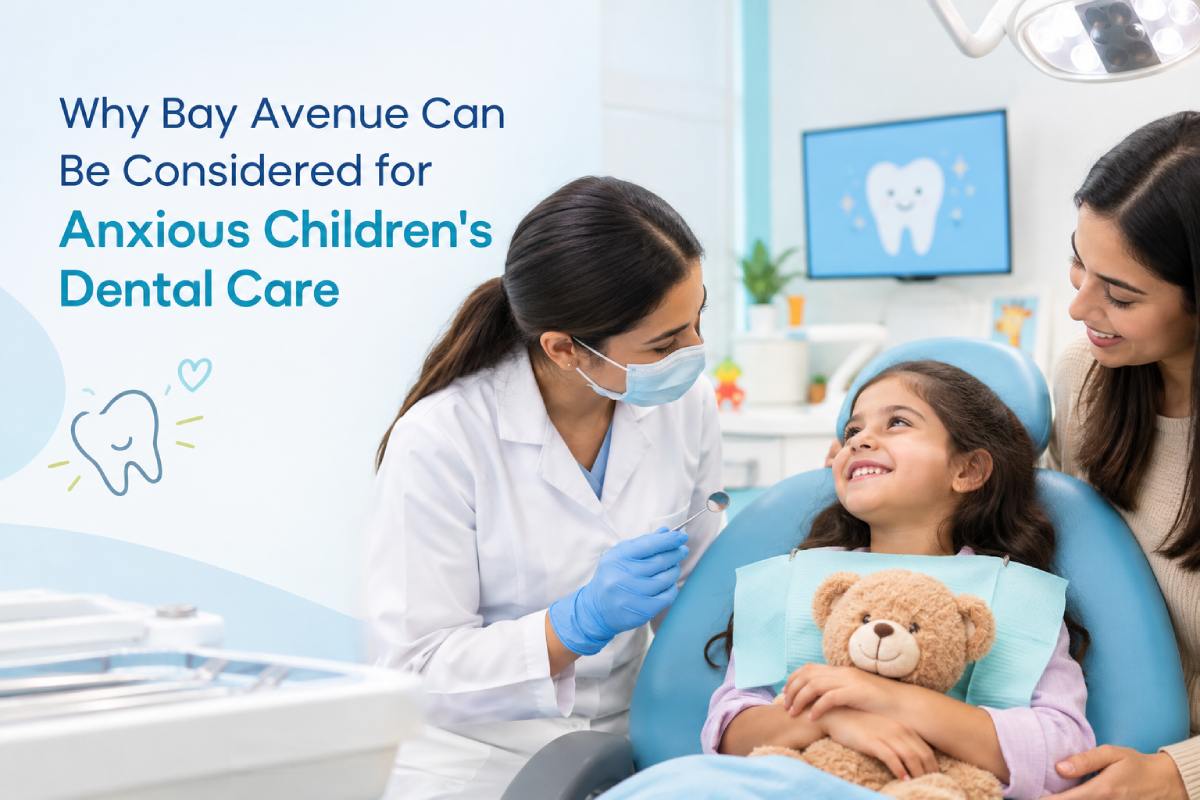
Why Bay Avenue Can Be Considered for Anxious Children’s Dental Care
Bay Avenue Dental Centre’s pediatric service is designed around child-focused care, with a pediatric dentist, preventive services, restorative treatment, orthodontic evaluation, and emergency dental care available within the wider clinic environment.
The clinic’s pediatric dentist profile also documents more than 10 years of pediatric clinical experience and training in pediatric and preventive dentistry, alongside certifications in nitrous oxide conscious sedation, PALS, and BLS. The profile describes individualized treatment planning for children with sensory sensitivities, developmental conditions, and medical complexities.
For families searching for a pediatric dentist in Business Bay, this combination can be particularly relevant when a child needs more than a routine dental check-up. The important consideration remains the individual child’s needs. A consultation should determine whether conventional behavior guidance is sufficient or whether additional measures are clinically appropriate.
Best Pediatric Dentist in Dubai: A Practical Parent’s Checklist
Before choosing a pediatric dentist, check these seven areas:
Pediatric qualification
Does the dentist have specialist pediatric dentistry training?
Anxiety management
Does the team have a structured approach to behavior guidance?
Communication
Does the dentist explain treatment in language appropriate for the child’s age?
Clinical capability
Can the clinic provide preventive, restorative, and emergency pediatric care?
Special needs experience
Can the team adapt care for sensory, developmental, or medical considerations?
Sedation expertise
If sedation is offered, is there appropriate training, monitoring, and clinical justification?
Long-term care
Can the clinic follow the child through different stages of dental development?
If the answer is yes across these areas, parents have a much stronger basis for choosing a pediatric dental team.
Final Thoughts: The Best Pediatric Dentist Is the One Who Can Treat the Child, Not Just the Teeth
There is no single best pediatric dentist in Dubai for every child. For an anxious child, the right dentist is one who can combine pediatric clinical expertise with patience, communication, behavior guidance, and appropriate treatment planning.
Parents should look beyond phrases such as “child-friendly” and ask more meaningful questions: What qualifications does the dentist have? How are anxious children managed? When is sedation considered? Can the clinic handle my child’s specific needs? What happens if my child cannot cooperate?
For families searching for a pediatric dentist close to me, best pediatric dentist near me, or pediatric dentist in Business Bay, these factors provide a much better framework for comparing clinics than distance or promotional claims alone.
The goal should not simply be to get a child through one difficult appointment.
It should be to provide necessary dental care while helping the child develop confidence in dental treatment that can benefit them for years to come.
FAQ: Pediatric Dentist for Anxious Children
What is the best pediatric dentist in Dubai for an anxious child?
The best choice depends on the child’s age, dental needs, anxiety level, previous experiences and ability to cooperate. Parents should look for a pediatric dentist with specialist training, experience in behavior guidance and an individualized approach to anxious children.
How can I find a good pediatric dentist near me?
Check pediatric qualifications, experience with anxious children, behavior-management techniques, treatment options, emergency availability, and location. Reviews can help, but they should not replace checking the dentist’s professional qualifications.
Should I choose a pediatric dentist close to me?
Convenience is valuable because children may need several dental visits and follow-ups. However, clinical expertise and the dentist’s ability to manage your child’s needs should come before distance.
Is sedation necessary for an anxious child?
Not necessarily. Many children can receive dental care using behavior guidance and communication techniques. Sedation may be considered for selected children when anxiety, treatment complexity, developmental needs or inability to cooperate make conventional treatment difficult.
Is nitrous oxide the same as general anesthesia?
No. They represent different levels of anesthesia/sedation. Parents should ask the dentist to explain the specific method being recommended, why it is appropriate and what safety and monitoring arrangements apply.
Can a pediatric dentist treat children with sensory sensitivities?
Some pediatric dentists have specific experience caring for children with sensory, developmental or medical needs. Bay Avenue’s pediatric-dentist profile specifically describes individualized care for children with sensory sensitivities, autism spectrum disorder, ADHD, developmental delays and medical complexities.
Can a pediatric dentist also identify orthodontic problems?
Yes. A pediatric dentist can monitor tooth and jaw development and identify concerns that may warrant orthodontic evaluation. Orthodontic treatment itself is generally planned by an orthodontist.
What should I do if my child refuses to open their mouth?
Do not assume the child is simply being difficult. Tell the dental team about the behavior before the appointment. An experienced pediatric dentist can assess the reason for resistance and determine whether familiarization, behavior guidance, another appointment or a different treatment approach is appropriate.