
Are Cosmetic Dentistry Porcelain Veneers Worth the Extra Cost? Long-Term Results Explained
Introduction
One of the most common questions cosmetic dentists hear is: “Are porcelain veneers really worth the extra cost?”
It is a fair question. Patients researching cosmetic dentistry porcelain veneers often notice that porcelain veneers cost significantly more than composite veneers. In some cases, the price difference can be two to three times higher.
This naturally leads many people to wonder:
- Why are porcelain veneers more expensive?
- Do they actually last longer?
- Are the results noticeably better?
- Is the additional investment justified?
The answer depends on what you value most. If your goal is simply to improve the appearance of one or two teeth for a few years, composite veneers may be sufficient.
However, if you want:
- highly natural aesthetics
- long-lasting results
- stain resistance
- a complete smile makeover
Then porcelain veneers often provide advantages that extend far beyond their initial cost.
In this guide, we will examine exactly why porcelain veneers cost Dubai more, how they are made, how long they last, and whether they represent good value for long-term smile enhancement.
Why Do Porcelain Veneers Cost More?
One of the first things patients notice when researching porcelain veneers cost Dubai is that the price is significantly higher than composite veneers. At first glance, both treatments seem similar because they improve the appearance of teeth. However, the difference lies in what happens behind the scenes.
Porcelain veneers involve:
- advanced materials
- laboratory fabrication
- extensive planning
- custom smile design
- multiple treatment stages
Each of these factors contributes to the final cost.
Custom-Made Rather Than Directly Applied
Composite veneers are generally created directly on the teeth during treatment. Porcelain veneers are different. Every veneer is individually designed and fabricated specifically for the patient.
The process involves:
- detailed measurements
- smile analysis
- digital scans
laboratory manufacturing
This level of customization requires significantly more time and expertise. Think of it like comparing a tailored suit to one purchased off the shelf. Both can look good. But one is specifically designed to fit your unique proportions. Porcelain veneers are individually crafted for your smile rather than shaped directly in the mouth.
Laboratory Craftsmanship
Many patients do not realize that porcelain veneers are partly an artistic procedure. Highly skilled dental technicians work closely with cosmetic dentists to create veneers that replicate natural teeth.
Each veneer is customized for:
- shape
- contour
- translucency
- brightness
- symmetry
This level of craftsmanship requires specialized equipment and considerable technical expertise. The goal is not simply to create white teeth. The goal is to create teeth that look naturally beautiful. A significant portion of the porcelain veneer cost comes from laboratory craftsmanship and customization.
Advanced Materials
Porcelain itself is a premium dental material. Modern ceramic systems are designed to mimic natural enamel while providing strength and durability.
These materials are engineered to offer:
- realistic translucency
- stain resistance
- wear resistance
- color stability
The quality of the ceramic used plays a major role in the final result. Higher-grade materials generally provide better aesthetics and longer-lasting outcomes. Premium materials contribute directly to both appearance and longevity. Patients searching for porcelain veneers near me often appreciate that greater customization contributes to improved veneers longevity and more natural, long-lasting smile results.
How Porcelain Veneers Are Made?
Understanding how porcelain veneers are created helps explain why they are often considered the gold standard in cosmetic dentistry. Unlike direct composite veneers, porcelain veneers undergo a highly controlled design and manufacturing process. Every stage is carefully planned to maximize aesthetics, fit, and durability.
Step 1: Smile Analysis and Planning
The process begins with a detailed consultation. This is much more than simply choosing a tooth shade.
The dentist evaluates:
- facial proportions
- lip position
- smile line
- tooth shape
- gum symmetry
- bite relationship
These factors influence how the final veneers will look within the overall facial structure. A veneer that looks attractive on one patient may not suit another patient at all. Successful smile design requires balancing teeth with facial aesthetics.
Step 2: Digital Smile Design
Many modern porcelain veneers clinics near me now use digital smile design technology. This allows patients to preview potential outcomes before treatment begins.
Digital planning helps evaluate:
- tooth proportions
- smile width
- tooth length
- mile symmetry
Patients can often see how their future smile may look before any irreversible treatment is performed. This improves communication and reduces uncertainty. Digital planning creates more predictable cosmetic outcomes.
Step 3: Tooth Preparation
Depending on the case, a small amount of enamel may be removed. This allows the veneers to sit naturally on the teeth without appearing bulky. Modern cosmetic dentistry aims to preserve as much natural tooth structure as possible.
Preparation is carefully controlled and customized. porcelain veneers clinic near me. Conservative preparation helps maintain long-term tooth health.
Step 4: Laboratory Fabrication
This stage separates porcelain veneers from most other cosmetic procedures. Using digital scans or impressions, technicians create custom ceramic restorations. Every veneer is individually shaped and characterized.
Details may include:
- translucency effects
- surface texture
- natural contours
- subtle color variation
These details help veneers blend naturally with surrounding teeth. Much of the beauty of porcelain veneers comes from laboratory artistry.
Step 5: Bonding and Final Placement
Once fabrication is complete, the veneers are bonded permanently to the teeth. The dentist carefully evaluates:
- fit
- color
- bite alignment
- aesthetics
Only after these checks are completed are the veneers permanently attached. This final stage transforms the smile while maintaining natural function. Proper bonding is essential for both aesthetics and longevity. Choosing experienced providers for porcelain veneers near me and following precise fabrication protocols helps support excellent fit, aesthetics, and extended veneers longevity.
Aesthetic Advantages of Porcelain Veneers
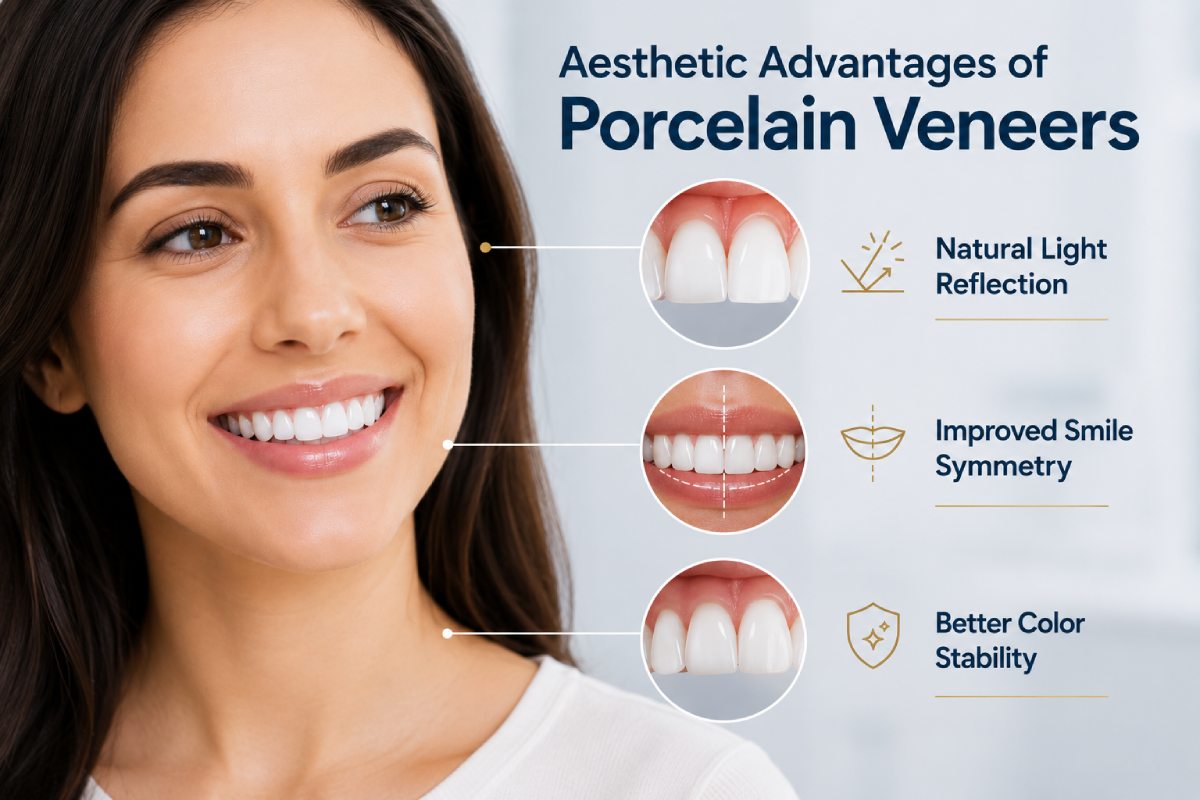
For many patients, aesthetics are the primary reason for choosing porcelain over composite. While both options improve appearance, porcelain often delivers a level of realism that is difficult to achieve with composite materials.
Natural Light Reflection
Natural teeth are not flat white objects. They interact with light in complex ways. Enamel allows light to pass through slightly before reflecting back.
This creates:
- depth
- vitality
- natural brightness
Porcelain mimics these optical properties remarkably well. As a result, porcelain veneers often appear more natural than composite alternatives. Natural light reflection is one of the biggest aesthetic advantages of porcelain.
Improved Smile Symmetry
Porcelain veneers are custom-designed to improve smile proportions.
This allows cosmetic dentists to correct:
- uneven teeth
- irregular shapes
- worn edges
- asymmetry
The result is a more balanced smile that complements the face. Patients frequently report that people notice their smile looks better without realizing dental work was performed. Great veneers improve harmony rather than attracting attention to themselves.
Better Color Stability
Many patients invest in veneers because they want a consistently bright smile. Unlike natural teeth, porcelain veneers maintain their shade exceptionally well.
This means:
- fewer touch-ups
- more predictable appearance
- long-term aesthetic consistency
Years after treatment, well-maintained porcelain veneers often look remarkably similar to the day they were placed. Color stability contributes significantly to long-term satisfaction. Understanding the porcelain veneers benefits helps patients choose a trusted porcelain veneers clinic near me for natural-looking, durable, and aesthetically balanced smile enhancements.
Longevity Compared to Composite Veneers
One of the strongest arguments in favor of porcelain veneers is longevity. Although composite veneers cost less initially, they generally require more maintenance and earlier replacement. This changes the long-term value equation considerably.
Composite Veneers Lifespan
Composite veneers typically last: 4–8 years
Longevity depends on:
- oral hygiene
- grinding habits
- staining exposure
- bite forces
Over time, patients may notice:
- discoloration
- chipping
- Polish loss
- edge wear
These issues often require repair or replacement. Composite veneers provide good medium-term results but usually need more maintenance.
Porcelain Veneers Lifespan
Porcelain veneers commonly last: 10–15+ years
Some patients enjoy excellent results for considerably longer.
Their longer lifespan is due to:
- stronger materials
- superior wear resistance
- better stain resistance
- stable surface finish
When properly maintained, porcelain veneers can remain highly aesthetic for many years. Longevity is one of the main reasons many patients choose porcelain despite the higher upfront cost. Patients evaluating porcelain veneers benefits often choose a reputable porcelain veneers clinic near me because long-lasting performance and reduced maintenance provide greater long-term value.
Stain Resistance Benefits
One of the most overlooked factors when comparing veneer options is stain resistance. Most patients focus on how veneers look immediately after treatment, but a more important question is:
“How will my smile look five or ten years from now?”
The answer often depends on how well the material resists discoloration over time. For patients investing in cosmetic dentistry porcelain veneers, stain resistance is one of the biggest long-term advantages.
Why Teeth Become Stained Over Time?
Natural teeth are constantly exposed to substances that can affect their color.
Common staining sources include:
- coffee
- tea
- red wine
- smoking
- soft drinks
- highly pigmented foods
Over time, pigments penetrate microscopic pores in enamel and gradually darken the teeth. Even patients who maintain excellent oral hygiene can experience discoloration as they age. This is one reason professional whitening often requires periodic maintenance. Natural teeth are highly susceptible to staining from everyday lifestyle habits.
How Composite Veneers Respond to Staining?
Composite resin is more porous than porcelain. Although modern composite materials have improved significantly, they still absorb pigments more readily than ceramic materials.
Over several years, patients may notice:
- yellowing around edges
- darkening of the surface
- uneven color changes
- reduced brightness
Frequent exposure to coffee, tea, or smoking can accelerate this process. Professional polishing may help improve appearance, but severe discoloration often requires replacement. Composite veneers generally require more aesthetic maintenance over time.
Why Porcelain Stays Brighter Longer?
Porcelain has an extremely smooth and dense surface. Because it is far less porous, pigments have difficulty penetrating the material.
This allows porcelain veneers to maintain:
- brightness
- color consistency
- surface gloss
- overall aesthetics
for many years. Patients who choose ceramic porcelain veneers in Dubai often do so because they want a smile that remains attractive long after treatment. Porcelain’s stain resistance is one of the biggest reasons it is considered a premium cosmetic material.
What This Means in Real Life?
Imagine two patients receiving veneers on the same day. One chooses composite veneers. The other chooses porcelain veneers.
After several years of:
- coffee consumption
- dining out
- occasional red wine
- everyday life
The porcelain veneers are far more likely to maintain their original appearance. This difference may not be obvious after six months, but it becomes increasingly noticeable over five to ten years. Stain resistance is not just about appearance; it directly affects long-term satisfaction.
Smile Makeover Applications
Porcelain veneers are frequently used as part of comprehensive smile makeover treatments. This is because they can solve multiple cosmetic concerns simultaneously. Unlike whitening, bonding, or orthodontics alone, veneers allow dentists to redesign several aspects of a smile at once.
Correcting Multiple Problems Simultaneously
Patients rarely have only one cosmetic concern.
Many people seeking smile makeovers present with a combination of:
- discoloration
- uneven teeth
- chips and cracks
- worn enamel
- spacing issues
- minor alignment concerns
Addressing each issue separately can require multiple treatments over an extended period. Porcelain veneers near me provide an opportunity to address many of these concerns within a single treatment plan. Veneers create comprehensive cosmetic improvement rather than isolated corrections.
Creating Smile Harmony
A beautiful smile is not simply about having white teeth.
It involves a balance between:
- tooth proportions
- facial structure
- lip position
- gum display
- smile width
Porcelain veneers allow cosmetic dentists to carefully refine these elements. The goal is not to create a generic Hollywood smile. The goal is to create a smile that complements the individual patient’s face. Great smile makeovers focus on harmony rather than artificial perfection.
Why Porcelain Is Often Preferred for Smile Makeovers?
When performing extensive smile transformations, durability and aesthetics become even more important.
Because porcelain offers:
- superior translucency
- excellent color stability
- long-term durability
It is often the preferred material for comprehensive smile makeovers. Patients investing in full smile rehabilitation typically want results that continue looking exceptional for many years. Porcelain veneers are often considered the foundation of a premium smile makeover treatment.
Real Long-Term Cost Analysis
One of the most important questions patients ask is:
“Are porcelain veneers actually worth the extra money?”
To answer this fairly, we must look beyond the initial treatment fee. True value comes from evaluating the total cost over many years.
Looking Beyond Upfront Cost
At first glance, composite veneers appear more affordable.
For example:
Composite veneers: AED 800 – AED 2,000+ per tooth
Porcelain veneers: AED 1,500 – AED 4,500+ per tooth
For patients comparing quotes, this difference can seem substantial. However, initial cost tells only part of the story. Long-term value is often more important than upfront savings.
The Cost of Maintenance
Composite veneers typically require more frequent maintenance.
This may include:
- polishing appointments
- repairs
- edge refinements
- partial replacements
Each maintenance procedure adds to the total investment over time. While individual repairs may seem inexpensive, costs accumulate over the years. Maintenance expenses can significantly affect long-term affordability.
The Cost of Replacement Cycles
Longevity plays a major role in value. Consider a hypothetical example: A patient replaces composite veneers every 5–7 years.
Over 15 years, they may undergo:
- multiple repairs
- at least one full replacement cycle
- additional maintenance visits
Meanwhile, a patient with porcelain veneers may still be enjoying the original restorations. Replacement frequency often changes the long-term financial equation.
Why Value Matters More Than Price?
When evaluating cosmetic dentistry porcelain veneers, patients should consider:
- durability
- appearance retention
- maintenance requirements
- longevity
rather than focusing exclusively on treatment cost. A treatment that lasts twice as long may ultimately provide better value, even if the initial investment is higher. Value is determined by performance over time, not simply the starting price.
Repair Frequency vs Replacement Cycles
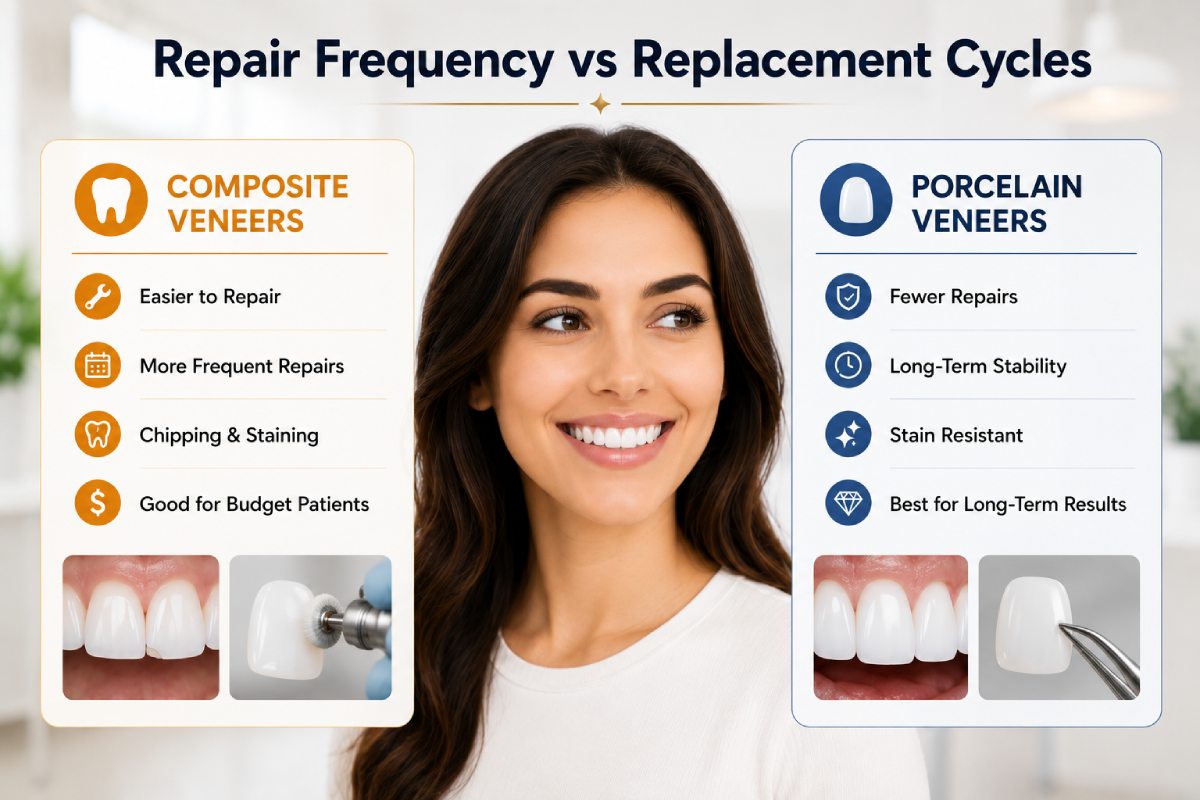
Understanding how often veneers require attention can help patients make informed decisions.
Composite Veneers
Composite veneers are easier to repair. This is one of their biggest advantages. Small chips or defects can often be corrected without replacing the entire veneer. However, because the composite is softer, repairs may be needed more frequently.
Common reasons include:
- chipping
- staining
- wear
- Polish loss
Composite veneers are easier to repair but generally require more ongoing attention.
Porcelain Veneers
Porcelain veneers require fewer repairs because they are more resistant to wear and discoloration. When properly fabricated and maintained, they often remain stable for many years. Although major damage may require replacement rather than repair, such situations are relatively uncommon. Porcelain veneers typically require less intervention throughout their lifespan.
When Composite May Be Better?
Despite the many advantages of porcelain, composite veneers are not the wrong choice. In fact, they may be the better option for certain patients.
Budget-Conscious Patients
Some patients want cosmetic improvement but are not ready for the investment required for porcelain veneers. Composite veneers allow these patients to achieve meaningful smile enhancement at a lower cost. Composite veneers provide accessible cosmetic dentistry solutions.
Younger Patients
Younger patients may prefer a more conservative approach. Because treatment goals and smile preferences can change over time, composite veneers may provide flexibility. Composite veneers can serve as a practical stepping stone before long-term cosmetic treatment.
Minor Cosmetic Corrections
When only a few small issues need correction, porcelain may not always be necessary.
Composite can effectively address:
- small chips
- minor gaps
- limited discoloration
without extensive treatment. Not every cosmetic concern requires premium ceramic restorations.
How to Choose the Best Dentist for Porcelain Veneers?
The success of porcelain veneers depends heavily on the dentist performing the treatment. Even the highest-quality ceramic material cannot compensate for poor planning or design.
Review Before-and-After Cases
A strong portfolio demonstrates experience and consistency.
Look for cases showing:
- natural aesthetics
- smile symmetry
- realistic results
- long-term outcomes
Past results often provide insight into future performance.
Evaluate Smile Design Philosophy
The best dentist for porcelain veneers focuses on natural beauty rather than creating overly white or artificial-looking smiles.
Ask questions about:
- smile design process
- customization options
- treatment planning philosophy
Natural-looking veneers require both technical skill and artistic judgment.
Consider Technology and Planning
Modern cosmetic dentistry often uses:
- digital smile design
- intraoral scanners
- high-resolution imaging
These tools improve accuracy and predictability. Advanced technology supports better cosmetic outcomes.
Questions to Ask Before Treatment
Before committing to veneers, patients should feel comfortable asking detailed questions.
Examples include:
- Am I a good candidate for porcelain veneers?
- How many veneers do you recommend?
- What material will be used?
- How long should the veneers last?
- What maintenance will be required?
- Can I see similar patient cases?
- What happens if a veneer becomes damaged?
These conversations help patients make informed decisions. An educated patient is more likely to be satisfied with treatment outcomes.
Final Verdict
So, are cosmetic dentistry porcelain veneers worth the extra cost? For many patients, the answer is yes.
Porcelain veneers offer advantages that often justify the higher investment:
- exceptional aesthetics
- natural translucency
- superior stain resistance
- long-term durability
- reduced maintenance
- excellent smile makeover results
However, value depends on your goals.
If you prioritize:
- long-term results
- premium appearance
- minimal maintenance
- comprehensive smile enhancement
Then porcelain veneers often provide outstanding long-term value. If affordability and immediate improvement are your primary concerns, composite veneers may still be an excellent option. The best veneer is not necessarily the cheapest or the most expensive; it is the one that aligns with your goals, expectations, and lifestyle.
Frequently Asked Questions
Are porcelain veneers worth the extra cost?
For many patients, yes. Their durability, aesthetics, stain resistance, and longevity often justify the higher initial investment.
How long do porcelain veneers last?
Porcelain veneers commonly last 10–15+ years and may last considerably longer with proper care.
Do porcelain veneers stain?
Porcelain veneers are highly stain-resistant and maintain their color significantly better than composite veneers.
What is the average porcelain veneers cost in Dubai?
Porcelain veneers in Dubai typically range from AED 1,500 to AED 4,500+ per tooth, depending on materials, complexity, and the dentist’s expertise.
Can porcelain veneers be repaired?
Minor issues may sometimes be addressed, but significant damage often requires veneer replacement.
Who is the best candidate for porcelain veneers?
Patients seeking long-term smile enhancement, premium aesthetics, and comprehensive cosmetic improvement are often excellent candidates.
Considering Porcelain Veneers in Dubai?
Looking for the best dentist for porcelain veneers and a personalized smile makeover plan?
- Comprehensive smile assessment
- Advanced digital smile design
- Premium ceramic porcelain veneers in Dubai
- Natural-looking cosmetic results
- Long-lasting smile transformation
Book your consultation today and discover whether porcelain veneers are the right investment for your smile.