
Composite Veneers vs Porcelain Veneers: Cost, Durability, Appearance & Maintenance Compared
Introduction
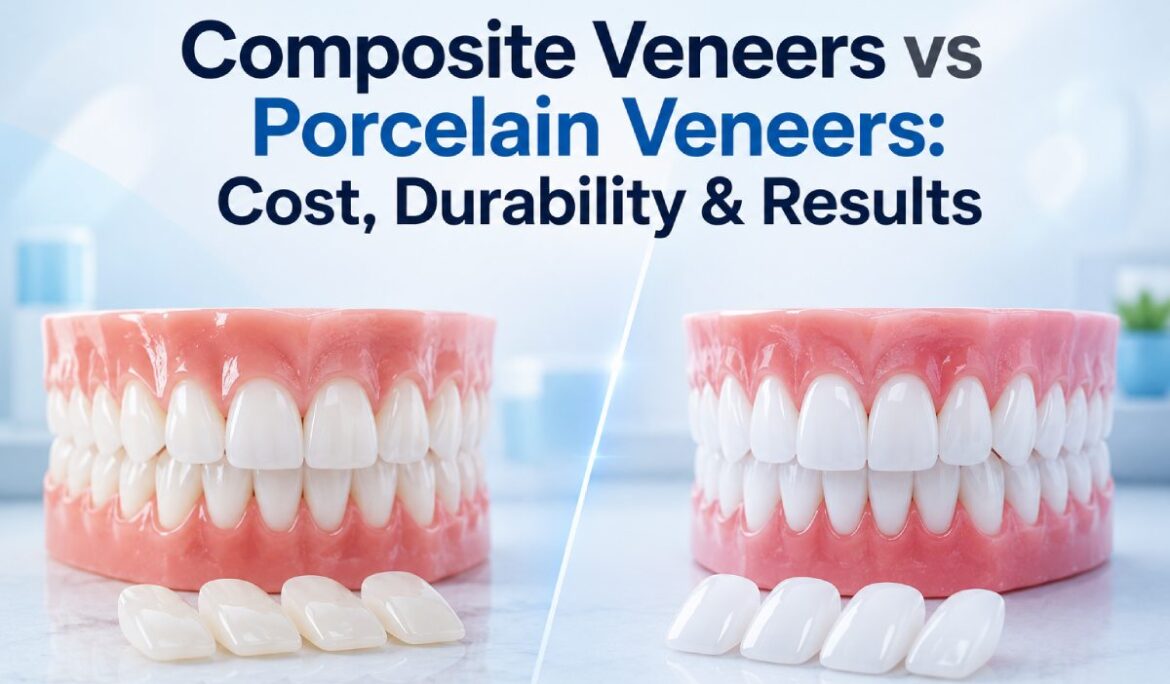
Dental veneers are one of the most popular cosmetic dentistry treatments available today. They can dramatically improve the appearance of teeth by correcting discoloration, chips, gaps, uneven shapes, and minor alignment issues.
However, one of the most common questions patients ask during a smile makeover consultation is: Should I choose composite veneers or porcelain veneers?
Both options can create beautiful smile transformations, but they differ significantly in:
- material composition
- appearance
- durability
- stain resistance
- treatment process
- long-term maintenance
- overall cost
Patients searching for:
- composite veneers in Dubai
- porcelain veneers near me
- cosmetic dentistry porcelain veneers
- composite veneers treatment near me
often struggle to understand which option provides the best value. The truth is that there is no single “best” veneer for every patient.
The right choice depends on:
- smile goals
- budget
- lifestyle
- oral health conditionlong-term expectations
This comprehensive veneers comparison guide explains everything you need to know before making a decision.
Many patients considering composite veneers in Dubai want a solution that balances aesthetics, affordability, and treatment time. Others researching porcelain veneers near me are often looking for a longer-lasting option with exceptional cosmetic results. Understanding the advantages and limitations of each treatment helps patients make a confident decision based on their smile goals and budget.
What Are Composite Veneers?
Composite veneers are cosmetic restorations made from tooth-colored composite resin material that is applied directly to the front surface of the teeth.
The same material is commonly used for:
- dental bonding
- tooth-colored fillings
- minor cosmetic corrections
Unlike porcelain veneers, composite veneers are usually sculpted directly onto the teeth by the dentist during treatment.
This allows cosmetic improvements to be completed relatively quickly.
Composite veneers are commonly used to improve:
- tooth color
- small gaps
- chipped teeth
- uneven tooth edges
- minor shape irregularities
Many patients choose composite veneers in Dubai because they provide a more affordable entry point into cosmetic dentistry. Composite veneers improve smile aesthetics using tooth-colored resin applied directly to the teeth.
How Composite Veneers Are Made?
The process is relatively straightforward.
The dentist:
- prepares the tooth surface
- applies composite resin layers
- shapes and sculpts the material
- hardens it with a curing light
- polishes the final result
Because the veneers are created directly on the teeth, treatment is often completed in a single visit. This makes composite veneers treatment near me a popular search among patients looking for fast smile improvements. Composite veneers can often transform a smile in just one appointment.
Benefits of Composite Veneers
Patients often choose composite veneers because of several advantages.
These include:
- lower initial cost
- faster treatment
- conservative tooth preparation
- easier repairs if damaged
- same-day smile enhancement
For patients seeking cosmetic improvement without a significant financial investment, composite veneers can be a practical option.
Composite veneers provide accessible cosmetic dentistry with quick results.
What Are Porcelain Veneers?
Porcelain veneers are custom-made ceramic shells bonded to the front surfaces of teeth. They are designed to mimic the appearance of natural enamel while improving the color, shape, size, and symmetry of teeth.
Porcelain veneers are widely considered the gold standard in cosmetic dentistry because of their:
- exceptional aesthetics
- durability
- stain resistance
- long lifespan
Patients searching for porcelain veneers near me are often looking for a more permanent smile enhancement solution. Porcelain veneers provide highly aesthetic and long-lasting smile transformation.
How Porcelain Veneers Are Made?
Unlike composite veneers, porcelain veneers are fabricated outside the mouth.
The process generally involves:
- consultation and smile planning
- tooth preparation
- digital scans or impressions
- laboratory fabrication
- final bonding appointment
Each veneer is individually crafted to match:
- facial features
- smile design goals
- neighboring teeth
- natural translucency
This customized approach allows extremely precise cosmetic results. Porcelain veneers combine advanced dental technology with artistic smile design.
Benefits of Porcelain Veneers
Porcelain veneers offer several advantages that make them one of the most requested cosmetic dentistry porcelain veneers treatments.
Key benefits include:
- natural appearance
- superior stain resistance
- excellent durability
- long-term aesthetics
- customized smile design
Because porcelain reflects light similarly to natural enamel, it often provides a more realistic appearance than composite resin. Porcelain veneers are frequently chosen for premium smile makeover treatments.
Material Differences Explained
Understanding the materials used in veneers helps explain why porcelain and composite behave differently over time.
Composite Resin Material
Composite veneers are created using resin-based materials.
Characteristics include:
- flexible application
- chairside sculpting
- easier repairs
- lower manufacturing cost
However, composite resin is more porous than porcelain.
This affects:
- stain resistance
- polish retention
- long-term appearance
Composite materials offer flexibility but require more maintenance.
Porcelain Ceramic Material
Porcelain veneers are fabricated using advanced ceramic materials.
Characteristics include:
- dense surface structure
- exceptional polish retention
- high strength
- natural translucency
Porcelain is less porous and more resistant to staining. This allows veneers to maintain their appearance longer. Ceramic technology contributes significantly to porcelain veneer longevity.
Appearance Comparison
For many patients, appearance is the most important factor when comparing veneers. After all, the primary goal is improving smile aesthetics.
Natural Look
Composite Veneers
Modern composite materials have improved significantly over the years. They can create attractive cosmetic results and are capable of mimicking many aspects of natural teeth.
However, composite resin may not fully replicate the depth and light reflection of natural enamel. In certain lighting conditions, the difference may be noticeable. Composite veneers can look natural but have aesthetic limitations compared to porcelain.
Porcelain Veneers
Porcelain is widely regarded as the most natural-looking veneer material available. Its optical properties closely resemble natural enamel.
This allows porcelain veneers to create:
- realistic light reflection
- depth and translucency
- natural color variation
- lifelike appearance
When designed properly, porcelain veneers are often indistinguishable from natural teeth. Porcelain veneers provide the highest level of aesthetic realism.
Translucency Comparison
Natural teeth are not completely opaque. They allow light to pass through the enamel slightly, creating depth and vitality.
Composite Veneers
Composite resin offers limited translucency. While skilled dentists can create attractive results, the material has inherent limitations.
Porcelain Veneers
Porcelain excels at reproducing enamel translucency.
This creates:
- natural brightness
- realistic depth
- youthful appearance
This is one reason why porcelain veneers are often preferred for high-end smile makeovers. Porcelain delivers superior translucency and aesthetic sophistication.
Durability Comparison
One of the most important considerations when comparing veneers is durability. Patients want to know how well their investment will perform over time.
Resistance to Chipping
Composite Veneers
Composite veneers are durable but generally softer than porcelain.
As a result, they may be more susceptible to:
- chipping
- edge wear
- surface scratches
Fortunately, repairs are often straightforward. Composite veneers are repairable but may require more maintenance over time.
Porcelain Veneers
Porcelain is stronger and more resistant to daily wear. When properly fabricated and bonded, porcelain veneers provide excellent durability.
They resist:
- chipping
- cracking
- surface damage
However, if damage does occur, repairs may be more complex. Porcelain offers superior long-term strength and wear resistance.
Wear Resistance
Daily chewing places significant forces on teeth. Over years of use, materials experience gradual wear.
Composite veneers may show:
- surface dullness
- edge wear
- loss of polish
Porcelain generally maintains:
- shape
- gloss
- surface texture
for much longer periods.Porcelain veneers typically retain their appearance better over time.
Stain Resistance Comparison
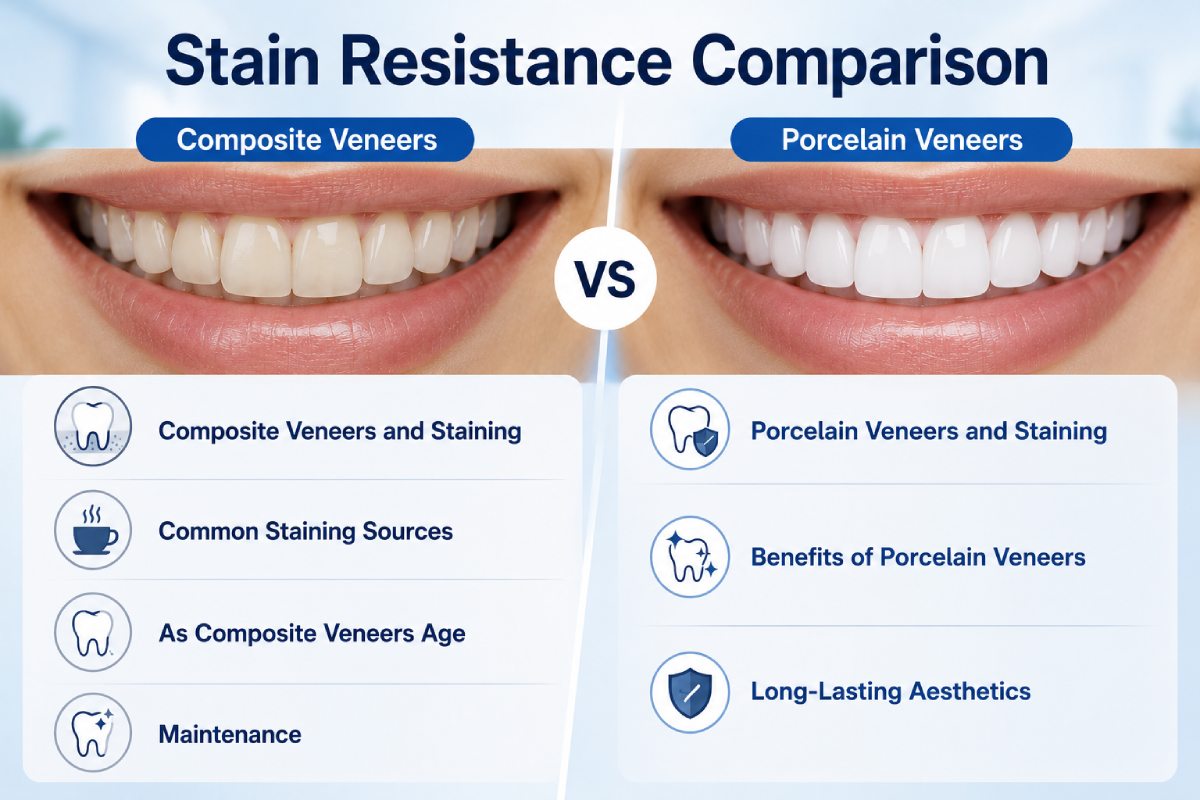
One of the biggest differences between composite and porcelain veneers becomes apparent several years after treatment. While both materials can initially look beautiful, they behave very differently when exposed to coffee, tea, wine, smoking, and everyday food pigments.
For many patients, stain resistance becomes one of the deciding factors when choosing between composite veneers in Dubai and porcelain veneers.
Composite Veneers and Staining
Composite resin is a slightly porous material. Over time, pigments from food and beverages can penetrate the surface and gradually affect the color of the veneers.
Common staining sources include:
- coffee
- tea
- red wine
- soft drinks
- smoking
- turmeric-rich foods
Even patients with excellent oral hygiene may notice some discoloration over the years.
As composite veneers age, they may become:
- darker
- duller
- less glossy
- more susceptible to visible staining
Professional polishing can often improve their appearance, but severe discoloration may eventually require repair or replacement. Composite veneers can stain over time and may require periodic maintenance to maintain aesthetics.
Porcelain Veneers and Staining
Porcelain is significantly less porous than composite resin. Its highly polished ceramic surface resists pigment absorption and helps maintain color stability for many years.
This means patients can enjoy:
- brighter smiles longer
- reduced staining risk
- less frequent polishing
- improved long-term aesthetics
Although porcelain veneers are not completely stain-proof, they are extremely stain resistant compared to natural teeth and composite materials. Many patients choose cosmetic dentistry porcelain veneers specifically because they want a smile that stays bright and attractive for years. Porcelain veneers offer superior stain resistance and color stability.
Cost Comparison: Composite vs Porcelain Veneers
When evaluating porcelain veneers cost, patients should consider not only the initial investment but also the expected lifespan, maintenance requirements, and long-term value. Although porcelain veneers generally involve a higher upfront cost, many patients view them as a worthwhile investment because of their durability and stain resistance. Cost is often one of the most important considerations when comparing veneer options.
However, it is important to evaluate both:
- initial cost
- long-term value
rather than focusing only on upfront pricing.
Composite Veneers Cost
Composite veneers are generally the more affordable option.
Average composite veneers cost in Dubai: AED 800 – AED 2,000+ per tooth
The total investment depends on:
- number of teeth treated
- complexity of smile design
- dentist experience
- clinic location
Because they require less laboratory work, composite veneers usually have lower treatment costs.
Patients searching for:
- affordable composite veneers near me
- composite veneers treatment near me
often choose composite veneers because of this accessibility. Composite veneers provide a lower-cost entry point into cosmetic dentistry.
Porcelain Veneers Cost
Porcelain veneers involve laboratory fabrication, advanced materials, and more extensive planning.
Average porcelain veneers cost in Dubai: AED 1,500 – AED 4,500+ per tooth
Pricing varies depending on:
- ceramic material used
- smile design complexity
- laboratory quality
- dentist expertise
Although porcelain veneers cost more initially, they often last significantly longer. Porcelain veneers require greater investment but may provide better long-term value.
Long-Term Cost Considerations
When comparing costs, patients should consider the lifespan of each option.
For example:
A patient who replaces composite veneers multiple times over 15 years may spend a similar amount—or even more—than someone who invested in porcelain veneers initially.
Factors influencing long-term cost include:
- repairs
- maintenance
- replacement frequency
- polishing appointments
The cheapest option initially is not always the most economical long term.
Treatment Time Comparison
Many patients want to know how quickly they can achieve their new smile. Treatment timelines differ significantly between composite and porcelain veneers.
Composite Veneers Treatment Timeline
Composite veneers are typically completed much faster.
The process often includes:
- consultation
- smile planning
- direct application
- shaping and polishing
Many patients complete treatment in: One appointment
This makes composite veneers ideal for patients seeking rapid smile enhancement. Composite veneers provide some of the fastest cosmetic dentistry results available.
Porcelain Veneers Treatment Timeline
Porcelain veneers require multiple stages.
Treatment typically includes:
- consultation
- smile analysis
- preparation appointment
- laboratory fabrication
- final placement
Most cases take: 1-3 weeks
Although treatment takes longer, the additional planning contributes to more customized and refined results. Porcelain veneers require more time but often deliver higher levels of aesthetic precision.
Maintenance Requirements
Proper maintenance plays a major role in the longevity of both veneer types. While veneers are durable, they are not maintenance-free.
Maintaining Composite Veneers
Composite veneers require regular care to preserve appearance.
Recommended maintenance includes:
- brushing twice daily
- flossing regularly
- professional polishing
- routine dental visits
Patients should also avoid habits such as:
- nail biting
- chewing ice
- opening packages with teeth
Because composite resin can stain and wear over time, maintenance becomes especially important. Composite veneers require more ongoing aesthetic maintenance.
Maintaining Porcelain Veneers
Porcelain veneers are generally easier to maintain because they resist staining and wear.
Patients should still:
- brush twice daily
- floss regularly
- attend dental checkups
- wear a night guard if recommended
Good oral hygiene helps protect both the veneers and surrounding natural teeth. Porcelain veneers require maintenance but generally retain their appearance longer.
Which Veneers Last Longer?
One of the most frequently asked questions during veneer consultations is: “Which veneers last longer?”
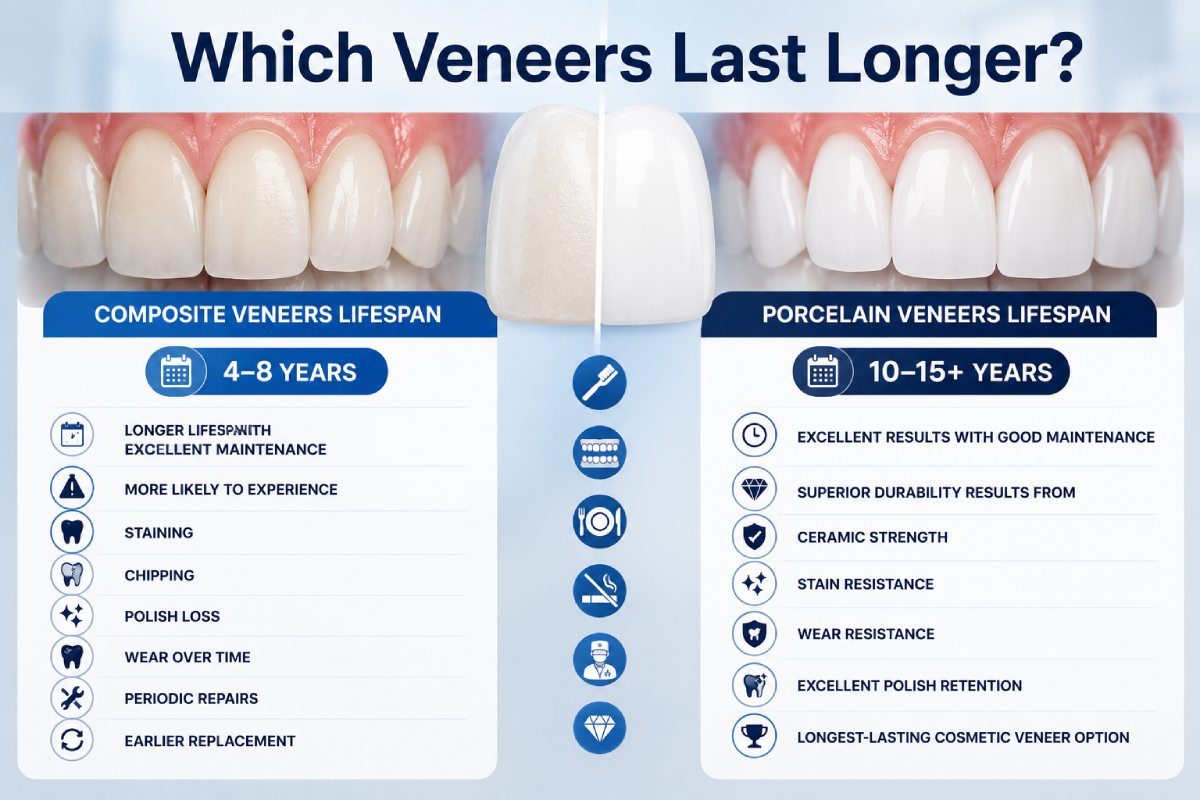
The answer is clear: Porcelain veneers generally last significantly longer than composite veneers.
However, lifespan depends on:
- oral hygiene
- bite forces
- diet
- smoking habits
- dentist skill
- material quality
Understanding expected longevity helps patients make informed decisions.
Composite Veneers Lifespan
Composite veneers typically last: 4–8 years
Some patients may achieve longer lifespans with excellent maintenance.
However, composite veneers are more likely to experience:
- staining
- chipping
- polish loss
- wear over time
Periodic repairs are relatively common. Composite veneers provide good medium-term results but usually require earlier replacement.
Porcelain Veneers Lifespan
Porcelain veneers typically last: 10–15+ years
Many patients enjoy excellent results for considerably longer when veneers are well maintained.
Their superior durability results from:
- ceramic strength
- stain resistance
- wear resistance
- excellent polish retention
Porcelain veneers are generally the longest-lasting cosmetic veneer option.
Who Should Choose Composite Veneers?
Individuals looking for composite veneers in Dubai often choose this treatment because it offers a conservative and cost-effective way to improve minor cosmetic imperfections without extensive dental procedures. It is particularly suitable for patients seeking fast smile enhancements.
Composite veneers are not “inferior” veneers. They simply serve different patient needs.
They are often ideal for patients seeking:
- affordable cosmetic improvement
- conservative treatment
- same-day smile enhancement
- minor cosmetic corrections
Composite veneers may be particularly suitable for:
- younger patients
- budget-conscious patients
- small smile improvements
- temporary cosmetic solutions
Composite veneers are excellent for patients prioritizing affordability and speed.
Patients with Minor Cosmetic Concerns
Composite veneers work especially well when patients have:
- small chips
- slight spacing
- minor discoloration
- limited smile asymmetry
These cases often do not require extensive laboratory fabrication. Small cosmetic issues can often be corrected effectively with composite veneers.
Who Should Choose Porcelain Veneers?
Patients searching for porcelain veneers near me are often looking for a trusted cosmetic dentist who can provide personalized smile design, high-quality ceramic materials, and long-lasting aesthetic results. A comprehensive consultation helps determine whether porcelain veneers are the right choice for their needs.
Porcelain veneers are often recommended for patients seeking comprehensive smile transformation.
They are especially suitable for individuals who want:
- premium aesthetics
- long-term durability
- superior stain resistance
- complete smile makeover results
Many smile makeover patients choose porcelain because they prioritize longevity and natural appearance. Porcelain veneers are often the preferred choice for extensive cosmetic enhancement.
Patients Seeking Long-Term Results
For patients comparing treatment options, porcelain veneers cost should always be weighed against the longevity and aesthetic benefits they provide. Many people find that the extended lifespan and minimal maintenance requirements make porcelain veneers an excellent long-term investment. Porcelain veneers are ideal for patients who view cosmetic dentistry as a long-term investment.
They are commonly chosen by individuals who:
- want durable results
- desire minimal future maintenance
- value highly natural aesthetics
- want predictable long-term outcomes
Porcelain veneers offer excellent long-term value despite higher upfront costs.
Final Verdict: Composite vs Porcelain Veneers
This veneers comparison highlights that there is no one-size-fits-all solution. The ideal veneer option depends on your cosmetic expectations, oral health, lifestyle, and budget, making a professional consultation essential before starting treatment. When comparing composite veneers and porcelain veneers, there is no universal winner.
The best choice depends on your:
- smile goals
- budget
- expectations
- lifestyle
- long-term plans
Choose Composite Veneers If:
- You want a lower initial investment
- You want same-day results
- You have minor cosmetic concerns
- You prefer a conservative treatment approach
Choose Porcelain Veneers If:
- You want premium aesthetics
- You want superior stain resistance
- You want longer-lasting results
- You are investing in a full smile makeover
For many patients seeking the most natural and durable cosmetic outcome, porcelain veneers remain the gold standard. However, composite veneers continue to offer excellent value and beautiful results when selected for the right candidate. The best veneer is not the most expensive one it is the one that aligns with your smile goals and expectations.
Frequently Asked Questions
Are composite veneers cheaper than porcelain veneers?
Yes. Composite veneers generally cost less because they require less laboratory work and can often be completed in one appointment.
Do porcelain veneers look more natural?
In most cases, yes. Porcelain offers superior translucency and light reflection, making it closer in appearance to natural enamel.
Which veneers last longer?
Porcelain veneers typically last 10–15+ years, while composite veneers generally last 4–8 years.
Can composite veneers be repaired?
Yes. One advantage of composite veneers is that small chips or damage can often be repaired directly.
Are porcelain veneers worth the extra cost?
For many patients, yes. Their durability, stain resistance, and natural aesthetics often justify the higher investment.
Can both veneer types be used in a smile makeover?
Yes. Both composite and porcelain veneers can be incorporated into smile makeover treatment plans depending on patient goals and budget.
Considering Veneers in Dubai?
Whether you’re exploring composite veneers in Dubai or comparing porcelain veneers near you, choosing the right treatment starts with a personalized smile assessment.
- Comprehensive smile evaluation
- Digital smile design planning
- Composite and porcelain veneer options
- Natural-looking smile makeover solutions
- Experienced cosmetic dentistry team
Book your cosmetic consultation today and discover which veneer option is best for your smile, lifestyle, and budget.