Dental Bridge in Dubai: How It Works, Cost, and When an Implant Is Better
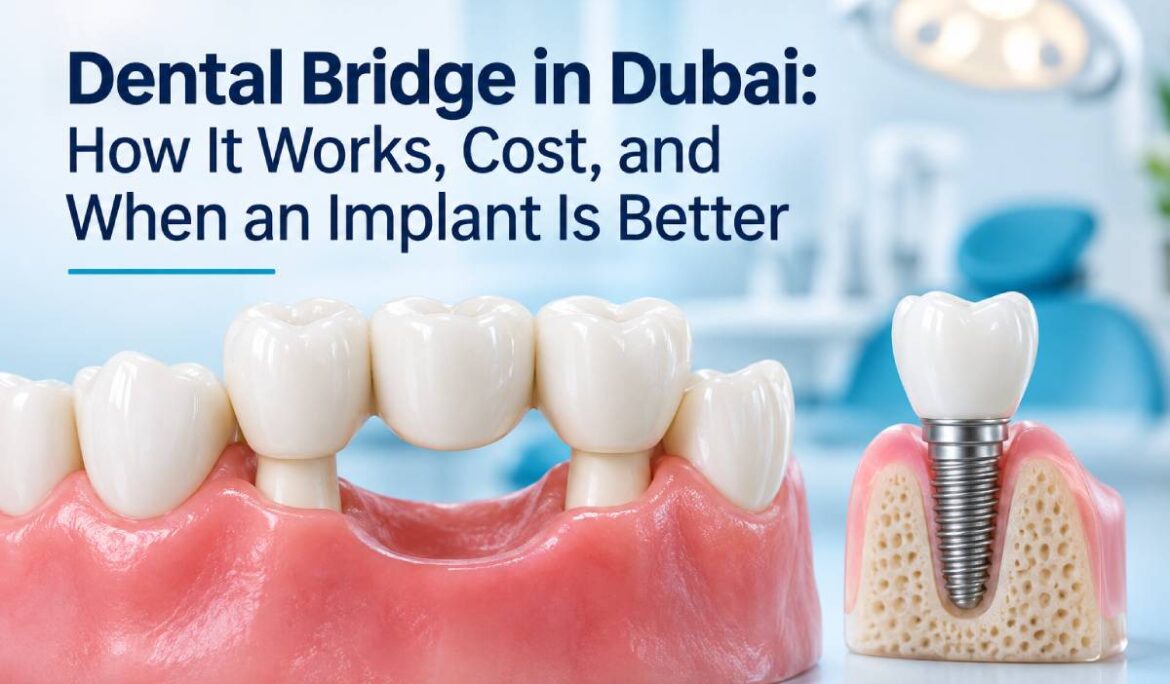
A dental bridge replaces one or more missing teeth with a fixed false tooth held by the teeth or implants on either side of the gap. It is cemented in place, so it does not come out like a denture. A dental bridge in Dubai is often a sensible choice when the neighbouring teeth already need crowns. Patients considering a dental bridge Dubai treatment should also understand that it may be less suitable when neighbouring teeth are healthy and untouched, as these teeth need to be shaped to support the bridge.
Quick Answer
A tooth bridge is a fixed replacement for missing teeth that usually takes two or three visits and can last many years with proper cleaning and maintenance. It suits patients whose neighbouring teeth need restoring anyway, or who cannot have, or do not want, an implant. When the neighbouring teeth are healthy, an implant is often the more conservative option because it leaves them alone.
What Is a Dental Bridge?
A bridge has two parts. The pontic is the false tooth that fills the gap. The abutments hold it in place: usually crowns on the neighbouring teeth, or dental implants. Because the units are joined, you clean under the false tooth with special floss or a small brush rather than flossing normally. Choosing dental bridges in Dubai involves assessing the number of missing teeth, the condition of neighbouring teeth and the patient’s overall oral health before deciding on the most suitable restoration.
Types of Dental Bridges
| Type | Supported by | Often considered when |
| Traditional | Crowns on both neighbouring teeth | Both teeth are strong and would benefit from crowns |
| Cantilever | A crown on one side only | Only one suitable support tooth, with light bite forces |
| Maryland (resin-bonded) | Thin wings bonded behind the neighbouring teeth | A single front tooth is missing, and the neighbours are healthy |
| Implant-supported | Two or more implants | Several teeth in a row are missing, and the bone is suitable |
A Maryland bridge needs little or no drilling, making it a conservative option for some front teeth, but it can come loose under heavy biting. An implant-supported bridge doesn’t rely on natural teeth; it requires surgery and sufficient bone.
Different dental bridges in Dubai are recommended depending on the location of the missing tooth, available support, and bite pressure. Your dentist can help determine which tooth bridge design offers suitable stability and function.
Who Is a Good Candidate for a Tooth Bridge?
A bridge may suit you if one tooth or a short row of teeth is missing, the neighbouring teeth are strong with healthy gums, and those teeth already have large fillings or crowns. It also suits people who want a fixed result faster than implant treatment allows.
Patients considering crown and bridge procedures in Dubai should undergo a detailed dental examination to check the condition of supporting teeth, gum health and bite alignment before treatment begins.
A bridge is often not the best option when:
- The neighbouring teeth are healthy and unfilled, so shaping them would remove sound enamel for good;
- The support teeth have gum disease or bone loss;
- A support tooth has a weak or uncertain root;
- The gap is long, which puts more strain on the supports;
- You grind or clench heavily.
In those cases, an implant or a removable option is usually safer, and the dentist should explain why.
The Dental Bridge Procedure, Step by Step
Most crown and bridge procedures in Dubai follow a structured treatment process to ensure the replacement tooth fits comfortably, supports proper chewing, and blends naturally with surrounding teeth.
- Assessment: the gap, neighbouring teeth, gums, and bite are checked, with X-rays of the roots and bone. Decay or gum disease is treated first.
- Planning: bridge type, material and shade are agreed, often using a digital scan.
- Preparation: under local anaesthetic, the support teeth are shaped for crowns (little or none for a Maryland bridge).
- Scan or impression: sent to the dental laboratory.
- Temporary bridge: protects the prepared teeth and fills the gap.
- Fitting: the final bridge is checked for fit, bite, and appearance, then cemented.
- Review: a follow-up visit checks the bite and gums.
At Bay Avenue Dental Centre, each dental bridge Dubai treatment plan is based on the patient’s dental condition, restoration requirements, and expected long-term results. Most traditional bridges take two to three visits over one to three weeks. Implant-supported bridges take months, because the implants heal first.
Bridge vs Implant: Which Is Better?
Neither is better for everyone; the condition of the neighbouring teeth and the bone in the gap decides. Understanding the bridge vs implant difference helps patients compare treatment time, impact on neighbouring teeth, maintenance requirements, and long-term oral health benefits.
| Factor | Dental bridge | Dental implant |
| Neighbouring teeth | Usually shaped for crowns (not with Maryland bridges) | Left untouched |
| Bone in the gap | Not needed | Needed; grafting may be required |
| Surgery | None | Minor surgery |
| Time to final tooth | Usually 1–3 weeks | Usually several months |
| Bone under the gap | May slowly shrink | Helps maintain it |
| Cleaning | Threader or brush under the false tooth | Much like a natural tooth |
| If a problem develops | The whole bridge may need remaking | Usually dealt with separately |
A dental bridge Dubai treatment often makes more sense when neighbouring teeth already need crowns, bone is limited, or surgery is not suitable. In comparison, an implant may be preferable when neighbouring teeth are healthy and sufficient bone is available. Our guide to implants vs bridges vs dentures adds dentures to the bridge vs implant comparison, while the single tooth implant page explains the implant treatment option.
Dental Bridge Materials
- Porcelain-fused-to-metal: strong and long-established; a grey line can show at the gum over time.
- Zirconia: very strong, suited to back teeth and longer spans.
- E.max (lithium disilicate): the most natural look for front teeth, best for short spans.
The choice depends on where the bridge sits, the span length, your bite, and how visible it is. During crown and bridge procedures in Dubai, the dentist selects the restoration material based on the tooth’s location, chewing pressure, aesthetic requirements, and expected durability.
Dental Bridge Cost in Dubai: What Affects the Price
The dental bridge cost Dubai patients pay varies because a bridge consists of multiple connected units rather than a single replacement tooth.
The overall dental bridge cost Dubai clinics quote depends on several factors, including:
- the number of units (a three-unit bridge is two crowns and one false tooth)
- the type: traditional, cantilever, Maryland, or implant-supported
- the material
- treatment needed first, such as fillings, root canal, or gum care on the support teeth
- implant surgery and grafting, for implant bridges
- laboratory work and follow-up visits
When comparing quotes, ask how many units are included, which material is quoted and why, whether the temporary bridge and preparatory treatment are included, and what happens if the bridge loosens or chips. For implant pricing, see our dental implant treatment page.
Before choosing a dental bridge in Dubai, request a detailed treatment estimate that explains the number of units, material selection, and any additional procedures included in the total cost.
How Long Does a Dental Bridge Last?
Systematic reviews report high survival for well-planned tooth-supported bridges at five years and beyond. How long yours lasts depends mostly on the health of the support teeth and how well the area under the false tooth is cleaned. Typical problems are decay at the edge of a support crown, gum disease, chipped porcelain and, with Maryland bridges, loss of the bond.
With appropriate planning and maintenance, a dental bridge Dubai patients receive can provide reliable tooth replacement for many years, although regular dental reviews remain important. To look after a bridge: brush along the gumline twice a day, clean under the false tooth daily with a floss threader or interdental brush, wear a night guard if you grind, and keep regular check-ups.
Dental Bridge Dubai: Treatment at Bay Avenue Dental Centre
At Bay Avenue Dental Centre in Business Bay, every dental bridge in Dubai treatment plan is developed after evaluating the supporting teeth, bone condition, and bite. Dr. Dilip Deshpande, Prosthodontist & Implantologist, leads crown, bridge, and implant restorations and can explain whether a dental bridge or implant is more suitable for your missing teeth. The clinic is at The Regal Tower, Office 1701, Business Bay, Dubai.
Dental Bridges in Dubai: Frequently Asked Questions
Is a dental bridge in Dubai a permanent solution?
A dental bridge is fixed and cannot be removed by the patient, but it is not a lifelong restoration. With proper oral hygiene and regular dental check-ups, it can last for many years.
Does getting a bridge hurt?
Preparation is done under local anaesthetic. Mild sensitivity for a few days after fitting is common.
Bridge vs implant: which lasts longer?
Both can last many years. Implants remove the risk of a support tooth failing, which is a common reason bridges need replacing.
Can I have a bridge if my neighbouring teeth are healthy?
Yes, but it means shaping healthy teeth. A Maryland bridge or an implant may be more conservative.
How long does it take to get a dental bridge in Dubai?
A traditional bridge usually takes two to three visits over one to three weeks.
Can food get stuck under a bridge?
Yes, which is why daily cleaning under the false tooth matters.
What affects dental bridge cost Dubai?
The price depends on the number of bridge units, selected material, complexity of treatment, and any additional dental procedures required.
Missing a tooth and considering a dental bridge Dubai treatment? A consultation at Bay Avenue Dental Centre can assess your neighbouring teeth, gums, and bone to help determine whether a bridge or implant is the right option. Book a consultation · +971 55 146 5512 · +971 4 277 0247