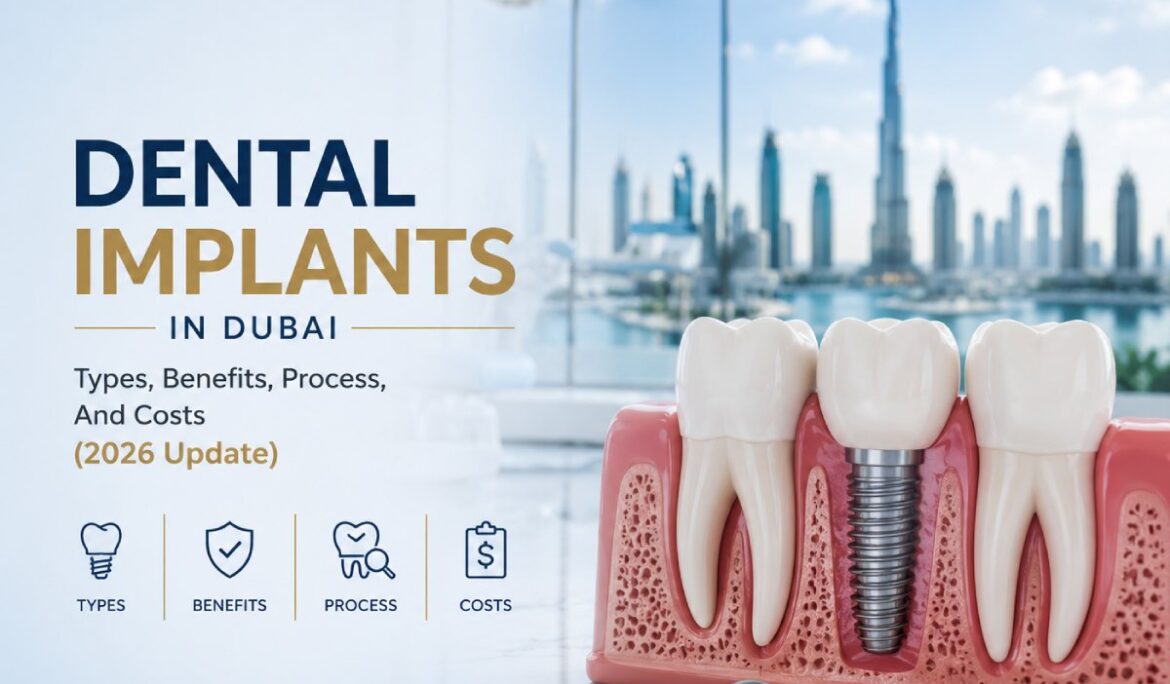
Dental Implants in Dubai: Types, Benefits, Process, And Costs (2026 Update)
Introduction
Missing teeth can affect far more than just your appearance. Tooth loss impacts chewing ability, speech, facial structure, confidence, and long-term oral health. This is why many patients today search for permanent and natural-looking tooth replacement solutions that provide stability, durability, and comfort.
Among all modern tooth replacement options, dental implants are considered the gold standard because they replace both the visible tooth and the missing root underneath the gums. Unlike removable dentures or traditional bridges, dental implants integrate with the jawbone and function similarly to natural teeth.
As cosmetic and restorative dentistry continues to advance, demand for dental implants in Dubai has grown rapidly. Patients today are looking for solutions that not only restore function but also improve smile aesthetics and preserve long-term oral health.
Whether you are missing a single tooth or require full mouth restoration, understanding the different implant options, costs, healing process, and treatment timelines is essential before making a decision.
This complete guide explains everything you need to know about dental implants in Dubai, including implant types, titanium implants, same-day implants, recovery, costs, and how to choose the right implant clinic.
What Are Dental Implants?
Dental implants are artificial tooth roots placed into the jawbone to support replacement teeth such as crowns, bridges, or full-arch restorations. Many patients seeking permanent dental implants services or affordable dental implants treatment near me choose implants because they provide stable, long-term tooth replacement with natural function.
A dental implant consists of three main parts:
- implant post (placed inside the bone)
- abutment connector
- visible crown or prosthetic tooth
The implant post acts like a natural tooth root and integrates with the jawbone over time through a process called osseointegration. This integration creates a strong and stable foundation for replacement teeth. Dental implants restore both function and aesthetics while helping preserve jawbone structure.
How Dental Implants Replace Missing Teeth?
When a natural tooth is lost, the root is also lost. This creates several long-term problems, including:
- bone loss
- shifting teeth
- bite imbalance
- facial collapse over time
Traditional dentures and bridges replace only the visible tooth portion, but implants replace the missing root as well.
The implant is surgically placed into the jawbone, where it gradually bonds with surrounding bone tissue. Once healing is complete, a custom crown or prosthetic tooth is attached to the implant.
This creates:
- stable chewing function
- improved speech
- natural appearance
- long-term support
Dental implants function more like natural teeth compared to other replacement options. Patients researching affordable dental implants treatment near me or same day dental implants specials near me often value solutions that restore appearance, comfort, and everyday function with minimal disruption.
Why Titanium Is Used in Dental Implants?
Titanium is the most commonly used material in dental implants because it is highly biocompatible and integrates successfully with bone.
Titanium implants are widely considered the industry standard due to their:
- strength and durability
- corrosion resistance
- compatibility with human bone
- long-term clinical success
One of the biggest advantages of titanium is its ability to fuse naturally with the jawbone during healing. This allows implants to become stable enough to support chewing forces for many years. Titanium implants in Dubai are commonly used because they offer excellent long-term success rates.
Types of Dental Implants in Dubai
Modern implant dentistry offers multiple treatment options depending on the number of missing teeth, bone condition, and patient goals. Some patients need a single implant, while others may require full-mouth rehabilitation.
Titanium Implants in Dubai
Titanium implants remain the most widely used implant option because of their proven reliability and long-term durability.
Benefits include:
- strong bone integration
- high success rates
- long lifespan
- excellent stability
Titanium implants are suitable for:
- single tooth replacement
- bridges
- full-mouth restorations
These implants have been used successfully in dentistry for decades. Titanium implants continue to be the preferred option for most implant procedures.
Zirconia Implants
Zirconia implants are a metal-free alternative used by some patients seeking ceramic-based solutions.
Advantages include:
- white tooth-colored appearance
- metal-free material
- good aesthetics in thin gum tissue areas
However, zirconia implants are generally less common and may not be suitable for every case. Long-term clinical data for titanium implants remain more extensive. Zirconia implants may be suitable for patients seeking metal-free implant options.
Single Tooth Implants
Single tooth implants replace one missing tooth without affecting neighboring teeth.
The procedure involves:
- placing one implant post
- attaching a custom crown
- restoring natural function and aesthetics
Single implants are often preferred over bridges because adjacent healthy teeth do not need to be altered.
Benefits include:
- preservation of neighboring teeth
- improved bone preservation
- natural appearance
- long-term stability
Single implants provide one of the most conservative tooth replacement solutions.
Full Arch Implants
Patients missing most or all teeth may require full arch implant restorations. These treatments use multiple implants to support an entire arch of teeth.
Popular options include:
- All-on-4 implants
- All-on-6 implants
- full mouth implant rehabilitation
These systems provide:
- fixed teeth
- improved chewing ability
- long-term stability
- better comfort than dentures
Full mouth dental implants clinics in Dubai commonly offer advanced full-arch implant solutions. Patients considering affordable dental implants in Dubai should choose a full mouth dental implants clinic that offers personalized treatment planning based on individual oral health needs.
Why Titanium Implants Are Commonly Used?
Titanium implants dominate modern implant dentistry because they consistently deliver predictable and long-lasting results.
Biocompatibility
Titanium is highly compatible with human tissue, which reduces the risk of rejection or complications. This compatibility allows bone tissue to bond directly with the implant surface. Successful integration is critical because it creates the stability needed for chewing and long-term function. Biocompatibility is one of the biggest reasons titanium implants are so successful.
Strength and Durability
Dental implants experience significant chewing forces every day. Titanium provides the strength needed to withstand these forces over many years.
Titanium implants are:
- lightweight yet strong
- resistant to fracture
- durable under pressure
This makes them highly reliable for both single and full-mouth restorations. Titanium implants are designed for long-term functional performance.
Long-Term Success Rates
Titanium implants have some of the highest long-term success rates in dentistry. With proper care, implants may last decades.
Success depends on:
- oral hygiene
- bone quality
- smoking habits
- regular dental maintenance
Dental implants are considered one of the most predictable long-term dental treatments. Many patients seeking affordable dental implants in Dubai, permanent dental implants services, or a trusted full mouth dental implants clinic prefer titanium implants for their proven durability and long-term reliability.
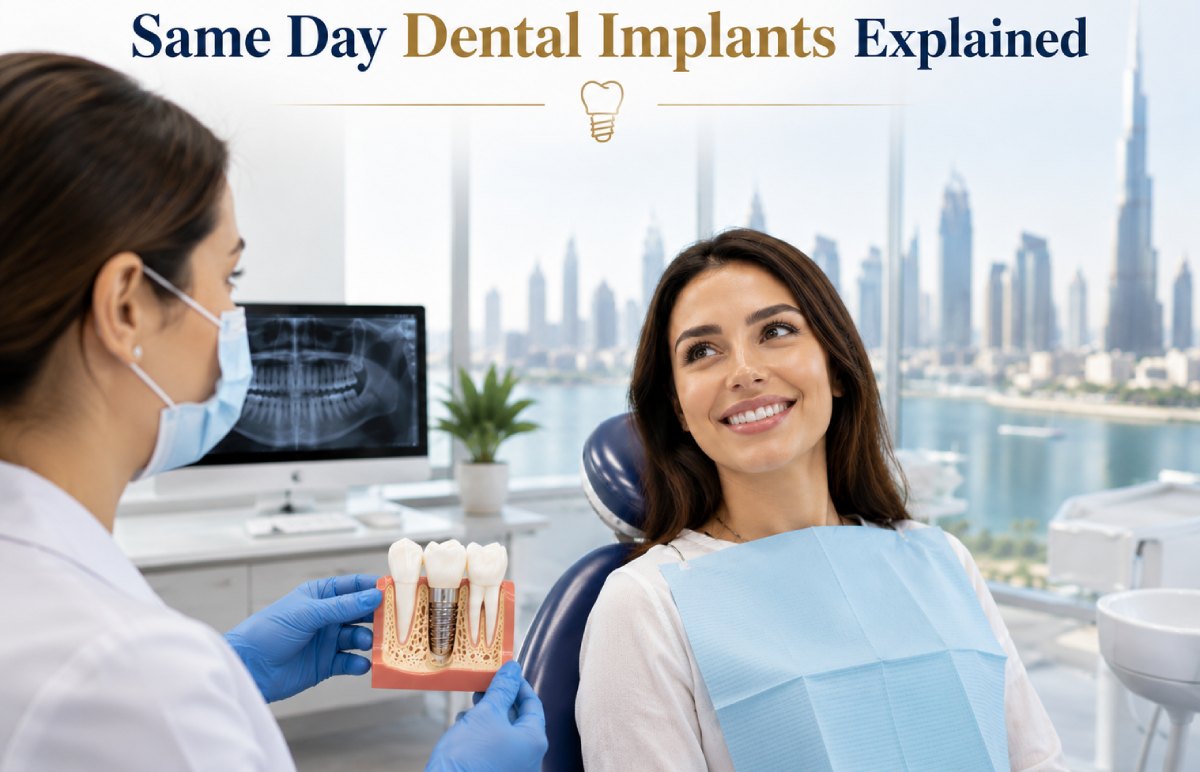
Same Day Dental Implants Explained
Many patients search for same day dental implants specials near me because they want faster smile restoration with fewer appointments. Same-day implants refer to implant procedures where temporary teeth are placed shortly after implant surgery.
Patients do not leave the clinic without teeth during the healing phase. Patients searching for same day dental implants specials near me or affordable dental implants treatment near me should understand that careful case selection is essential for predictable outcomes.
What “Same Day” Actually Means
Same-day implants do NOT usually mean the final permanent teeth are placed immediately.
Instead, patients often receive:
- temporary fixed teeth
- temporary crowns or bridges
- immediate functional restoration
After healing is complete, the final prosthetic teeth are attached. Same-day implants allow patients to maintain appearance and function during recovery.
Who Qualifies for Same-Day Implants?
Not all patients are candidates for immediate implant loading.
Ideal candidates typically have:
- adequate bone density
- healthy gums
- stable bite conditions
- good overall health
Patients with severe bone loss or active infection may require staged treatment instead. Careful evaluation is essential before recommending same-day implants.
When Staged Treatment Is Safer?
In some situations, delaying final restoration improves implant success and healing.
Staged treatment may be recommended for:
- severe bone loss
- gum disease
- complex bite conditions
- smokers with healing concerns
Healing time allows stronger osseointegration before full chewing forces are applied. Safety and long-term success are more important than speed alone.
Same Day Dental Implants Clinic Dubai: What to Look For?
Choosing the right same-day dental implant clinic in Dubai is extremely important because immediate loading procedures require advanced planning and technology.
In-House Imaging Technology
Modern implant clinics use advanced imaging systems such as:
- CBCT scans
- digital implant planning
- 3D diagnostics
These tools improve:
- surgical accuracy
- implant positioning
- treatment predictability
Advanced imaging technology significantly improves implant outcomes.
Experienced Surgical Team
Successful implant treatment requires an experienced multidisciplinary team.
Patients should evaluate:
- implant experience
- surgical qualifications
- restorative expertise
- complex case experience
Experienced implant dentists are better equipped to manage complications and achieve aesthetic results. Implant dentistry requires both surgical precision and restorative expertise.
On-Site Dental Laboratory
Some advanced implant clinics have in-house dental labs for faster and more accurate restoration fabrication.
Benefits include:
- faster turnaround times
- better customization
- improved communication between the dentist and the technician
On-site labs often improve efficiency and prosthetic accuracy.
Dental Implants vs Dentures vs Bridges
Patients replacing missing teeth often compare dental implants, dentures, and bridges before deciding on treatment. While all three options restore missing teeth, they differ significantly in terms of comfort, stability, longevity, and long-term oral health impact.
Understanding these differences helps patients choose the most suitable treatment based on their goals, budget, and oral condition.
Stability and Function
One of the biggest differences between implants, dentures, and bridges is stability during daily activities such as chewing and speaking.
Dental Implants
Dental implants are fixed directly into the jawbone, making them the most stable tooth replacement option available.
Benefits include:
- strong chewing ability
- stable bite force
- no slipping or movement
- natural feel while eating and speaking
Because implants integrate with bone, they function similarly to natural teeth.
Patients can comfortably eat foods that are often difficult with dentures, including:
- meat
- apples
- nuts
- crunchy foods
Dental implants near me provide the closest experience to natural teeth.
Dentures
Dentures rest on top of the gums and rely on suction or adhesives for support.
Common challenges include:
- movement while speaking
- reduced chewing efficiency
- slipping while eating
- discomfort over time
Many patients avoid hard foods because dentures provide less bite force. Over time, dentures may also become loose due to jawbone shrinkage. Dentures restore appearance but offer less stability than implants.
Dental Bridges
Bridges are fixed restorations supported by neighboring teeth.
They provide:
- better stability than dentures
- fixed tooth replacement
- moderate chewing function
However, bridges do not replace missing tooth roots and may require trimming healthy adjacent teeth. Bridges are more stable than dentures but less protective than implants long term.
Comfort and Daily Experience
Comfort is an important factor because tooth replacement affects everyday life.
Dental Implants
Most patients describe implants as feeling very natural after healing.
Advantages include:
- no removable appliance
- no adhesives
- no bulky feeling
- stable long-term comfort
Because implants are fixed, patients often forget they even have restorations. Implants offer the most natural daily experience.
Dentures
Dentures may feel bulky, especially initially.
Patients often experience:
- sore spots
- gum irritation
- pressure areas
- adjustment challenges
Some patients adapt well, while others continue experiencing discomfort over time. Dentures may require ongoing adjustments for comfort.
Bridges
Bridges generally feel more natural than dentures because they are fixed in place. However, patients may need time to adapt to cleaning underneath the bridge structure. Bridges provide moderate comfort with fixed support.
Longevity and Durability
Long-term durability varies significantly between these treatment options.
Dental Implants
With proper care, dental implants can last decades.
Longevity depends on:
- oral hygiene
- bone health
- smoking habits
- regular dental visits
The implant itself often lasts much longer than the crown attached to it. Dental implants are one of the longest-lasting dental restorations available.
Dentures
Dentures usually require:
- adjustments
- relining
- replacement every 5–8 years
Bone loss over time changes denture fit, making maintenance necessary. Dentures often require more ongoing maintenance.
Bridges
Bridges may last 10–15 years or longer with good care.
However, surrounding supporting teeth may develop:
- decay
- gum disease
- structural problems
Bridge lifespan depends heavily on adjacent tooth health.
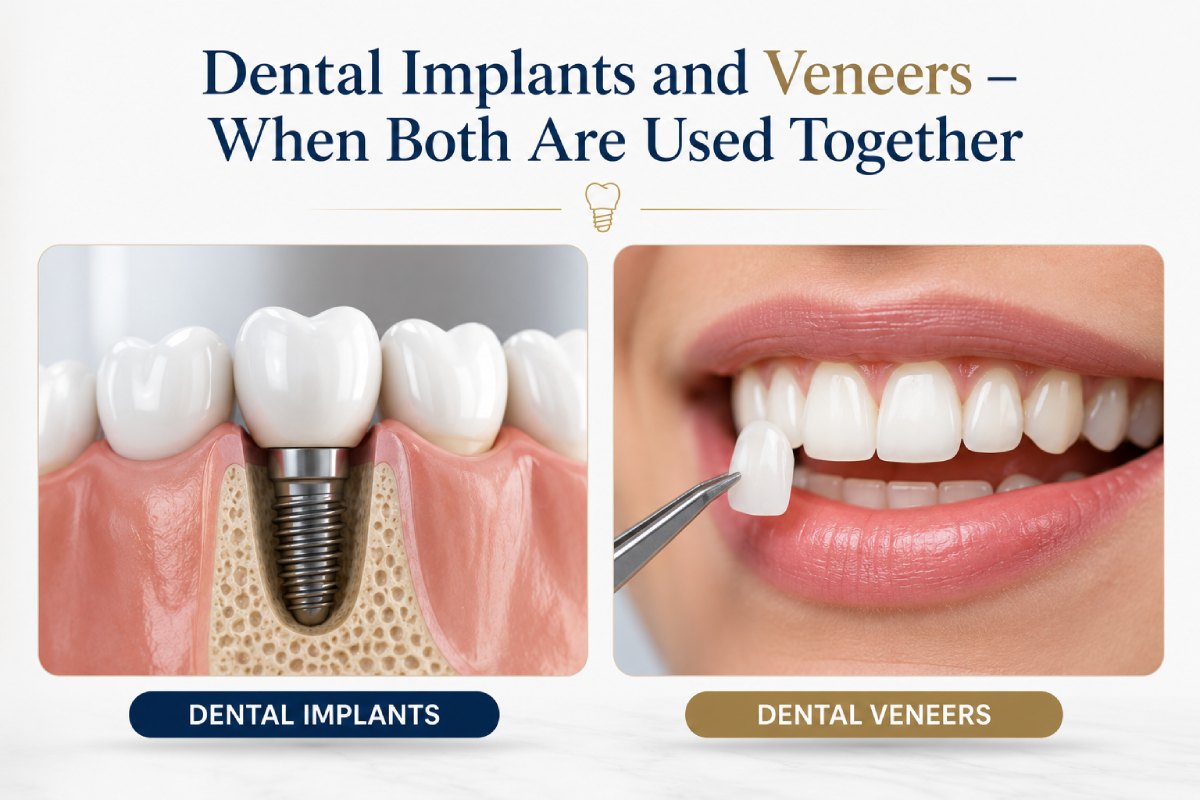
Dental Implants and Veneers Near Me – When Both Are Used Together
Many smile makeover patients require a combination of cosmetic and restorative treatments to achieve ideal results. In some cases, dental implants and veneers are used together as part of a comprehensive smile rehabilitation plan.
Smile Makeovers
Patients with missing teeth may also have:
- worn teeth
- discoloration
- uneven smile shape
- alignment issues
Smile makeovers combine treatments such as:
- implants
- veneers
- whitening
- aligners
- crowns
This allows dentists to restore both function and aesthetics comprehensively. Combining implants and veneers creates a balanced full-smile transformation.
Bite Rehabilitation
Patients with long-term tooth loss often develop bite imbalance or excessive tooth wear. Implants restore missing support, while veneers or crowns improve remaining teeth aesthetics.
This combination helps:
- improve bite function
- restore smile harmony
- protect remaining teeth
- enhance facial aesthetics
Full rehabilitation focuses on both aesthetics and functional balance.
Full Mouth Dental Implants Cost in Dubai
Cost is one of the biggest considerations for patients researching affordable dental implants in Dubai. There is no single standard price because implant treatment is highly customized.
The final cost depends on:
- number of implants
- type of restoration
- bone condition
- surgical complexity
- materials used
Average Implant Cost Ranges
Single dental implant cost in Dubai:
• AED 3,000 – AED 8,000+ per implant
Full mouth dental implants cost:
• AED 35,000 – AED 90,000+
All-on-4 dental implants:
• AED 35,000 – AED 60,000+ per arch
These ranges vary depending on clinic expertise, technology, and restoration quality. Implant pricing reflects both complexity and long-term value.
What Affects Implant Costs?
Several factors influence implant treatment cost.
Number of Implants
Naturally, replacing more teeth increases overall treatment cost.
Patients may need:
- single implant
- multiple implants
- full arch restorations
More implants require more surgical and restorative work.
Bone Grafting Requirements
Some patients lack adequate jawbone support due to long-term tooth loss. Bone grafting may be required before implants.
This increases:
- treatment stages
- healing time
- overall cost
Bone health significantly impacts implant planning and pricing.
Implant Materials and Components
Premium implant systems often cost more due to:
- superior engineering
- stronger research support
- long-term reliability
Restoration materials also affect pricing.
High-quality ceramic crowns and prosthetics provide:
- better aesthetics
- improved durability
- more natural appearance
Material quality directly impacts long-term success and aesthetics.
How Much Does 4 Dental Implants Cost?
Many patients search specifically for “how much does 4 dental implants cost” because All-on-4 treatment is one of the most popular full-mouth restoration options.
In Dubai, All-on-4 treatment generally ranges from:
AED 35,000 – AED 60,000+ per arch
The cost varies depending on:
- implant brand
- temporary vs final prosthetic
- bone grafting needs
- clinic expertise
More advanced prosthetic materials may increase the final cost. All-on-4 dental implants treatment provides full-arch restoration using fewer implants than traditional methods.
Healing and Recovery Timeline
Healing after dental implants occurs in stages and varies based on the complexity of treatment. Understanding the recovery process helps patients prepare realistically.
Surgery Day
Most implant procedures are performed under local anesthesia, with sedation available for anxious patients.
After surgery, patients may experience:
- mild swelling
- tenderness
- minor bleeding
- temporary discomfort
These symptoms are usually manageable with medication and proper care. Most patients return to light daily activities within a short period.
First Few Weeks
Initial healing occurs during the first few weeks after surgery.
Patients are usually advised to:
- avoid hard foods
- Maintain oral hygiene carefully
- attend follow-up visits
Soft tissue healing occurs relatively quickly, but deeper bone integration takes longer. Early healing is critical for implant stability.
Final Crown Placement
Osseointegration usually requires several months before final restorations are attached.
Typical healing periods:
- 3–6 months for standard implants
- shorter timelines for some immediate-load cases
Once integration is complete, custom crowns or prosthetic teeth are placed. Final restorations are only placed after adequate healing and stability.
Who Is a Good Candidate for Dental Implants?
Not every patient automatically qualifies for implants. Proper evaluation is essential for long-term success.
Bone Health
Adequate jawbone support is necessary to stabilize implants.
Patients with severe bone loss may require:
- bone grafting
- sinus lift procedures
- staged treatment planning
Advanced imaging helps evaluate bone availability accurately. Bone quality plays a major role in implant success.
General Health
Overall health affects healing and recovery.
Conditions that may influence implant success include:
- uncontrolled diabetes
- smoking
- immune disorders
- certain medications
However, many patients with medical conditions can still receive implants successfully with proper management. Medical evaluation helps reduce complications and improve healing.
Oral Hygiene and Maintenance
Dental implants require ongoing care similar to natural teeth.
Good candidates should be willing to:
- brush regularly
- attend maintenance visits
- maintain gum health
Poor oral hygiene increases the risk of peri-implant disease and implant complications. Long-term implant success depends heavily on maintenance.
Final Thoughts
Dental implants have transformed modern dentistry by providing stable, long-lasting, and natural-looking tooth replacement solutions. Whether replacing a single missing tooth or restoring a full smile, implants offer significant advantages over dentures and bridges in terms of function, comfort, aesthetics, and bone preservation.
However, successful implant treatment depends on:
- accurate diagnosis
- personalized planning
- experienced clinicians
- proper long-term maintenance
The best way to determine whether implants are right for you is through a detailed consultation and imaging evaluation. Dental implants are an investment in long-term oral health, confidence, and quality of life.
Frequently Asked Questions
Are dental implants permanent?
Dental implants are designed to be long-lasting. With proper care, the implant itself may last decades, although crowns may eventually require replacement.
Are dental implants painful?
Implant surgery is typically performed under anesthesia, making the procedure comfortable. Mild discomfort after surgery is usually temporary and manageable.
How long does dental implant treatment take?
Treatment timelines vary depending on healing, bone condition, and complexity. Full treatment may take several months for complete healing and final restoration.
What is the success rate of dental implants?
Dental implants have very high success rates, especially when placed by experienced clinicians and maintained properly.
Can smokers get dental implants?
Yes, but smoking increases the risk of complications and slower healing. Dentists may recommend reducing or stopping smoking before treatment.
Book Your Dental Implant Consultation in Dubai
Looking for permanent dental implants services in Dubai?
- advanced implant technology
- full mouth dental implant solutions
- experienced implant specialists
- personalized treatment planning
Book your consultation today and restore your smile with confidence.