
How to Fix Gaps Between Teeth: Causes, Problems & Best Teeth Alignment Treatment in Dubai
Introduction
Gaps between teeth, also known as diastema or teeth spacing, are one of the most common cosmetic dental concerns among both teenagers and adults. While some small gaps may not cause serious oral health problems, larger spaces between teeth can affect smile appearance, confidence, bite function, and even long-term dental health.
Many patients search for answers such as:
- How to close teeth gaps
- How to Fix Gaps Between Teeth
- best gap between teeth treatment
- cosmetic teeth alignment in Dubai
- teeth spacing solutions
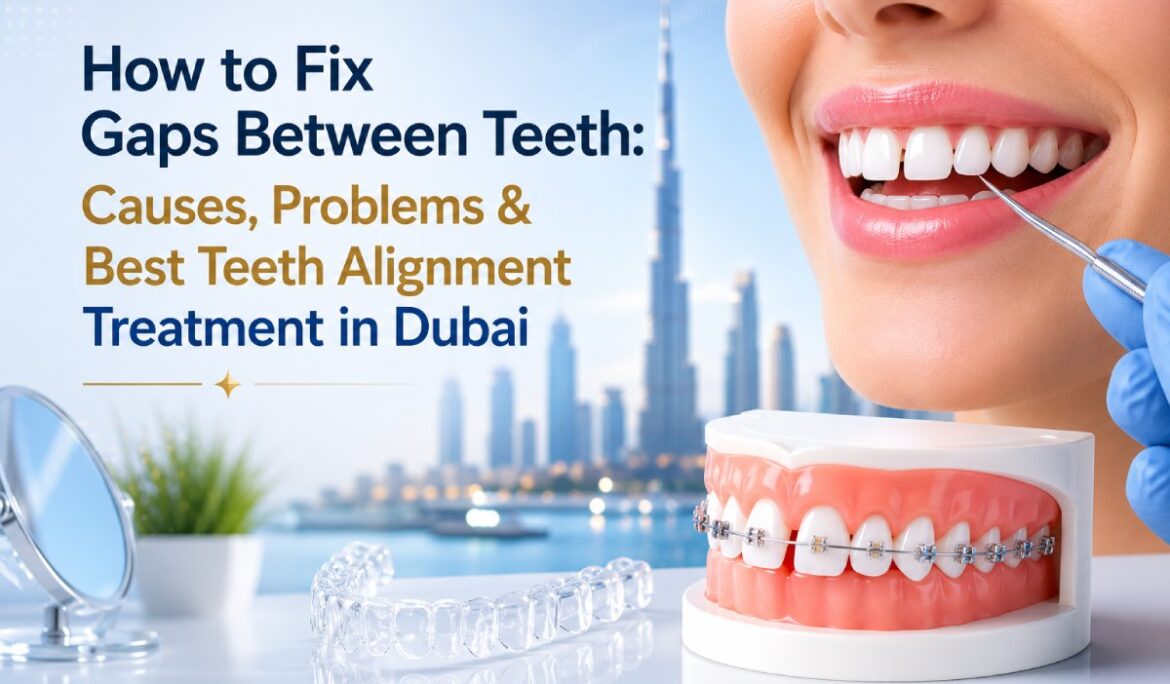
Modern cosmetic dentistry offers multiple solutions to fix gaps between teeth, depending on the size of the spacing, tooth alignment, gum health, and aesthetic goals. Understanding how to fix gaps between teeth begins with identifying the underlying cause and selecting the most appropriate treatment approach. Today, patients no longer need to live with unwanted spacing issues. Treatments such as clear aligners, veneers, bonding, braces, and smile makeovers can successfully close gaps and improve smile symmetry.
This guide explains everything you need to know about teeth spacing causes, complications, treatment options, costs, and how to choose the best teeth alignment solution in Dubai.
What Causes Gaps Between Teeth?
Gaps between teeth can develop for many different reasons. In some patients, spacing is genetic, while in others it develops over time due to dental habits, missing teeth, or bite problems.
Understanding the cause is important because successful treatment depends on correcting the underlying issue rather than simply hiding the gap. Knowing the reason behind spacing is the first step in understanding how to fix gaps between teeth effectively and achieve lasting results.
Genetics and Jaw Size
One of the most common causes of gaps between teeth is inherited jaw and tooth size differences.
Some patients naturally have:
- larger jaw structure
- smaller teeth
- extra spacing between teeth
When the teeth are too small relative to the jawbone, spaces may appear naturally.
These gaps commonly occur:
- between the front teeth
- throughout the dental arch
- symmetrically on both sides
Genetics plays a major role in natural teeth spacing patterns.
Missing Teeth
Missing teeth can create spacing problems because neighboring teeth gradually drift into empty areas over time.
This movement may cause:
- uneven spacing
- bite imbalance
- shifting teeth
- worsening alignment issues
The longer missing teeth remain untreated, the more surrounding teeth may move. Replacing missing teeth early helps prevent spacing complications.
Gum Disease and Bone Loss
Advanced gum disease can weaken the bone and supporting structures around teeth.
As bone support decreases:
- teeth may loosen
- teeth begin shifting
- spaces may widen over time
This type of spacing is often progressive and may worsen without periodontal treatment. Gum health is essential for maintaining stable tooth alignment.
Tongue Thrusting and Oral Habits
Certain habits may place pressure on teeth over time and gradually create gaps.
Examples include:
- tongue thrusting
- thumb sucking
- nail biting
- improper swallowing patterns
These habits are especially problematic during childhood development, but can also affect adults. Long-term oral habits can slowly alter tooth positioning.
Teeth Size and Shape Problems
Some people naturally have teeth that are smaller, narrower, or differently shaped.
This may create:
- visible spacing
- asymmetrical smile appearance
- uneven proportions
Cosmetic treatments such as veneers or bonding are commonly used in these cases.Tooth shape irregularities often contribute to visible smile gaps.
Problems Caused by Teeth Gaps
Some patients view gaps only as cosmetic concerns, but spacing problems may also affect oral function and long-term dental health.
The severity depends on:
- gap size
- bite condition
- overall tooth alignment
Aesthetic Concerns
The most common reason patients seek gap between teeth treatment is cosmetic dissatisfaction.
Spacing may make the smile appear:
- uneven
- incomplete
- asymmetrical
- less youthful
Many patients feel self-conscious about smiling in photos or social situations. Cosmetic improvement is one of the biggest motivations for treatment.
Food Trapping and Hygiene Issues
Large gaps can trap food particles more easily, increasing the risk of:
- plaque buildup
- bad breath
- gum irritation
- cavities between teeth
Some patients struggle to clean certain areas effectively. Teeth spacing may increase oral hygiene challenges.
Bite Problems and Uneven Pressure
Spacing sometimes affects the way teeth contact during chewing.
This may lead to:
- uneven bite pressure
- excessive wear on certain teeth
- jaw discomfort
- bite instability
Correct alignment improves both aesthetics and functional balance. Bite harmony is important for long-term oral health.
Speech Concerns
In some cases, larger front gaps may slightly affect speech pronunciation. Patients may notice difficulty pronouncing certain sounds or changes in airflow during speaking. This is more common when spacing is significant. Teeth positioning contributes to speech clarity and airflow control.
How to Fix Gaps Between Teeth?
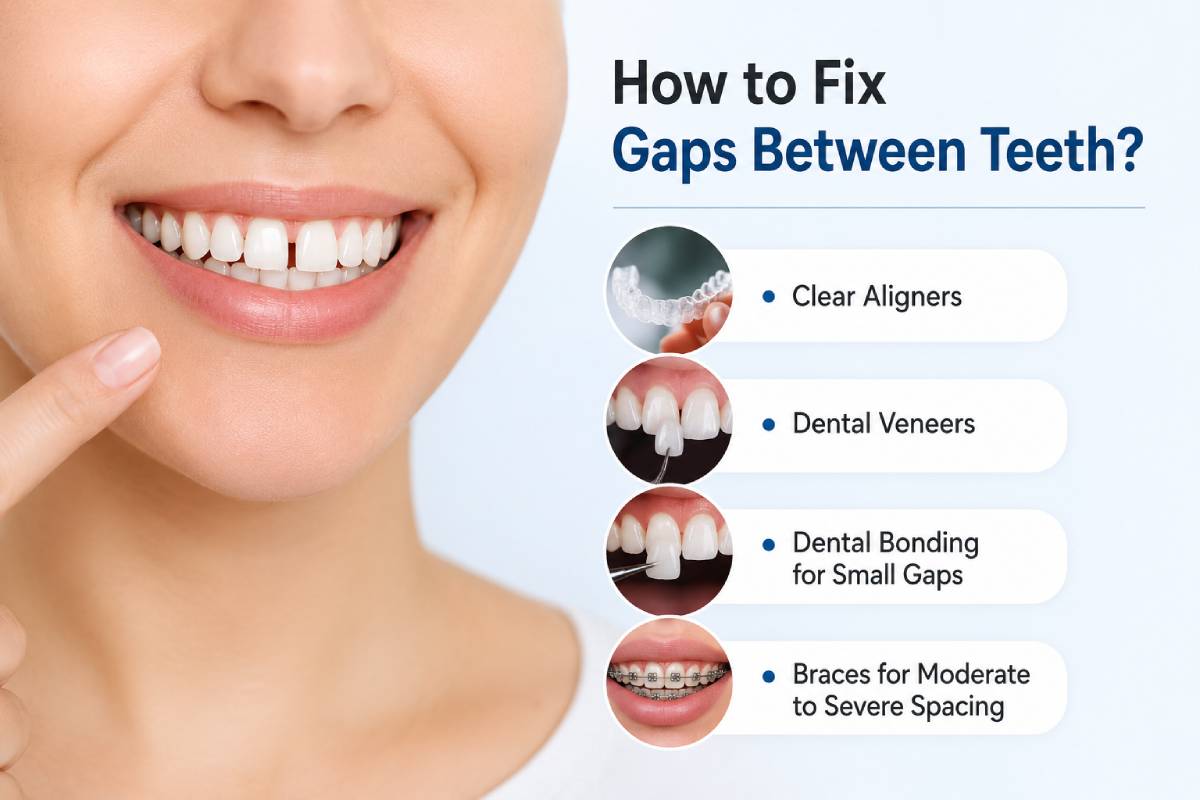
Modern cosmetic dentistry offers multiple tooth spacing solutions depending on the underlying cause and severity of the spacing. Understanding how to fix gaps between teeth requires a personalized assessment that considers both cosmetic concerns and long-term oral health.
Treatment selection depends on:
- size of gaps
- tooth shape
- bite condition
- gum health
- patient goals
There is no universal solution because every smile is different. The best approach for how to close teeth gaps depends on the severity, bite alignment, and overall smile objectives.
Clear Aligners for Teeth Gaps
Clear aligners are one of the most popular solutions for closing teeth gaps because they gradually move teeth into proper alignment using transparent trays.
Aligners are especially effective for:
- mild to moderate spacing
- front tooth gaps
- generalized spacing
Benefits include:
- nearly invisible appearance
- removable convenience
- comfortable treatment
- digitally planned movement
Many adults prefer aligners because they provide discreet cosmetic teeth alignment in Dubai. Clear aligners are one of the most conservative and aesthetic spacing treatments available.
How do Aligners Close Teeth Gaps?
Each aligner applies gentle pressure to gradually move teeth closer together.
Treatment typically involves:
- digital scanning
- customized treatment planning
- sequential aligners
- regular progress monitoring
As teeth shift gradually, spaces become smaller until proper alignment is achieved. Aligners improve spacing while maintaining natural tooth structure.
Veneers for Closing Gaps
Dental veneers are another popular option for fixing gaps between teeth, especially when spacing is combined with cosmetic concerns such as discoloration or uneven tooth shape.
Veneers are thin shells placed over the front surface of teeth to improve:
- spacing
- shape
- symmetry
- smile aesthetics
They are ideal for:
- small to moderate gaps
- uneven teeth
- smile makeover cases
Veneers provide a fast cosmetic transformation with highly aesthetic results.
Advantages of Veneers for Teeth Gaps
Benefits include:
- immediate cosmetic improvement
- natural-looking appearance
- improved smile symmetry
- stain-resistant porcelain options
However, veneers do not physically move teeth like orthodontics. Veneers visually close spaces rather than repositioning teeth.
Dental Bonding for Small Gaps
Bonding is a minimally invasive cosmetic procedure commonly used for smaller spaces between teeth.
The dentist applies tooth-colored composite resin to reshape teeth and reduce spacing.
Bonding is ideal for:
• small front gaps
• minor cosmetic corrections
• affordable smile enhancement
Benefits include:
- fast treatment
- conservative approach
- lower cost
- same-day results
Bonding is often used for subtle cosmetic gap correction.
Braces for Moderate to Severe Spacing
Traditional braces remain highly effective for larger or more complex spacing problems.
Braces may be recommended when spacing is combined with:
- bite issues
- tooth rotation
- severe misalignment
- jaw imbalance
Modern braces are smaller and more comfortable than older systems. Braces provide highly controlled movement for difficult alignment cases.
Cosmetic Teeth Alignment in Dubai
Cosmetic teeth alignment focuses on improving both aesthetics and function.
Unlike traditional orthodontics, focused purely on bite correction, cosmetic alignment emphasizes:
- smile symmetry
- facial harmony
- discreet treatment options
- minimally invasive approaches
Patients increasingly seek cosmetic teeth alignment in Dubai because they want natural-looking smile improvement without highly visible appliances.
Aligners vs Braces for Teeth Gaps
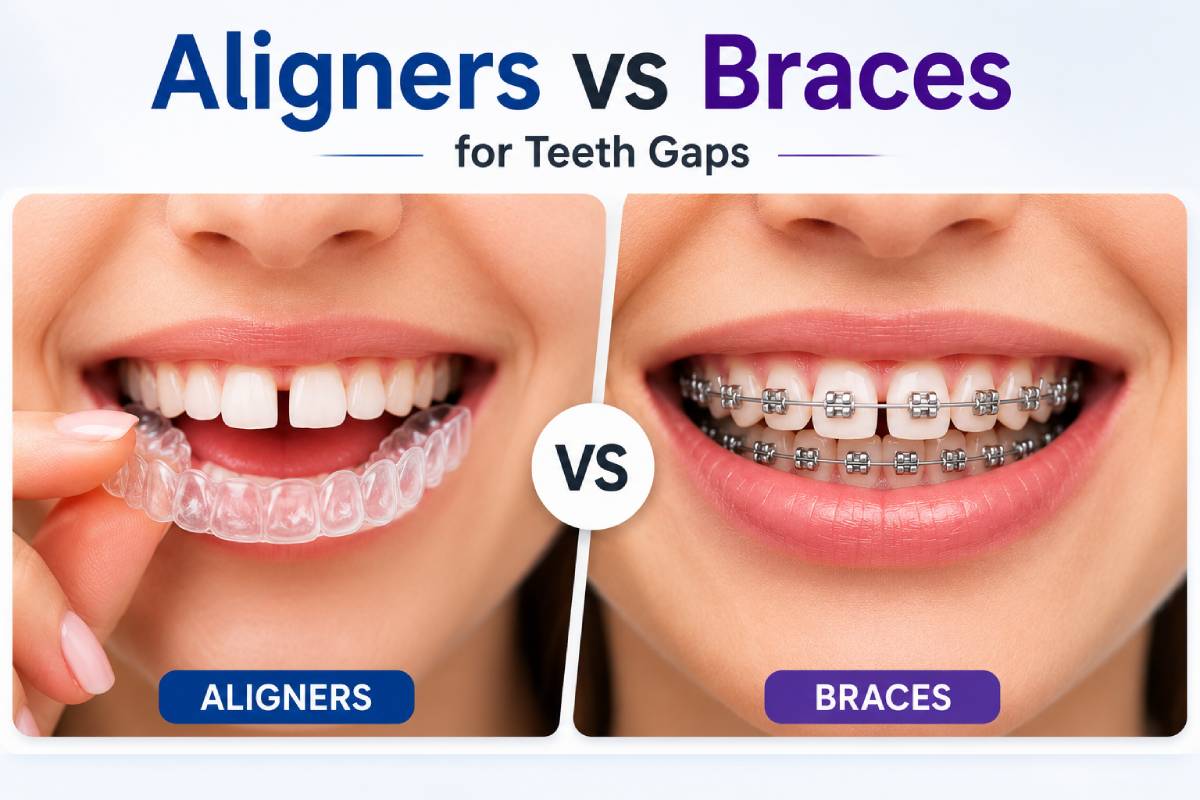
Aligners vs Braces: The best treatment depends on case complexity.
Aligners
Best for:
- mild to moderate spacing
- adults and professionals
- patients wanting discreet treatment
Advantages include:
- removable trays
- easier oral hygiene
- better aesthetics during treatment
Braces
Best for:
- severe spacing
- bite correction
- complex orthodontic problems
Advantages include:
- stronger movement control
- effective for difficult cases
- continuous tooth movement
The ideal treatment depends on spacing severity and smile goals.
Smile Makeovers for Multiple Cosmetic Problems
Some patients with teeth gaps also have:
- discoloration
- chipped teeth
- worn enamel
- uneven smile shape
In these cases, a smile makeover may combine:
- veneers
- whitening
- aligners
- bonding
- gum contouring
This comprehensive approach improves overall smile harmony rather than addressing spacing alone. Smile makeovers combine cosmetic dentistry treatments for a full smile transformation.
Teeth Spacing Solutions: Which Treatment Is Best?
There is no single universal treatment for teeth gaps because every spacing problem is different. The best solution depends on:
- size of the gap
- tooth alignment
- bite condition
- gum health
- smile goals
- patient budget
Some patients only require minor cosmetic correction, while others need full orthodontic treatment or comprehensive smile rehabilitation. The ideal treatment should improve both aesthetics and long-term oral function.
Gap Between Teeth Treatment Cost in Dubai
One of the most common questions patients ask is how much the gap is between teeth treatment costs in Dubai.
The cost varies significantly because spacing treatments differ in complexity, materials, and treatment duration.
Clear Aligners Cost
Clear aligners are one of the most popular teeth spacing solutions because they provide discreet treatment and predictable results.
Average cost in Dubai: AED 8,000 – AED 20,000+
The final cost depends on:
- number of aligners required
- complexity of spacing
- treatment duration
- clinic technology
Mild spacing cases generally require fewer aligners and lower costs. Aligners are ideal for patients seeking aesthetic and minimally visible treatment.
Veneers Cost for Teeth Gaps
Veneers are commonly used when spacing is combined with discoloration, uneven teeth, or smile asymmetry.
Average veneer cost in Dubai:
Composite veneers: AED 800 – AED 2,000+ per tooth
Porcelain veneers: AED 1,500 – AED 4,500+ per tooth
The total cost depends on:
- number of veneers
- material quality
- smile design complexity
Veneers provide fast cosmetic enhancement but are usually more expensive than bonding.
Dental Bonding Cost
Bonding is one of the most affordable cosmetic treatments for small gaps.
Average cost: AED 500 – AED 1,500+ per tooth
Bonding is commonly chosen by patients looking for:
- lower-cost cosmetic improvement
- same-day treatment
- minimally invasive procedures
Bonding is ideal for minor spacing corrections and cosmetic refinements.
Braces Cost
Traditional braces are recommended for moderate to severe spacing and alignment issues.
Average braces cost in Dubai: AED 6,000 – AED 18,000+
Pricing varies based on:
- treatment complexity
- orthodontic duration
- brace type
- clinic expertise
Braces remain highly effective for complex spacing and bite problems. Patients exploring how to close teeth gaps should consider treatment goals, complexity, and long-term benefits alongside overall costs.
How Long Does It Take to Close Teeth Gaps?
Treatment duration depends on:
- size of the gap
- treatment method used
- bite complexity
- patient compliance
Some cosmetic corrections provide immediate results, while orthodontic movement requires gradual adjustment over time.
Veneers and Bonding Timeline
Veneers and bonding provide some of the fastest cosmetic results.
Dental Bonding
Usually completed in: 1 visit. This makes bonding ideal for patients wanting quick smile enhancement before events or social occasions.
Veneers
Porcelain veneers usually require:
- consultation
- smile planning
- preparation
- fabrication
- final placement
Typical timeline: 1–3 weeks. Veneers provide a fast but highly aesthetic smile transformation.
Aligners and Braces Timeline
Orthodontic spacing correction requires gradual tooth movement.
Clear Aligners
Typical duration: 3–12 months, depending on spacing severity Patients with mild front gaps may complete treatment relatively quickly.
Braces
Braces may require: 12–24 months for more complex cases This is especially true when spacing is combined with bite correction. Orthodontic treatment takes longer but physically repositions teeth for long-term stability.
Who Is a Good Candidate for Teeth Gap Treatment?
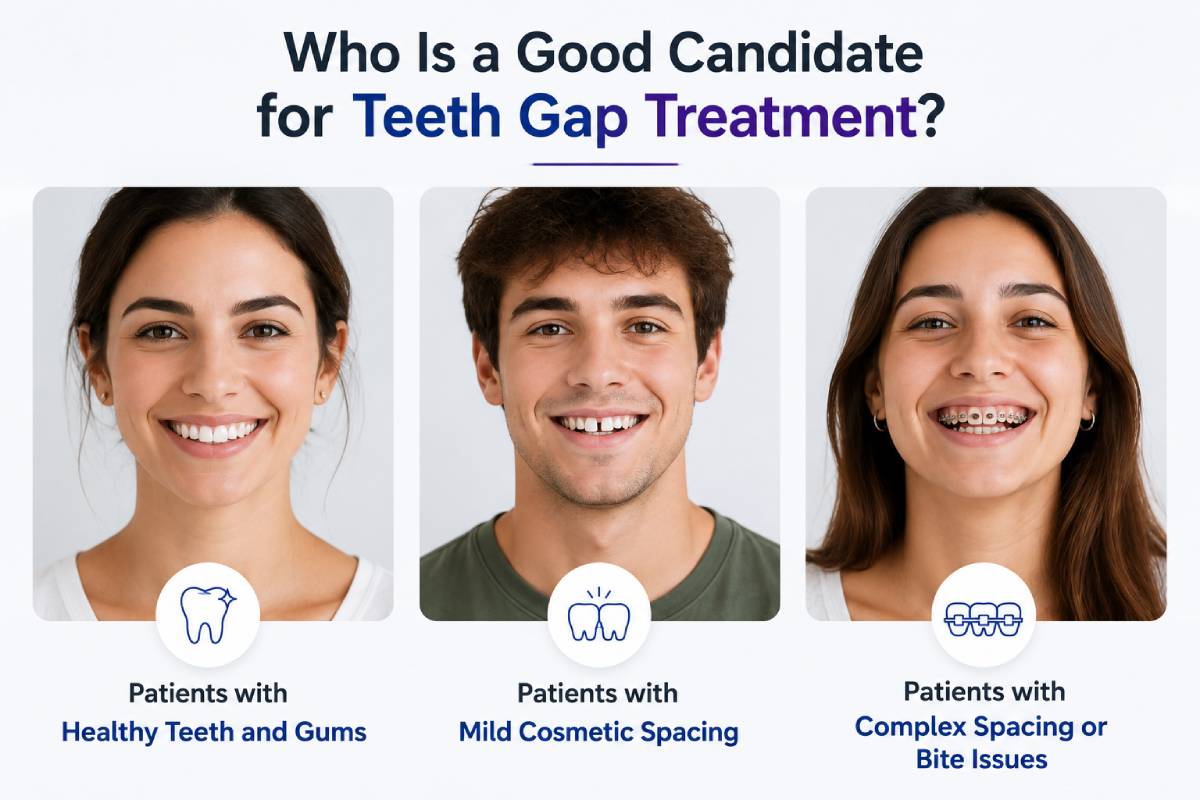
Most patients with spacing concerns qualify for cosmetic or orthodontic treatment, but the ideal approach depends on their specific dental condition.
Patients with Healthy Teeth and Gums
Patients with a healthy oral condition often qualify for:
- veneers
- bonding
- aligners
- braces
Good gum health is especially important before cosmetic procedures. Healthy gums improve treatment success and aesthetics.
Patients with Mild Cosmetic Spacing
Small gaps may often be treated conservatively using:
- bonding
- veneers
- minor aligner treatment
These options provide aesthetic improvement with minimal intervention. Conservative cosmetic treatments work well for small front gaps.
Patients with Complex Spacing or Bite Issues
Patients with:
- severe spacing
- bite imbalance
- rotated teeth
- jaw discrepancies
may require more advanced orthodontic planning. In these cases, braces or comprehensive aligner treatment may be recommended. Complex spacing often requires orthodontic correction rather than cosmetic camouflage alone.
Recovery and Adjustment After Gap Closure Treatment
Recovery varies depending on the treatment performed.
Recovery After Veneers or Bonding
Most patients resume normal activities immediately after treatment.
Some patients may experience temporary:
- sensitivity
- mild gum irritation
- adjustment to the new tooth shape
These symptoms usually improve quickly. Cosmetic procedures generally involve minimal downtime.
Recovery After Aligners or Braces
Orthodontic treatment requires gradual adaptation.
Patients may experience:
- pressure after adjustments
- temporary soreness
- speech adaptation with aligners
These symptoms are usually mild and temporary. Tooth movement naturally creates short-term adjustment periods.
Maintaining Results After Teeth Gap Treatment
Long-term maintenance is essential to preserve alignment and aesthetics. Retainers After Orthodontic Treatment Patients who complete aligner or braces treatment usually require retainers to prevent teeth from shifting back.
Retainers help maintain:
- tooth positioning
- bite stability
- long-term alignment results
Failure to wear retainers may cause relapse over time. Retention is critical after orthodontic spacing correction.
Oral Hygiene and Regular Dental Care
Patients should maintain:
- regular brushing and flossing
- dental cleanings
- routine checkups
Good hygiene helps preserve both cosmetic and orthodontic results. Long-term maintenance protects your smile investment.
Final Thoughts
Gaps between teeth can affect both smile aesthetics and oral function, but modern dentistry offers multiple highly effective solutions.
Whether the spacing is caused by genetics, missing teeth, gum disease, or alignment problems, treatments such as:
- clear aligners
- veneers
- bonding
- braces
- smile makeovers
can successfully improve smile appearance and stability.
There is no single best treatment for every patient. The right solution depends on:
- spacing severity
- oral health condition
- cosmetic goals
- long-term expectations
The best way to determine the ideal treatment is through a personalized consultation and smile evaluation. Successful gap closure treatment should improve both aesthetics and long-term oral health.
Frequently Asked Questions
What is the best treatment for gaps between teeth?
The best treatment depends on the size and cause of the gap. Options include aligners, veneers, bonding, and braces.
Can veneers close gaps between teeth?
Yes. Veneers can visually close small to moderate gaps while improving tooth shape and color.
Are clear aligners effective for teeth gaps?
Yes. Clear aligners are highly effective for mild to moderate spacing problems and provide discreet treatment.
How long does it take to close teeth gaps?
Treatment time varies from one visit for bonding to several months for aligners or braces.
Can teeth gaps come back after treatment?
Yes. Without proper retention, teeth may gradually shift over time, especially after orthodontic treatment.
Book Your Teeth Alignment Consultation in Dubai
Looking for the best gap between teeth treatment in Dubai?
- cosmetic teeth alignment solutions
- veneers, bonding & aligners
- personalized smile makeover plans
- advanced digital smile analysis
Book your consultation today and achieve a more balanced, confident smile.