
Gum Specialist Dubai: When to See a Periodontist and What They Treat
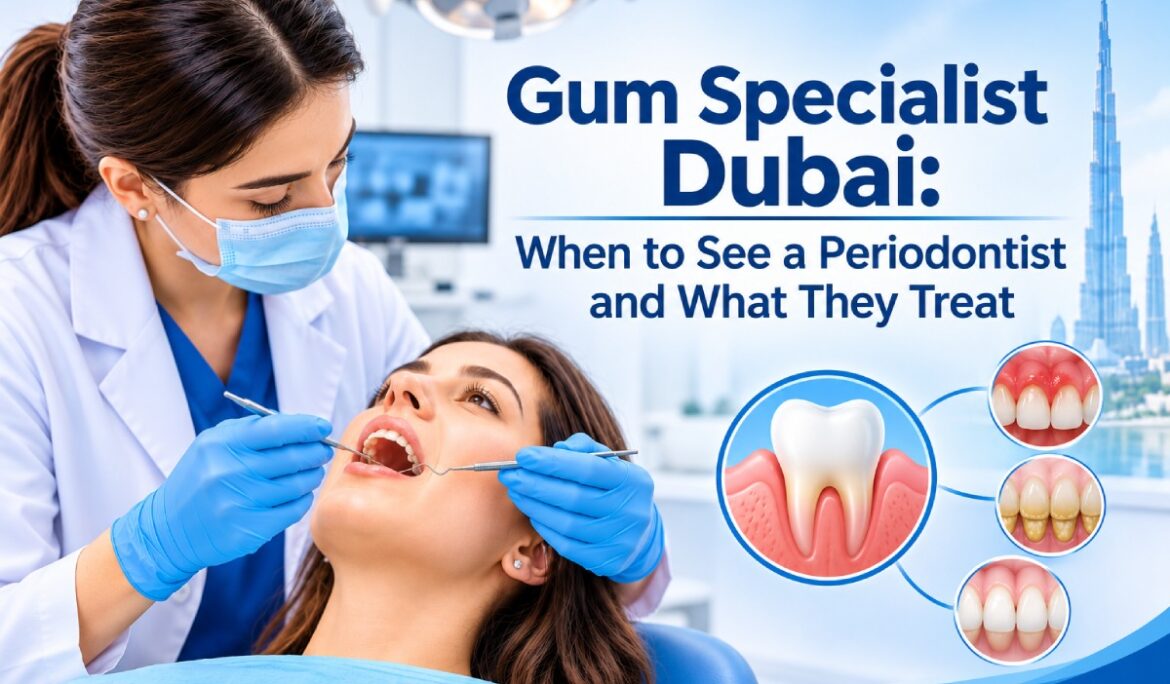
A periodontist is a dentist with specialist training in the gums and the bone that holds the teeth. A gum specialist Dubai may be recommended when gum problems go beyond what routine cleaning can control, including persistent bleeding, deep gum pockets, receding gums, loose teeth, or preparation for dental implants. If you are searching for a gum specialist Dubai clinic, the important question is not only who to consult, but whether your symptoms need specialist care now.
Quick Answer
Consult a periodontist in Dubai if your gums bleed regularly, have pulled back from the teeth, feel swollen or tender, or if any tooth feels loose. A qualified gum specialist in Dubai can identify the underlying cause and recommend appropriate treatment. A gum specialist measures the pockets around each tooth, checks the bone on X-rays, stages any gum disease, and treats it with deep cleaning, surgery, grafting, or regenerative procedures as needed. Early assessment usually means simpler treatment.
Periodontist vs General Dentist: Who Does What?
Many patients ask whether a gum doctor or gum specialist periodontist is different from their regular dentist. Both care for gums, but their specialist training and the complexity of cases they handle differ.
| General dentist | Periodontist (gum specialist) | |
| Training | Dental degree | Dental degree plus a specialist postgraduate degree in periodontology |
| Typical gum care | Check-ups, scaling and polishing, early gingivitis | Moderate to advanced periodontitis, recession, gum surgery |
| Procedures | Routine cleaning, basic deep cleaning | Advanced deep cleaning, flap surgery, gum grafts, regeneration, crown lengthening |
| Implants | Someplace implants | Implant placement, bone grafting, treatment of failing implants |
| When involved | Routine care and first diagnosis | Referral or direct visit when disease is advanced, complex, or recurring |
In practice, the two work together. Your general dentist keeps up routine care, and the periodontist manages the gum disease and the maintenance plan.
Signs You Need a Gum Specialist
Gum disease is often painless until it is advanced, so these signs matter even if nothing hurts:
- Bleeding when brushing or flossing on most days
- Red, swollen, or tender gums
- Receding gums, longer-looking teeth, or sensitive exposed roots
- Bad breath or a bad taste that does not go away
- Loose or drifting teeth, or new gaps between front teeth
- Pus between the teeth and gums
- Deep pockets (usually 4 mm or more) recorded at a check-up
- Diabetes, smoking, or a family history of gum disease, which raise the risk
- Planning implants, braces, or veneers, where gum health must be stable first
A gum specialist Dubai can assess these symptoms before they progress into advanced periodontal disease. Visiting a periodontist in Dubai early can help identify gum damage and determine whether non-surgical or advanced treatment is required. If a tooth already feels loose, read our guide to loose tooth treatment, which explains when it can be saved.
What Happens at a Periodontal Assessment?
A first visit with a gum specialist periodontist, or gum doctor is primarily focused on detailed examination, gum measurements, and diagnosis.
- Medical and dental history: diabetes, medications, smoking, and previous gum treatment all affect the plan.
- Periodontal charting: a fine probe measures the pocket depth at six points around every tooth and records bleeding, recession, and mobility.
- X-rays: show bone levels around each root. A 3D scan is used only when specific questions need it, such as implant planning.
- Staging and grading: the disease is classified by severity (stage I to IV) and by how fast it is likely to progress (grade A to C), following the 2017 international classification.
- Treatment plan: you leave with a written plan, the order of treatment, and an estimate.
The chart becomes the baseline. Every later visit is measured against it, which is how you know whether treatment is working.
Periodontal Treatment in Dubai: What a Gum Specialist Provides
Periodontal treatment in Dubai follows a staged approach, starting with the least invasive option and progressing to advanced procedures only when gum pockets remain deep after initial treatment.
Oral hygiene coaching and risk control
Brushing and interdental cleaning technique, smoking cessation advice, coordination with your doctor if diabetes is not well controlled.
Deep cleaning (scaling and root debridement)
Removes bacteria and hardened deposits below the gumline. Many patients need nothing more. See our gum disease treatment page.
Periodontal flap surgery
For pockets that stay deep after deep cleaning and reassessment. Our guide to periodontal flap surgery explains when it is needed.
Regenerative procedures
In suitable bone defects, grafts or membranes can help rebuild some lost support.
Gum grafting
Covers exposed roots and thickens thin gums. See gum recession treatment.
Laser-assisted gum therapy
Used alongside conventional treatment in selected cases.
Crown lengthening and gum contouring
For cosmetic or restorative reasons.
Implants and bone grafting
Replacing teeth lost to gum disease once the disease is controlled, and treating infection around existing implants.
An experienced periodontist in Dubai evaluates how the gums respond after each stage of treatment. The choice of periodontal treatment in Dubai depends on the severity of gum disease, bone loss, and individual oral health needs.
Gum Health Before Implants, Braces and Veneers
Healthy, stable gums are the foundation for most other dental treatment.
- Implants: active gum disease raises the risk of infection around implants (peri-implantitis). It should be controlled before an implant is placed.
- Braces and aligners: moving teeth through inflamed gums can speed up bone loss. Adults with a history of gum disease usually need periodontal clearance first.
- Veneers and crowns: inflamed gums bleed, recede, and change shape, which affects how well restorations fit and look.
This is why a gum specialist Dubai often works alongside orthodontists, implant dentists, and cosmetic dentists. Consulting a periodontist in Dubai before these procedures helps ensure that gum health is stable before treatment begins.
How Often Should You See a Periodontist After Treatment?
Periodontitis can be controlled but not cured. After active treatment, most patients move to supportive periodontal care, typically every three to four months at first. The interval is then adjusted according to pocket depths, bleeding, and risk factors. Regular charting shows whether the gums are stable.
Skipping maintenance is one of the most common reasons gum disease returns. A periodontist Dubai specialist can determine the appropriate maintenance schedule based on gum pocket measurements and individual risk factors.
How to Choose a Gum Specialist Dubai
Finding the best periodontist in Dubai involves more than comparing clinic names. Look for a qualified gum specialist periodontist who provides a detailed diagnosis, explains treatment options, and offers long-term periodontal maintenance.
- Is the dentist a specialist periodontist with a postgraduate qualification in periodontology?
- Will they chart my pockets and show me the results?
- What stage and grade is my gum disease?
- Which treatments do you recommend first, and why?
- When would surgery be considered, and what are the alternatives?
- What maintenance will I need afterwards, and how often?
- Do you coordinate with my general dentist, orthodontist or implant dentist?
Gum Specialist Care at Bay Avenue Dental Centre
At Bay Avenue Dental Centre in Business Bay, gum treatment follows a staged approach: diagnosis and charting first, non-surgical care next, and surgery only where pockets remain. Dr. Alok Mehta, Specialist Periodontist & Implantologist, provides non-surgical and surgical periodontal treatment, gum grafting, regenerative procedures, and implant care.
Choosing the best periodontist in Dubai also means finding a specialist who explains treatment alternatives and creates a personalised care plan. The clinic is at The Regal Tower, Office 1701, Business Bay, Dubai.
Periodontist Dubai: Frequently Asked Questions
Do I need a referral to see a periodontist in Dubai?
Usually not. Many patients book directly, although some insurers ask for a referral before covering treatment.
Is bleeding when brushing normal?
No. Regular bleeding is a sign of gum inflammation and should be checked.
Can gum disease be cured?
It can be controlled and kept stable, but it needs ongoing maintenance.
Is periodontal treatment painful?
Deep cleaning and surgery are done under local anaesthesia. Some tenderness for a few days afterwards is common.
Can lost gum or bone grow back?
Not on its own. Grafts and regenerative procedures can restore some support in suitable sites.
Does a gum specialist place implants?
Many periodontists do, particularly where bone grafting or a history of gum disease makes planning more complex.
When should I visit a gum doctor in Dubai?
You should visit a gum doctor if you experience persistent bleeding, gum recession, swelling, bad breath, or loose teeth. A specialist assessment can help identify gum disease and determine the appropriate treatment.
How do I find a periodontist Dubai that patients can trust?
Look for a qualified specialist with postgraduate training in periodontology, experience in gum surgery, and a clear approach to diagnosis and long-term maintenance.
What should I look for when choosing the best periodontist in Dubai?
Check specialist qualifications, experience with advanced gum procedures, diagnostic methods, patient communication, and post-treatment maintenance support.
Bleeding gums, recession or a loose tooth? A periodontal assessment measures your gums and explains your options. Book a gum assessment · +971 55 146 5512 · +971 4 277 0247