Who Is a Candidate for Same Day Dental Implants in Dubai? 10 Factors Dentists Check
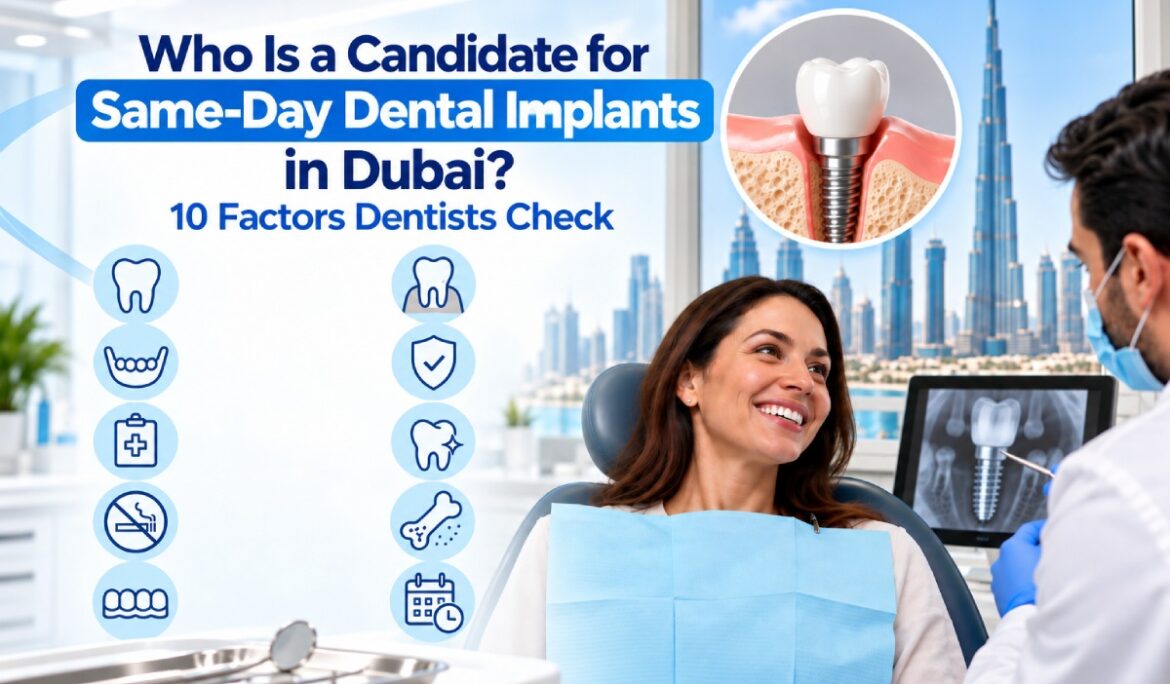
If you have a tooth that needs to be removed, the idea of replacing it with an implant and leaving the clinic with a temporary tooth on the same day can sound straightforward. In reality, same day dental implants Dubai are not suitable for every patient. The important question is not simply, “Can I get a same day tooth implant?” It is: Do my bone, gum health, bite, medical history, and implant site provide the conditions needed for immediate placement and, where appropriate, immediate loading dental implants?
Immediate implant placement and immediate loading dental implants are separate clinical decisions. An implant may sometimes be placed immediately after extraction but still require delayed loading. Immediate loading generally means the implant receives a restoration within a very short period after placement; the International Team for Implantology (ITI) defines immediate loading as loading earlier than one week after implant placement. For selected patients, immediate treatment can reduce the time spent without a visible tooth and may provide a temporary restoration during the healing period. But careful case selection is central to predictable treatment.
ITI consensus guidance identifies factors including medical status, periodontal health, occlusion, parafunctional habits, bone availability, infection, soft tissue, extraction conditions, and primary implant stability when selecting immediate placement and loading protocols. This guide explains the 10 factors dentists check when deciding who can get same day dental implants, what can make a patient unsuitable, and what happens when conventional or staged implant treatment is the safer option.
What Are Same-Day Dental Implants?
Same-day dental implants generally refer to an implant treatment approach in which an implant is placed during the same appointment as tooth extraction or during an immediate treatment session, with a temporary restoration potentially being attached during that visit.
The phrase can be misleading because the final permanent tooth does not necessarily get completed on the same day. A typical treatment may involve: Damaged tooth → extraction → implant placement → temporary tooth → healing → final restoration. The implant still needs to integrate with the surrounding bone through a process known as osseointegration. The temporary restoration is therefore not necessarily the final crown.
This distinction is particularly important when comparing providers offering same day dental implants Dubai, as patients should understand exactly what the treatment includes. Patients should ask whether “same day” means immediate implant placement, immediate temporary restoration, immediate loading, or completion of the final permanent restoration. Those are not interchangeable terms.
Who Can Get Same-Day Dental Implants?
A suitable candidate generally needs enough healthy bone to stabilize the implant, acceptable gum and periodontal health, manageable bite forces, suitable general health, and the ability to follow post-operative instructions. But there is no single checklist that automatically determines dental implant eligibility or immediate dental implants eligibility. Immediate treatment is highly site- and patient-dependent.
ITI guidance specifically recommends clinical and radiographic assessment, including evaluation of available bone, facial bone condition, and the ability to achieve primary stability in the planned three-dimensional implant position. A dentist or implant specialist therefore has to evaluate the complete situation rather than deciding who can get same day dental implants from the missing tooth alone, helping identify the most suitable same day dental implants candidates.
Bone Volume and Quality
Bone is one of the first things an implant dentist needs to evaluate. A dental implant is anchored in the jawbone. For immediate placement, the dentist needs sufficient bone in an appropriate location to stabilize the implant and position it correctly.
This is more complicated than simply asking whether there is “enough bone.” The implant needs to be placed in a restoration-driven three-dimensional position that supports the planned crown while respecting surrounding anatomical structures and soft tissues.
CBCT imaging can help evaluate the available bone and the anatomy of the implant site. ITI guidance recommends radiographic assessment and notes that CBCT and planning software can be particularly useful when evaluating immediate placement and the ideal three-dimensional implant position.
What can make immediate treatment difficult?
Examples include:
- Significant bone loss
- A large extraction-socket defect
- A damaged facial bone wall
- Insufficient bone for primary stability
- Anatomical limitations
- A need for substantial bone augmentation
A patient with inadequate bone is not necessarily “ineligible for implants.” They may simply not meet the immediate dental implants eligibility requirements or qualify as one of the ideal same day dental implants candidates for immediate placement and loading. That distinction matters.
Primary Implant Stability
Bone volume alone does not determine whether a same day tooth implant can be loaded successfully. The implant must achieve sufficient primary stability at placement. Primary stability refers to the mechanical stability of the implant immediately after it is inserted. It is different from biological integration, which develops during healing. If the implant does not have adequate initial stability, loading it immediately may not be appropriate.
This is one of the key reasons a treatment plan can change during surgery. ITI consensus guidance identifies lack of primary stability as one of the factors that can prevent completion of an intended immediate placement/immediate loading protocol. In practical terms, this means a patient may appear suitable before extraction but still require a different loading protocol once the tooth has been removed and the actual bone conditions are visible.
This is an important question to ask your dentist:
“If the implant does not achieve sufficient primary stability during surgery, what is the alternative plan?” A responsible treatment plan should have an answer.
Gum Health and Periodontal Condition
Healthy gums matter because implants are placed into tissues that need to remain stable throughout healing and beyond. Existing periodontal disease can affect implant planning and long-term maintenance. ITI’s immediate implant selection criteria specifically include periodontal disease among the patient-related factors that need to be considered. If a patient has active gum disease, bleeding, periodontal pockets, or significant inflammation, the priority may be to control the disease before proceeding with an implant.
This does not necessarily mean implants are impossible. It means that same-day implant treatment may not be the first step. A dentist may recommend periodontal treatment, improved oral hygiene, and reassessment before implant surgery. This is one reason a proper dental implant consultation Dubai should assess the condition of the entire mouth rather than focusing only on the tooth being replaced and confirming dental implant eligibility.
Active Infection at the Implant Site
Infection is another factor that needs careful evaluation. Patients sometimes assume that an infected tooth automatically means an immediate implant is impossible. The reality is more nuanced. ITI consensus guidance indicates that certain chronic periapical infections do not automatically rule out immediate placement when the infection can be adequately debrided and sufficient bone remains to achieve primary stability.
However, acute infection and unfavourable local conditions can change the treatment decision. The distinction between a controlled chronic periapical infection and an acute infection is therefore clinically important.
A dentist may need to assess:
- The type and extent of infection
- Whether the infection can be completely removed
- Whether a fistula is present
- The condition of the surrounding bone
- Whether primary stability can be achieved
- Whether the implant can be positioned correctly
If those conditions are not favourable, immediate placement may carry unnecessary risk. In that situation, extraction followed by healing and later implant placement may be the more predictable route.
Smoking and Tobacco Use
Smoking does not automatically mean that a person can never receive dental implants. However, smoking is an important risk factor that should be discussed before immediate implant treatment. This is particularly relevant when the treatment involves immediate loading because successful treatment depends on the interaction between surgical conditions, bone stability, healing and patient behaviour.
ITI evidence reviews note that smoking status has been considered in the selection of loading protocols, with many studies excluding heavy smokers and some allowing selected light smokers. The practical takeaway is not that every smoker is automatically excluded.
Rather, smoking can change the risk assessment and may influence whether immediate loading is appropriate.
Your dentist may recommend smoking cessation or reduction before treatment and during healing. If you smoke, disclose it honestly during your dental implant consultation Dubai. It allows the implant team to plan around the actual risk rather than an assumed one.
Bite Forces and Teeth Grinding
The implant does not exist independently of the rest of the mouth. Your bite determines how forces are transferred to the temporary restoration and implant. Patients with heavy biting forces or parafunctional habits such as significant teeth grinding or clenching may require a different approach.
ITI guidance lists occlusal factors and parafunction among the patient- and site-specific considerations for immediate implant protocols. This becomes especially important when an implant is going to receive an immediate restoration.
Your dentist may therefore evaluate:
- Bite relationship
- Available space for the restoration
- Opposing teeth
- Signs of tooth wear
- Clenching
- Grinding
- Previous restoration fractures
- Functional loading of the implant site
In some cases, the implant can still be placed, but immediate loading dental implants may be avoided. In others, the temporary restoration may be designed specifically to reduce or control functional forces during healing. This is why “same-day” should never mean “put a tooth on every implant immediately.”
Tooth Location
The location of the missing tooth can influence the treatment plan considerably. Replacing a front tooth presents different challenges from replacing a molar.
Front teeth
The aesthetic demands can be high because the gum contour, tooth position, and surrounding tissues are visible when a person smiles.
The dentist must consider:
- Facial bone thickness
- Gum thickness
- Gum margin position
- Implant position
- Tooth proportions
- Emergence profile
- Smile line
- Adjacent teeth
ITI guidance for immediate placement in the anterior maxilla highlights factors such as the facial bone wall, soft tissue quality, gingival margin, adjacent teeth, and three-dimensional implant positioning.
Back teeth
Posterior teeth are subjected to substantial chewing forces.
The dentist may therefore pay particular attention to:
- Bone dimensions
- Implant position
- Occlusal forces
- Available space
- Implant dimensions
- Need for augmentation
Immediate loading in posterior areas can be predictable in selected circumstances, but the clinical benefit and biomechanical situation have to be assessed individually. So when someone searches for same day implants near me or a same day tooth implant, the answer cannot be determined from location alone. The exact tooth and surrounding anatomy matter.
General Health and Medical History
Dental implant eligibility is also influenced by general health. The relevant question is not simply whether a patient has a medical condition. It is whether the condition is well controlled and compatible with the planned procedure and healing process.
The dentist may ask about:
- Existing medical conditions
- Medications
- Previous surgeries
- Allergies
- Smoking
- Healing problems
- Previous dental complications
- Relevant systemic risk factors
ITI consensus material identifies medical status as an important patient-related consideration when selecting immediate implant protocols. This is why patients should provide a complete medical history rather than assuming that a dental procedure does not require this information. If a medical condition is uncontrolled or creates a significant surgical or healing concern, the dentist may recommend stabilising the situation first or choosing a different treatment timeline.
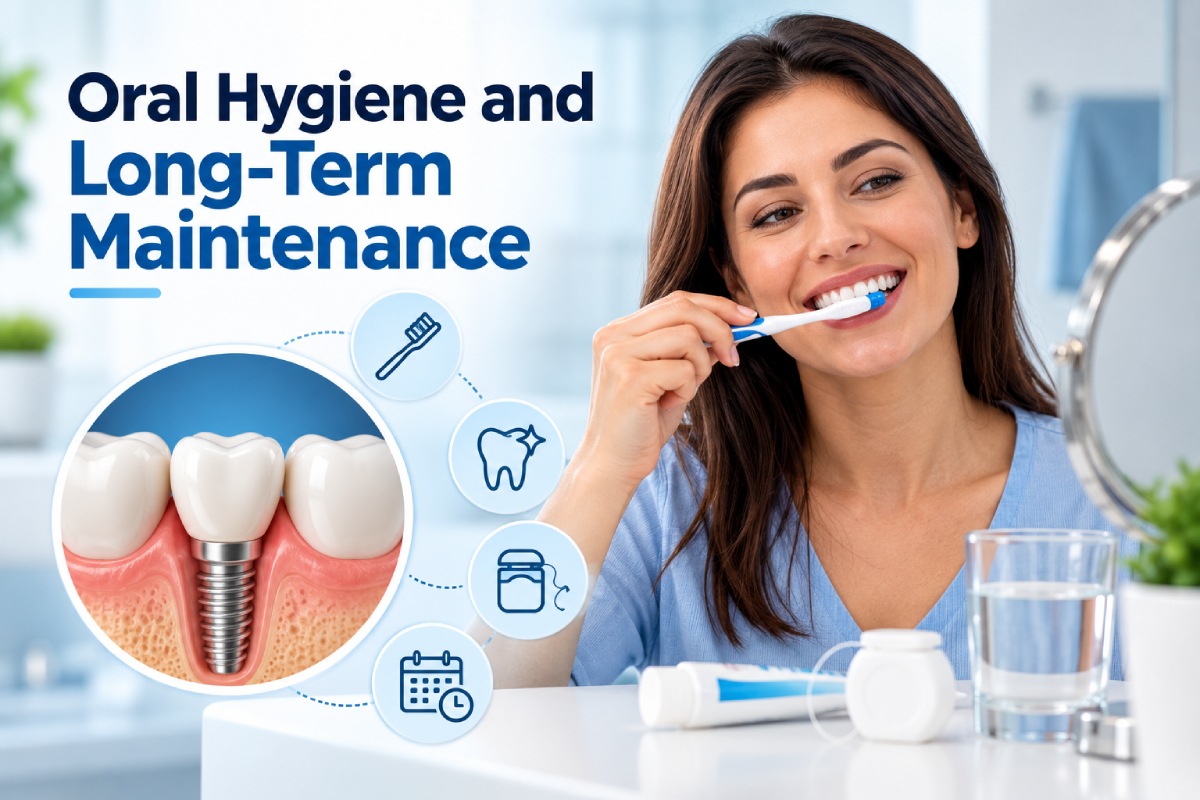
Oral Hygiene and Long-Term Maintenance
An implant is not a “fit it and forget it” treatment. Patients need to maintain the implant and surrounding tissues after treatment. Good oral hygiene is particularly important because bacteria and plaque can contribute to inflammation around implants and natural teeth. Before same-day treatment, the dentist may assess whether the patient is able and willing to maintain an appropriate oral hygiene routine.
That includes:
- Regular brushing
- Cleaning between teeth
- Cleaning around the implant restoration
- Attending follow-up appointments
- Professional maintenance when recommended
- Reporting unusual pain, swelling, or mobility
A patient who is unwilling or unable to maintain the implant properly may have a higher long-term maintenance burden. This is one reason dental implant eligibility is about more than bone and surgery. It also includes the patient’s ability to maintain the treatment after leaving the clinic.
Ability to Follow Post-Operative Instructions
The final factor is often underestimated. Immediate loading can involve a temporary restoration that needs to be protected while the implant undergoes healing.
Patients may receive specific instructions concerning:
- What foods to eat
- What foods to avoid
- How much pressure to place on the temporary tooth
- Oral hygiene
- Medication
- Physical activity
- Follow-up visits
- Warning signs that require attention
Compliance matters because the implant is still undergoing biological healing even if the temporary tooth looks and feels functional. Research on immediate loading has also identified patient compliance as an important part of patient selection.
A person who understands the restrictions and follows the treatment plan is more likely to be considered among suitable same day dental implants candidates than someone who expects to treat the temporary tooth like a fully healed natural tooth immediately after surgery.
The 10 Factors Dentists Check at a Glance
| Factor | What the dentist wants to know |
| Bone volume | Is there enough suitable bone for implant placement and stability? |
| Primary stability | Can the implant achieve adequate mechanical stability at placement? |
| Gum health | Are the gums and supporting tissues healthy enough for treatment? |
| Infection | Is there active infection or a defect that makes immediate placement unsuitable? |
| Smoking | Could tobacco use increase treatment or healing risks? |
| Bite forces | Is there excessive loading, clenching or grinding? |
| Tooth location | Does the site have suitable anatomy and functional/aesthetic conditions? |
| General health | Is the patient’s medical status compatible with the procedure and healing? |
| Oral hygiene | Can the patient maintain the implant and surrounding tissues? |
| Compliance | Will the patient follow dietary, hygiene, and follow-up instructions? |
These factors should be considered together rather than treated as ten independent yes/no questions. A patient may have excellent bone but uncontrolled periodontal disease. Another may have healthy gums but insufficient primary stability. Someone else may have suitable bone and stability but excessive bite forces that make immediate loading less appropriate. That is why there is no universal “same-day implant eligibility score.”
What Happens During a Same-Day Implant Consultation in Dubai?
A proper dental implant consultation Dubai should establish whether immediate placement and immediate loading dental implants are clinically appropriate before treatment begins.
The process may include:
Clinical examination
The dentist evaluates the tooth, gums, surrounding tissues, bite, and adjacent teeth.
Dental and medical history
Previous dental treatment, medications, medical conditions, smoking, and relevant risk factors are reviewed.
Imaging
Appropriate imaging can help assess bone and anatomical structures. For immediate placement, ITI guidance strongly recommends radiographic assessment, with CBCT particularly useful for evaluating the site and planning the ideal three-dimensional implant position.
Treatment planning
The dentist determines whether the tooth should be extracted, whether an immediate implant is appropriate, and who can get same day dental implants based on the clinical findings.
Loading decision
Even if immediate implant placement is possible, the dentist still has to decide whether immediate loading is appropriate.
This distinction is critical. Immediate placement does not automatically mean immediate loading.
What If You Are Not a Candidate for Same-Day Dental Implants?
Not meeting the criteria as one of the same day dental implants candidates does not mean that dental implants are off the table. It may simply mean that your immediate dental implants eligibility requires the implant to be placed or restored using a different timeline. There are several established alternatives.
Staged Dental Implant Treatment
If the conditions are not suitable for immediate placement or loading, the dentist may divide treatment into separate stages. For example: Extraction → healing → implant placement → healing → final restoration. This takes longer, but the additional healing period may create a more predictable environment for implant placement.
Conventional loading remains a clinically established protocol and is particularly relevant when factors such as poor primary stability, substantial bone augmentation, or compromised conditions are present. Patients should therefore not view a longer treatment timeline as a treatment failure. Sometimes it is the safer plan.
Bone Grafting Before an Implant
If insufficient bone is available, bone augmentation may be recommended. The purpose is to create or improve the foundation required for implant placement.
The timing depends on:
- Amount of bone deficiency
- Location
- Type of grafting procedure
- Soft tissue condition
- Implant requirements
- Individual healing
A significant bone defect may make an immediate implant protocol inappropriate. ITI guidance recommends considering alternative protocols where larger facial bone defects are present. This can turn treatment into a staged process rather than a same-day procedure.
Extraction Followed by Healing
Sometimes the most appropriate first step is simply to remove the unhealthy tooth and allow the area to heal.
This can be appropriate when:
- Infection requires management
- The socket is severely damaged
- Bone augmentation is needed
- Primary stability cannot be achieved
- The soft tissues require healing
- Immediate placement presents unnecessary aesthetic or biological risk
Once healing is adequate, implant placement can be planned based on the new anatomy.
Temporary Tooth During the Healing Period
Patients often worry that rejecting a same-day implant means they must spend months with a visible gap.
That is not necessarily the case. Depending on the location and clinical situation, a dentist may discuss a temporary tooth or provisional restoration while the extraction site heals.
The specific solution can vary according to the number of missing teeth, location, bite, aesthetics, and the patient’s needs. The important point is that temporary tooth replacement and immediate implant placement are separate decisions.
Delayed Loading
Another possibility is to place the implant but allow more healing time before attaching the functional restoration.
In this situation, the implant is inserted but is not immediately exposed to the same functional demands as an immediately loaded implant.
This may be considered when the implant can be placed successfully, but the conditions are not ideal for immediate loading. The decision depends on primary stability, bone conditions, implant position, occlusion, patient factors, and the overall treatment plan.
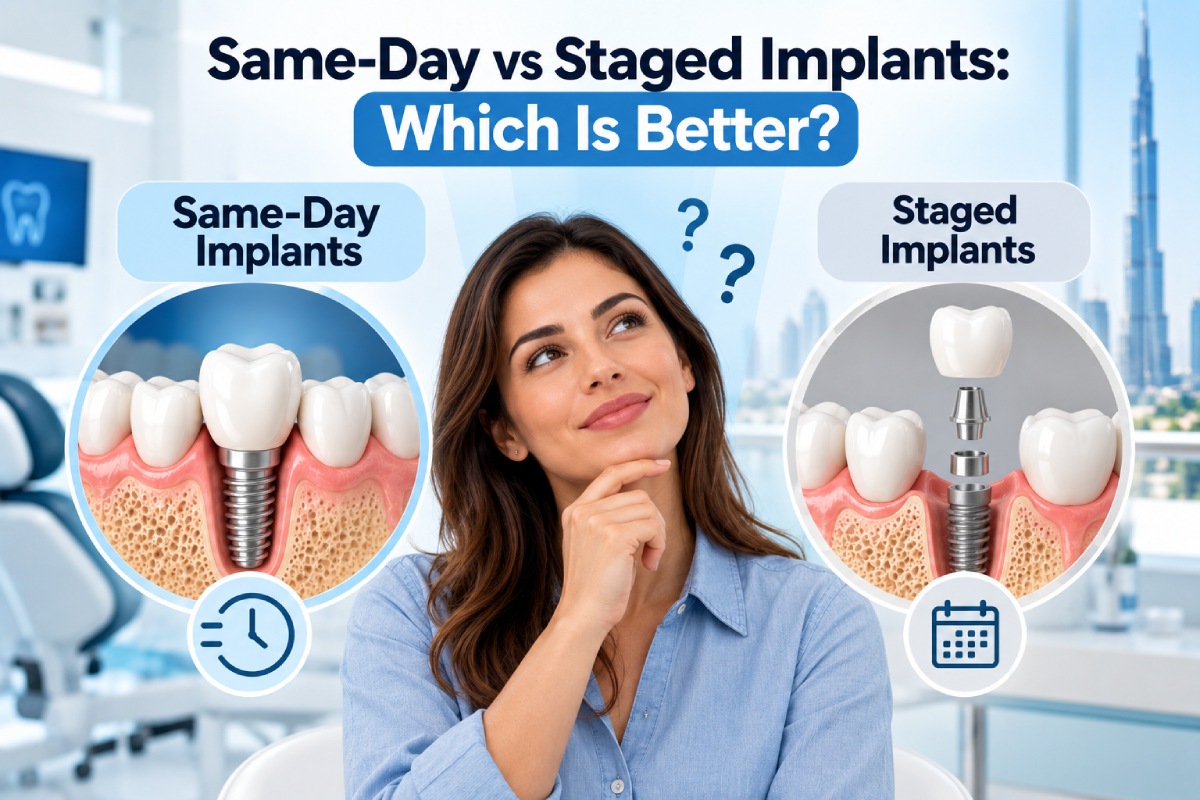
Same-Day vs Staged Implants: Which Is Better?
Neither is universally better.
- Same-day treatment may be attractive when the patient is appropriately selected, and immediate placement/loading offers a genuine patient benefit.
- Staged treatment may be preferable when the site needs healing, bone augmentation, periodontal treatment, or a more controlled loading protocol.
ITI specifically recommends that immediate placement and immediate loading should only be considered when appropriate clinical conditions are present and when there are patient-centred advantages to the approach. The goal should therefore not be:“How quickly can I get an implant?” The better question is: “What treatment sequence gives me the most appropriate balance of predictability, function, aesthetics and long-term maintenance?”
Questions to Ask Before Choosing Same-Day Dental Implants
Before agreeing to immediate treatment or searching for same day implants near me, ask the implant dentist:
- Will my implant be placed immediately after extraction?
- Will I receive a temporary tooth on the same day?
- Is the temporary tooth fixed or removable?
- Will the temporary tooth be functional or mainly aesthetic?
- When will I receive the permanent crown?
- Do I have enough bone for primary stability?
- What does my CBCT show?
- What happens if primary stability is not achieved during surgery?
- Do I have any gum disease or infection that needs treatment first?
- How will my bite affect immediate loading?
- Are there additional procedures such as bone grafting that I may need?
- What restrictions will I have after the procedure?
These questions help distinguish a genuinely suitable same-day treatment plan from a generic promise of “teeth in one day.”
Same-Day Dental Implants in Dubai: What Patients Should Look For
When comparing clinics, don’t judge a same-day implant service only by the fact that it is advertised as fast. Look at the selection process behind the treatment. A good implant consultation should explain why immediate treatment is or is not appropriate for your particular tooth.
Look for a clinic that can discuss:
- CBCT-based assessment where clinically indicated
- Bone availability
- Primary stability
- Gum and periodontal health
- Infection
- Bite forces
- Temporary versus permanent restoration
- Alternative treatment timelines
- Bone grafting where necessary
- Follow-up and maintenance
This is particularly relevant when searching for same day implants near me or same day dental implants Dubai. Convenience matters, but the quality of diagnosis matters more.
Why Not Every Patient Should Have Same-Day Implants
The strongest same-day implant treatment is not the one that promises immediate treatment to everyone.
It is the one that identifies when immediate treatment makes sense and when it does not. Some patients have ideal conditions: sufficient bone, good soft tissue, stable occlusion, controlled oral health, and an implant position that allows adequate primary stability.
Others need preparation. A patient may first require periodontal treatment. Another may need bone augmentation. Someone with an infected or severely damaged extraction site may benefit from healing before implant placement. Another patient may receive an implant but need delayed loading. These are not failures of implant dentistry. They are examples of treatment being adapted to the patient’s biology.
Final Answer: Who Can Get Same-Day Dental Implants?
The best candidates for same-day dental implants are carefully selected patients with suitable bone and soft tissue conditions, adequate primary implant stability, acceptable gum health, manageable infection risk, appropriate bite forces, suitable general health, and the ability to follow post-operative instructions. But candidacy cannot be determined from a checklist alone.
A dentist needs to examine the tooth and surrounding tissues, assess the bite and medical history, and use appropriate imaging to determine whether immediate placement is technically and biologically appropriate. Most importantly, being unsuitable for same-day treatment does not mean being unsuitable for dental implants. You may still be an excellent candidate for conventional implant treatment after extraction, healing, periodontal treatment, or bone augmentation.
For patients considering same day dental implants Dubai, the most useful dental implant consultation Dubai is not one that simply answers “yes” or “no.” It should explain why you qualify, what the same-day part actually includes, what happens during healing, when the permanent restoration will be placed, and what the alternative would be if immediate loading is not appropriate.
Frequently Asked Questions
Who can get same day dental implants?
Patients with suitable bone, adequate primary implant stability, acceptable gum health, manageable bite forces, appropriate medical health, and good ability to follow post-operative instructions may be candidates. Eligibility must be determined individually after examination and imaging.
Are same-day dental implants suitable for everyone?
No. Immediate implant placement and loading require favourable patient and site conditions. Insufficient bone, poor primary stability, uncontrolled periodontal problems, significant defects, unfavourable bite forces, or other risk factors may make staged treatment more appropriate.
Does a same-day dental implant mean I get my permanent tooth the same day?
Not necessarily. Same-day treatment may involve implant placement and a temporary restoration during the same visit. The final permanent crown or prosthesis may be fitted after the implant has healed and integrated with the bone.
Can I get a same-day implant if I have an infection?
It depends on the type and extent of infection. Certain chronic periapical infections may not automatically prevent immediate placement if the infection can be adequately managed and sufficient bone remains for primary stability. Acute infection or significant local defects may require another treatment approach.
Does smoking prevent same-day implants?
Not automatically, but smoking can influence implant risk and loading decisions. The dentist should assess smoking history as part of the overall treatment plan.
What happens if there is not enough bone?
The dentist may recommend bone grafting or another augmentation procedure, followed by implant placement after appropriate healing. In some cases, an alternative implant position or treatment protocol may be considered.
Can I get an immediate implant if I grind my teeth?
Possibly, but significant clenching or grinding needs to be considered because high or parafunctional forces can affect immediate loading decisions.
Is immediate loading the same as immediate implant placement?
No. Immediate implant placement refers to placing the implant soon after tooth extraction. Immediate loading refers to placing a restoration into functional or controlled loading shortly after implant placement. The two decisions are related but not identical.
What if I am not a candidate for same-day implants?
You may still be a candidate for dental implants. Treatment may involve extraction and healing, bone grafting, staged implant placement, a temporary tooth, or delayed loading.
Should I get a second opinion before same-day implant treatment?
For a significant treatment decision, especially when different treatment timelines are possible, asking questions or seeking another qualified clinical opinion can be reasonable. The important point is to compare the diagnosis and treatment rationale, not simply the speed or price.